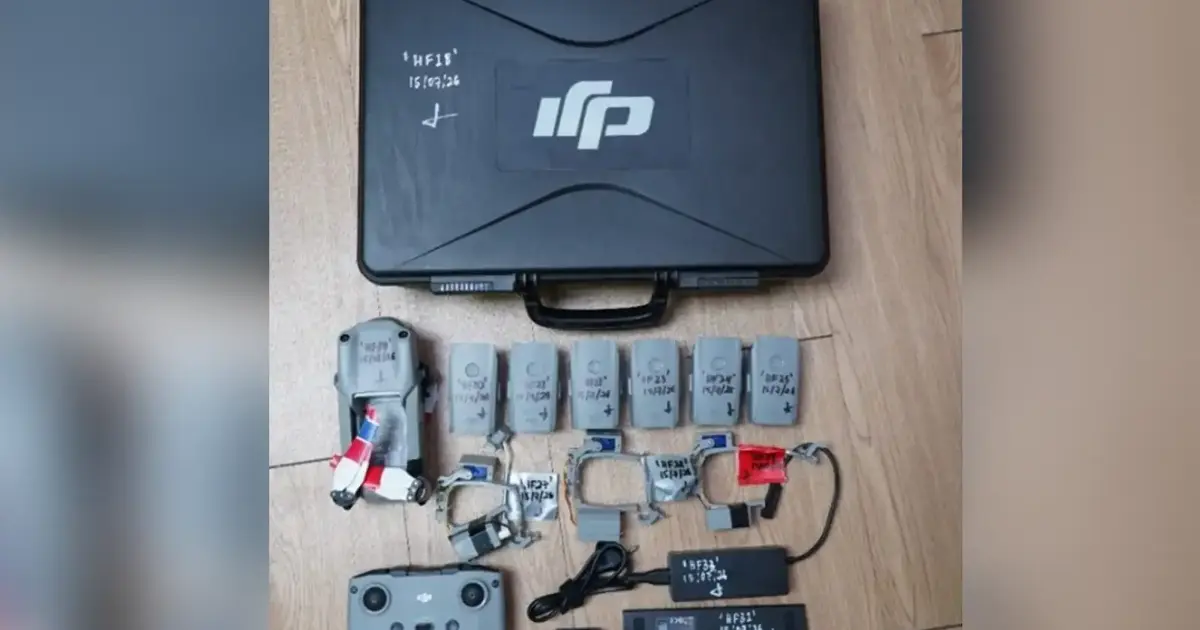
Melaka police have apprehended a man and woman in connection with an audacious attempt to deliver tobacco products into a state prison using unmanned drone technology, marking a notable escalation in contraband smuggling methods at Malaysian correctional facilities.
The Melaka police chief disclosed that investigators believe the operation was executed in collaboration with a person incarcerated within the facility, suggesting a deliberate coordination between external accomplices and someone working from inside the prison walls. This dimension of the case underscores growing security challenges facing Malaysia's prison system as criminals increasingly exploit technological innovation to circumvent established safeguards.
The use of drones to introduce prohibited items into custodial settings represents a concerning trend in prison security breaches globally and regionally. While traditional smuggling methods involving corrupt officers, visitors, or concealment within delivered goods remain prevalent, aerial delivery systems present novel difficulties for detection and interception. The technology's accessibility, range, and ability to operate under cover of darkness or poor visibility make it an attractive option for organised smuggling networks seeking to maintain supply chains to incarcerated individuals.
Tobacco products hold particular value within prison economies across Southeast Asia, functioning as a de facto currency among inmates and generating substantial profit margins for those managing the supply chains. Restrictions on tobacco sales and consumption within facilities, combined with high demand, create powerful market incentives that drive smuggling operations. The presence of tobacco as the contraband of choice in this case reflects these established patterns within Malaysian prisons, where such items command premium prices.
The coordination between external parties and internal operatives raises serious questions about prison security protocols and staff vigilance. For an inmate to orchestrate contact with accomplices outside and arrange a specific delivery mechanism suggests either lapses in communication monitoring systems or potential involvement by correctional personnel. Melaka police investigations into this incident will likely extend beyond the arrested couple to examine whether any prison staff facilitated or enabled the operation.
This case arrives amid broader scrutiny of security measures across Malaysian penal institutions. The Department of Prisons has faced criticism in recent years over various breaches, from contraband introduction to overcrowding and inadequate rehabilitation programmes. The advancement of smuggling methods using technological means demands corresponding evolution in detection and prevention strategies, forcing authorities to invest in counter-drone measures and enhanced surveillance capabilities.
The incident reflects how criminal networks adapt their tactics to exploit vulnerabilities in system design. As conventional detection methods become more sophisticated, smugglers increasingly turn to unconventional approaches. Drone deployment offers anonymity, speed, and minimal direct human contact, reducing exposure to detection compared with methods requiring physical transfer between individuals inside and outside the facility.
For Malaysian prison authorities, this arrest provides both a cautionary lesson and an opportunity to strengthen defensive measures. Implementing counter-unmanned aerial vehicle technology, enhanced perimeter monitoring, and updated security protocols becomes increasingly necessary as smuggling operations grow more ambitious. The relative ease with which drones can be purchased commercially makes prevention particularly challenging without substantial investment in detection infrastructure.
The investigation's findings regarding collusion with an inmate will prove significant in establishing whether this represents an isolated incident or part of a broader smuggling network. If the arrested couple had successfully delivered contraband multiple times prior to apprehension, it would indicate a coordinated criminal enterprise extending beyond spontaneous action. Such networks typically operate with systematic distribution channels and established protocols.
Regionally, Southeast Asian prisons face comparable smuggling challenges, with neighbouring countries reporting similar incidents involving both conventional and emerging smuggling methodologies. Sharing intelligence and best practices on counter-smuggling measures, including counter-drone technology, could enhance the region's collective capacity to address these security threats. The arrest in Melaka occurs within this broader context of evolving custodial security challenges across ASEAN nations.
The case also underscores the importance of rehabilitation and alternative programmes that reduce inmates' dependence on prohibited items and underground prison economies. When incarcerated individuals lack legitimate access to certain goods and face lengthy sentences with limited constructive activity, demand for contraband naturally increases. Comprehensive prison reform addressing root causes of smuggling—rather than focusing solely on enforcement—remains essential for long-term security improvements.
Moving forward, authorities will need to balance preventing external smuggling efforts with addressing the underlying conditions that make prison contraband markets viable. The arrested couple's apparent cooperation with an internal accomplice demonstrates how external and internal factors combine to create security vulnerabilities. Only through integrated approaches tackling both supply side constraints and demand side factors can Malaysian prisons substantially reduce contraband introduction incidents and enhance overall facility security.

