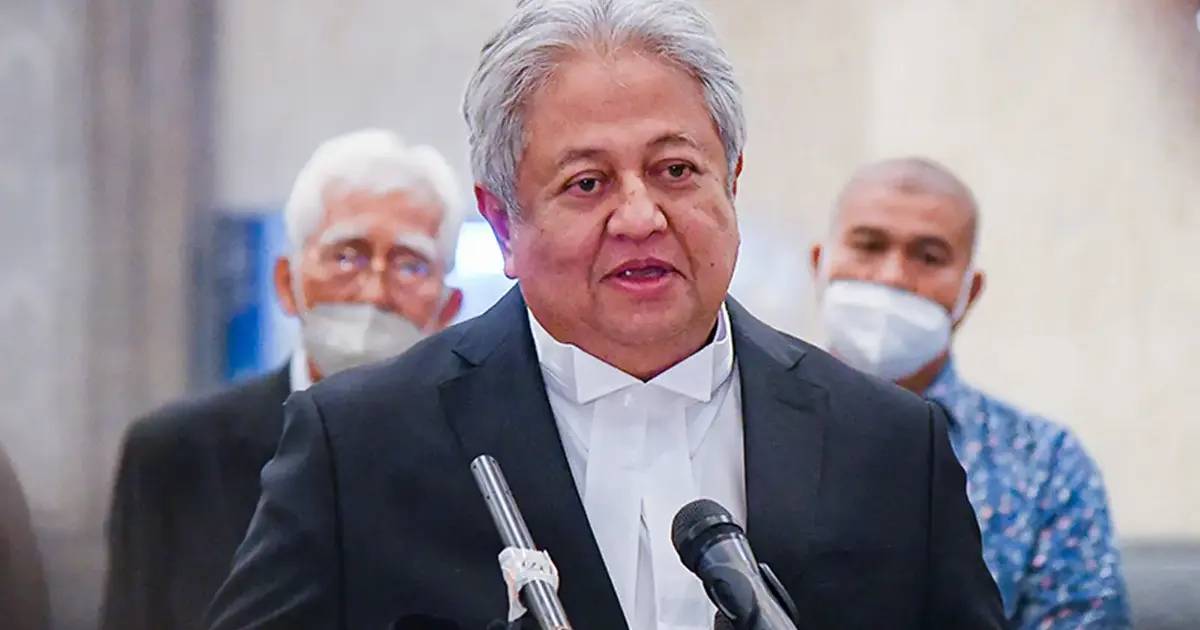
A significant development has emerged in the ongoing defamation dispute between Zaid Ibrahim, a prominent lawyer and former cabinet minister, and several colleagues against the Bar Council of Malaysia. Justice Latifah Tahar has withdrawn from the appellate panel that was scheduled to hear the case, prompting the Court of Appeal to reset its procedural timeline. The court has now designated July 13 as the date for case management, during which a fresh hearing date will be established before a reconstituted judicial panel.
The recusal of Justice Latifah Tahar marks an important juncture in litigation that has already captured the attention of Malaysia's legal community and observers of judicial governance. When a judge withdraws from a case, it typically signals either a conflict of interest, a prior connection to parties or issues that could compromise impartiality, or other circumstances deemed problematic under principles of natural justice. The specific grounds for Justice Latifah Tahar's recusal have not been publicly disclosed, which is standard practice in Malaysian judicial proceedings.
Defamation cases involving lawyers and legal institutions carry particular weight within Malaysia's legal system, as they often touch upon professional conduct, regulatory authority, and the boundaries of free speech within the judiciary and bar. Zaid Ibrahim's profile as both a senior practitioner and a former international trade and industry minister amplifies the public significance of this dispute. His involvement ensures that the case receives scrutiny not merely as a private legal matter but as something with broader implications for how the legal profession polices itself and responds to criticism.
The Bar Council, the professional regulatory body responsible for admission and discipline of advocates and solicitors in Malaysia, serves as the opposing party in this appeal. The Council's decisions and enforcement actions regularly generate debate among legal practitioners, with some criticizing what they characterise as overreach while others defend the institution's authority to maintain professional standards. This particular defamation claim suggests that Zaid Ibrahim and his co-appellants contest assertions made by the Bar Council or dispute the Council's characterisation of their conduct or statements.
The procedural step of case management, scheduled for mid-July, represents a critical administrative phase before substantive arguments proceed. During this hearing, the court will confirm which justices will comprise the new panel, establish timelines for filing further submissions if required, clarify the issues for determination, and set a date when the appeal will be heard on its merits. Case management conferences have become increasingly important in Malaysian appellate practice, allowing judges to manage caseloads efficiently while ensuring parties have adequate notice and opportunity to prepare their arguments.
The reassignment of the judicial panel introduces an element of uncertainty regarding how the fresh bench might approach the case. Different judges bring varying judicial philosophies, particularly when questions of defamation, professional standards, and the balance between institutional authority and individual rights intersect. The outcome may depend partly on how the new panel interprets precedent regarding professional liability and the scope of permissible criticism within the legal profession.
From a practical standpoint, the delay occasioned by Justice Latifah Tahar's recusal and the requirement to reconstitute the panel means that resolution of this appeal will extend further into the future. For Zaid Ibrahim and his co-appellants, continued delay might be strategically frustrating, while for the Bar Council, any prolongation of uncertainty surrounding a defamation finding could pose reputational considerations. The legal community will be watching closely to understand how appellate courts handle cases touching upon professional self-regulation, an area where boundaries between judicial deference and robust scrutiny remain contested.
The recusal also underscores broader questions about judicial management and transparency. While judges routinely withdraw from cases for valid reasons, the frequency of such recusals and their impact on case progression warrant attention. Malaysian courts have been working to enhance public confidence in the judiciary through clearer procedures and greater efficiency, making timely reassignment of cases important to that institutional project.
The substantive merits of the defamation claim—what statements were made, whether they were false, whether they caused harm, and whether defences such as justification or qualified privilege apply—remain to be addressed once a new panel convenes. Defamation law in Malaysia requires plaintiffs to prove that published statements were false and damaging, though considerable case law examines circumstances under which true statements or statements made in the course of professional duty receive protection.
Legislative and professional bodies in Malaysia have periodically examined how defamation law interacts with free speech and legitimate criticism, particularly within closed professional communities. The Bar Council's authority to make public statements about professional conduct and discipline is well-established, yet that authority is not boundless, and determinations of whether particular statements crossed into unwarranted harm remain fact-intensive and context-dependent.
The July 13 case management date will provide the first opportunity for stakeholders to understand the composition of the new judicial panel and the anticipated timeline. For the broader Malaysian legal profession, the resolution of this appeal may carry precedential significance, clarifying the contours of permissible professional criticism and the remedies available when such criticism is contested. Until that panel convenes and deliberates, however, the dispute remains in abeyance, awaiting the administrative machinery of the court to complete its reassignment process.

