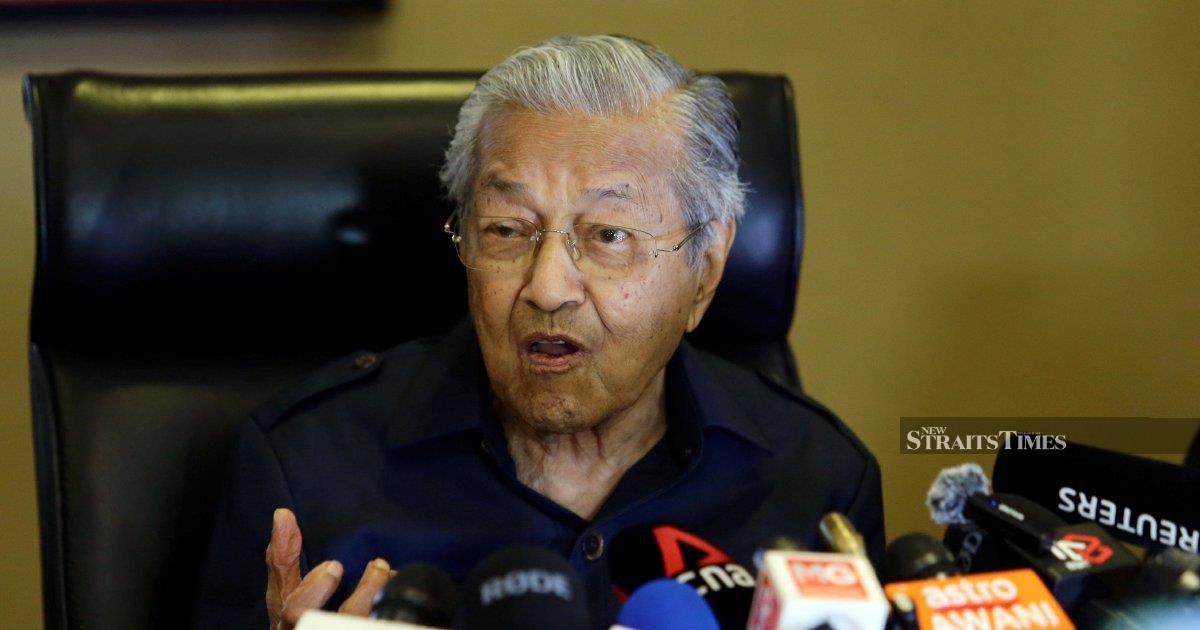
The High Court in Shah Alam is scheduled to receive crucial medical information on Friday concerning the state of Tun Dr Mahathir Mohamad's health and whether he remains fit to pursue his RM150 million defamation action against Prime Minister Datuk Seri Anwar Ibrahim. This procedural development marks a significant juncture in one of Malaysia's most high-profile legal disputes, as the court must determine whether the nonagenarian former leader can physically and mentally engage with the rigorous demands of civil litigation.
The defamation suit, which centres on allegations arising from their long-standing political rivalry, has already drawn intense public attention given the stature of both parties involved. Dr Mahathir, who previously served as Prime Minister across two separate tenures and wielded considerable influence over Malaysia's political landscape for decades, initiated the proceedings as part of his ongoing disputes with Anwar Ibrahim's administration. The case represents not merely a personal grievance between two individuals but carries broader implications for Malaysia's legal system, governance narratives, and the country's political memory.
At 99 years of age, Dr Mahathir's capacity to fulfil the obligations inherent in litigation proceedings understandably merits judicial scrutiny. Health concerns among elderly litigants can substantially impact case management, evidence presentation, and the plaintiff's ability to testify credibly if required. Medical updates become essential documents that allow courts to make informed decisions about proceeding timelines, procedural accommodations, or adjournments necessary to protect both parties' rights and ensure fair trial standards.
The RM150 million quantum attached to this claim underscores its significance as a civil matter, placing it among Malaysia's more substantial defamation cases. Defamation litigation in Malaysia traditionally requires plaintiffs to establish that published statements caused genuine reputational harm, with damages reflecting lost earnings, harm to professional standing, and emotional distress. Given Dr Mahathir's prominence, quantifying reputational damage becomes particularly contentious, as his public profile and media visibility mean allegations circulate broadly throughout the nation.
This case unfolds within Malaysia's broader political context, where tensions between Anwar Ibrahim and Dr Mahathir have simmered since the latter's 2003 retirement and Anwar's subsequent imprisonment. The relationship between these two towering figures has defined significant portions of recent Malaysian political history, alternating between alliance and acrimony depending on shifting electoral calculations and policy disagreements. Their current legal dispute crystallises these historical tensions within a formal court framework, converting political antagonism into justiciable claims.
Procedurally, Malaysian courts must balance the legitimate right of litigants to pursue claims while respecting judicial resources and principles of natural justice that protect both plaintiff and defendant. The Friday medical assessment will provide the bench with objective information needed to determine appropriate case management directions. Courts increasingly recognise that elderly plaintiffs may require modified procedures, including shorter hearing days, more frequent breaks, or extended timelines for document review and evidence presentation.
The defamation claim itself touches upon fundamental issues of public discourse, as allegations involving former and current prime ministers inevitably attract political overtones. Malaysian courts operate within a framework designed to protect individual reputations whilst preserving public discussion rights, creating inherent tensions when prominent political figures seek damages for allegedly defamatory statements. This equilibrium becomes particularly delicate when one party occupies Malaysia's highest executive office, raising questions about whether government machinery might become entangled in what should remain a strictly private dispute.
For Southeast Asian observers, this litigation exemplifies how ageing political figures navigate post-retirement grievances through formal legal channels. Across the region, leaders have increasingly pursued defamation actions against predecessors and rivals as political competition intensifies and institutional checks weaken. Malaysia's case therefore offers insights into how courts balance respect for aged statesmen with demands for procedural fairness and institutional integrity.
The forthcoming medical update may prove decisive for case trajectory. Should the assessment indicate Dr Mahathir remains medically fit despite his advanced age, litigation will likely proceed according to standard timelines, potentially extending across multiple years given Malaysian court backlogs. Conversely, if medical evidence suggests significant incapacity, the court might entertain applications for adjournment, suspension, or even discontinuance, forcing Dr Mahathir and his legal team to recalibrate litigation strategy.
This litigation ultimately reflects Malaysian society's evolving relationship with its political past. Rather than resolving disputes through political negotiation or electoral displacement of rivals, both Dr Mahathir and Anwar Ibrahim have pursued formal legal remedies, signalling that Malaysia's courts now serve as arenas for resolving elite political conflicts. Whether this represents legal sophistication or political dysfunction remains contested among Malaysian observers, legal analysts, and constitutional scholars.
The Friday hearing represents more than a routine procedural update; it constitutes a moment where Malaysia's judiciary must visibly manage the intersection of law, politics, advanced age, and national interest. How the High Court approaches this delicate balance will resonate throughout Malaysia's legal and political communities, setting precedent for how courts handle future disputes involving prominent public figures at life's twilight.

