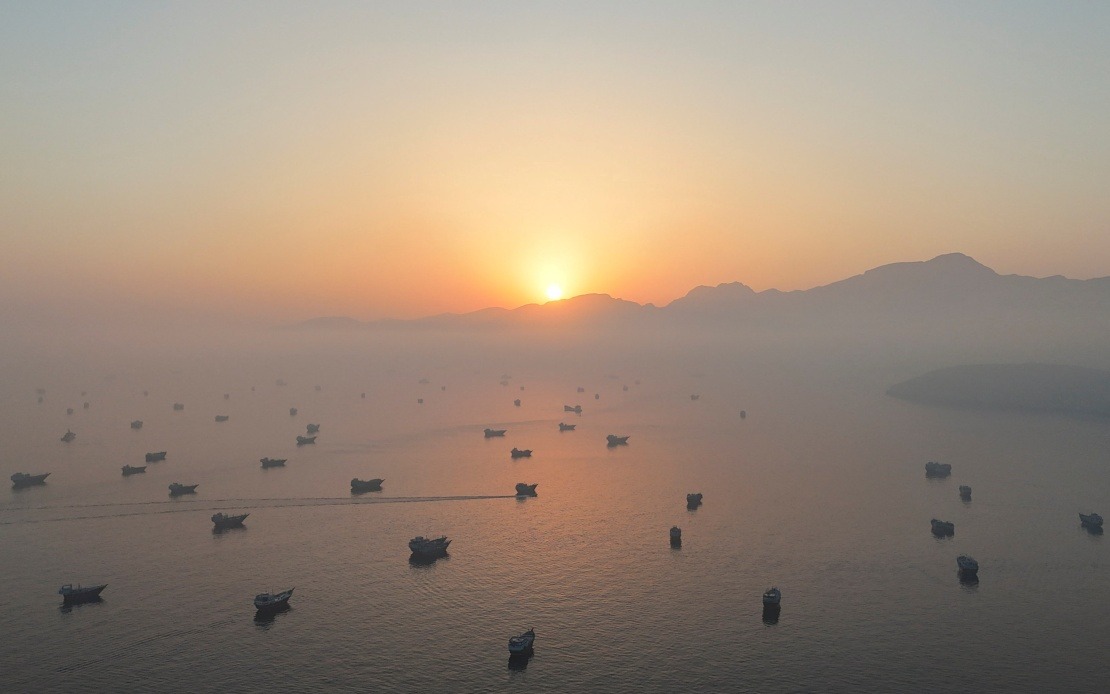
The 12-member Comprehensive and Progressive Agreement for Trans-Pacific Partnership has signalled strong backing for the emerging understanding between the United States and Iran, particularly regarding restoration of free passage through the Strait of Hormuz. The endorsement came via a joint ministerial statement released after a virtual assembly on Friday, and underscores the trade bloc's deep concern about threats to one of the world's most critical shipping arteries. For Malaysia and other Southeast Asian members, the stakes are particularly high given the region's heavy reliance on energy imports flowing through this chokepoint.
The statement reflects a fundamental anxiety among member economies about the vulnerability of global supply chains to geopolitical friction. The 12 signatory nations—Australia, Brunei, Canada, Chile, Japan, Malaysia, Mexico, New Zealand, Peru, Singapore, the United Kingdom and Vietnam—jointly acknowledged that unimpeded transit through the Hormuz Strait serves not merely as a commercial convenience but as an essential underpinning for economic security across the Indo-Pacific. The ministers recognised that crude oil, refined petroleum products including diesel, natural gas, petrochemical goods and fertilisers represent irreplaceable components of modern economies, and any sustained disruption would cascade across manufacturing, agriculture and power generation sectors.
The language deployed in the communiqué demonstrates measured optimism tempered by institutional caution. Ministers emphasised the primacy of international maritime law, specifically invoking the United Nations Convention on the Law of the Sea as the governing framework for navigation rights. This reference carries particular significance for smaller maritime economies and those dependent on sea-lane security, effectively anchoring the trade bloc's position within established legal structures rather than unilateral assertions. For nations like Malaysia, Vietnam and Singapore—all with substantial shipping interests—this legalistic foundation provides reassurance that any resolution to the US-Iran tensions would respect recognised international norms.
Energy security emerges as the central preoccupation throughout the statement. The ministers stressed their collective commitment to maintaining open and secure maritime corridors, freedom of navigation and the continuous, unobstructed movement of vessels through strategic waters. This framing reflects anxiety that extends beyond immediate commercial concerns to encompass the structural stability of the international trading system itself. A prolonged closure or significant restriction of Hormuz passage would eliminate alternative routes for millions of barrels daily, creating acute shortages across Asia and beyond.
The bloc made explicit its determination to prevent the erection of trade barriers disguised as protective measures. Ministers pledged not to impose what they characterised as unjustified trade-restrictive measures and called upon other nations to exercise similar restraint. This declaration carries particular weight given recent history of tit-for-tat sanctions and counter-sanctions that have disrupted global commerce. For Malaysian exporters and importers, such assurances offer a degree of predictability in an increasingly fragmented economic landscape.
The statement also acknowledged the emerging Partnership On Wide Energy and Resources Resilience Asia, or POWERR Asia, as a promising framework for building more robust energy supply chains across the region. This initiative gained prominence precisely because producers and consumers increasingly recognise their interdependence and the mutual benefit of closer coordination. Rather than allowing energy markets to operate in isolation, the partnership model seeks to embed resilience through deliberate cooperation between nations at different stages of the energy value chain. For Southeast Asian nations positioned between major producers in the Middle East and major consumers in East Asia, such frameworks offer tangible benefits through improved information sharing and coordinated crisis response.
Particularly noteworthy is the ministers' explicit acknowledgment of the distinct vulnerabilities faced by small-island developing nations, particularly those in the Pacific region. These economies, entirely dependent on maritime trade for survival, face existential risks from any extended disruption to sea lanes. The CPTPP's attentiveness to their concerns signals a bloc-wide understanding that the benefits of free trade mean little if the physical infrastructure enabling that trade becomes compromised or contested. This perspective carries lessons for Malaysia and other Southeast Asian economies that, while larger than Pacific island nations, nonetheless remain heavily dependent on uninterrupted maritime commerce.
The timing of the statement assumes added significance against the backdrop of prolonged global supply-chain turbulence. Since 2020, manufacturers and traders have confronted successive shocks ranging from pandemic-induced shutdowns through semiconductor shortages to inflationary pressures and currency volatility. Energy supply reliability has emerged as a crucial determinant of recovery speed and stability. The Strait of Hormuz incident represents precisely the kind of geopolitical risk that cannot be easily hedged or insured against; rather, it requires diplomatic resolution and international consensus around maintaining the rules-based trading order.
The joint assertion of commitment to free and open markets, combined with explicit calls for rules-based commerce in energy and other affected commodities, represents an attempt to elevate normative expectations around state behaviour. By framing these principles as essential to collective prosperity rather than narrow national advantage, the ministers seek to shift incentive structures away from zero-sum competition toward mutual gain. This rhetorical and diplomatic strategy recognises that in an interdependent global economy, disruption to others' energy security inevitably rebounds upon disruptors themselves.
For Malaysian policymakers and business leaders, the CPTPP statement carries direct implications. As a member of this influential bloc and as a nation deeply integrated into regional energy markets, Malaysia benefits from international consensus supporting free navigation and open energy trade. The endorsement of the US-Iran agreement, even in measured language, represents diplomatic progress that reduces the likelihood of further Hormuz-related disruptions. Simultaneously, Malaysia's participation in initiatives like POWERR Asia positions the nation to help shape more resilient regional energy frameworks, potentially reducing dependency on any single external supplier or route.
The statement's emphasis on minimising disruptions to energy flows in accordance with international law creates a framework within which all parties—including regional powers like Iran—can find legitimate grounds for cooperation. Rather than framing the situation as a confrontation between incompatible interests, the CPTPP approach treats energy security as a shared concern transcending bilateral disputes. This reframing opens diplomatic space for practical cooperation even where broader political relations remain strained, a model with relevance to numerous other regional tensions.

