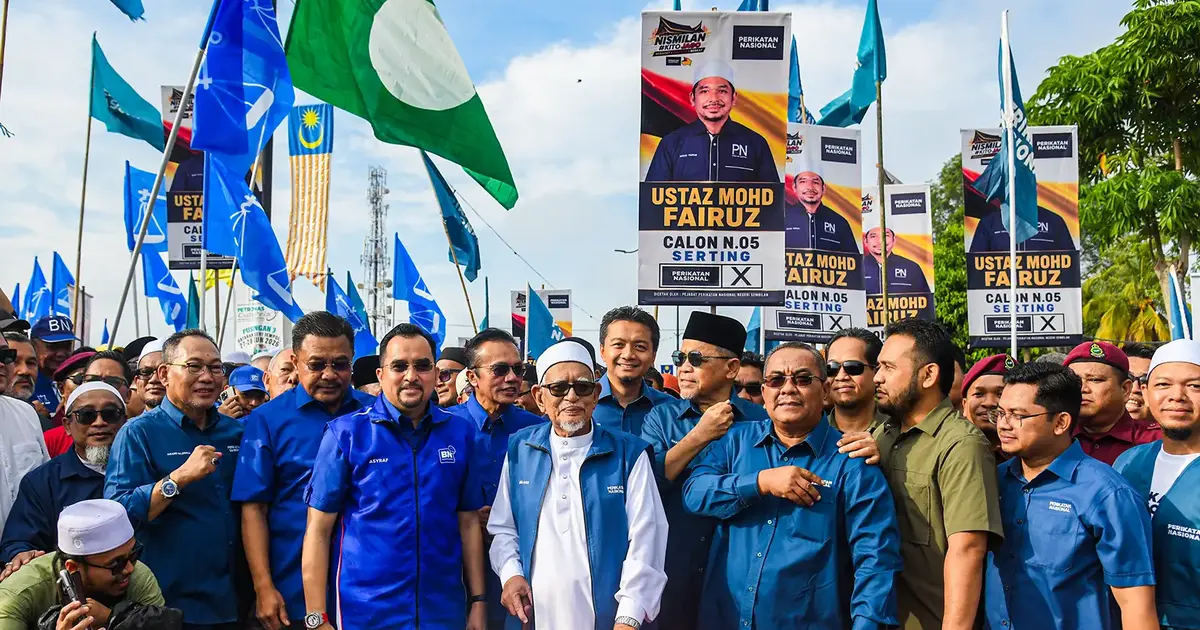
Malaysia's ruling coalition is showing visible signs of internal strain, as leaders from Barisan Nasional and Perikatan Nasional find themselves locked in a cycle of public contradiction and rebuttal rather than presenting a unified vision to the electorate. Political observers warn that this pattern of conflicting messages represents a troubling development for a government that requires cohesion to implement its agenda effectively.
The friction stems from fundamental disagreements within the alliance on several fronts. Rather than iron out these differences behind closed doors, party leaders have increasingly aired their disputes in public statements and media appearances. This approach not only exposes the fragility of the BN-PN partnership but also consumes valuable political oxygen that could be directed toward substantive governance matters. Analysts suggest this dynamic reflects deeper structural problems in how the coalition manages internal consensus.
One critical consequence of this internal preoccupation is the distraction from policy substance. Instead of articulating clear positions on economic challenges, social welfare initiatives, or development priorities, coalition spokespeople find themselves constantly defending their party's position or attacking counterparts. This reactive posture leaves the government appearing reactive rather than proactive—a perception that undermines public confidence in its ability to lead. The opposition, by contrast, faces fewer constraints in focusing its messaging on areas where the government is perceived as weak.
The alliance between BN and PN was forged partly out of electoral necessity following recent political realignments in Malaysia. However, the two coalitions bring distinct political cultures, competing power bases, and divergent policy preferences to the table. BN draws its traditional strength from its established apparatus and established patron-client networks, while PN represents a newer political force with different ideological moorings. These structural differences create natural friction points that emerge whenever specific policy decisions must be made or public positions must be articulated.
For Malaysian voters and international observers monitoring regional political stability, these visible cracks carry implications beyond mere palace intrigue. A government consumed by internal disputes has diminished capacity to address urgent challenges facing the economy, healthcare systems, education infrastructure, and environmental concerns. The coalition's credibility is also affected; voters who perceive a government as internally divided question whether it can deliver on promises or maintain consistent policy direction over time.
The timing of these tensions is particularly significant. Malaysia's economy faces headwinds from global trade uncertainties and domestic fiscal pressures, issues requiring decisive leadership and clear policy direction. Educational reform, infrastructure development, and social cohesion initiatives all demand sustained focus and resources. When political capital is diverted to managing coalition infighting, these essential functions inevitably suffer from neglect or delayed implementation.
Analysts point to several recent incidents where party leaders have contradicted each other on significant matters, ranging from fiscal policy priorities to social issues. Rather than treating disagreements as normal elements of coalition governance that should be resolved through formal channels, these disputes have played out in the public domain. This pattern suggests either weak coordination mechanisms within the coalition or deliberate political posturing by individual party leaders seeking to establish their party's distinct identity.
The BN-PN arrangement also operates against the backdrop of Malaysia's broader political volatility. Over the past decade, coalition configurations have shifted repeatedly, leaving voters uncertain about the durability of any particular arrangement. The current visible strain adds to this sense of precariousness, potentially affecting consumer and investor confidence. Foreign observers considering Malaysia as a destination for investment or economic partnership often view political stability as a crucial factor; internal squabbling within the ruling coalition raises questions about Malaysia's governance reliability.
Moving forward, coalition leaders face a critical choice. They can work to strengthen internal coordination mechanisms, establish clearer protocols for managing disagreements, and commit to presenting a more unified public front on policy matters. Alternatively, continued public contradiction risks further erosion of coalition cohesion. Each internal dispute that spills into the public arena makes the next disagreement slightly easier to justify as public property, creating a downward spiral in unity.
The challenge for BN and PN leadership is distinguishing between healthy internal debate—which any governing coalition requires—and counterproductive public contradiction that undermines collective credibility. Southeast Asian governance scholarship suggests that successful multi-party coalitions establish clear lines between private coalition negotiations and public policy messaging. Malaysia's current trajectory suggests these boundaries have become blurred.
For smaller coalition partners and emerging political players watching from the sidelines, the spectacle of BN-PN tension creates both opportunity and uncertainty. It signals that the ruling alliance may be vulnerable to opportunistic political challenges, yet it also raises questions about whether alternative combinations would govern more effectively. This dynamic will likely shape Malaysian politics through the coming electoral cycle.
Ultimately, observers agree that the BN-PN coalition's effectiveness depends on its ability to manage internal differences while maintaining sufficient public unity to govern. The current trajectory suggests this balance is becoming increasingly difficult to maintain, with consequences that extend well beyond coalition politics to affect Malaysia's broader economic and social trajectory.

