Cuban President Miguel Diaz-Canel launched a sharp rebuke against the United States on Friday, characterising newly imposed sanctions as part of a coordinated campaign reminiscent of the anti-communist witch-hunts that defined American politics during the 1950s. Speaking from Hamilton in Canada, Diaz-Canel articulated his view that Washington and its allies are orchestrating what amounts to a contemporary version of McCarthyism, a period when Senator Joseph McCarthy led investigations targeting individuals accused of communist sympathies. The Cuban leader's remarks underscore deepening tensions between Havana and Washington, particularly as President Donald Trump's administration has intensified economic pressure on the Caribbean island nation through successive executive orders.
In a statement posted on the social media platform X, Diaz-Canel expanded his critique beyond domestic American politics, drawing parallels to darker chapters of twentieth-century history. He contended that transnational far-right alliances operating in today's geopolitical landscape echo the ideological dimensions of Hitlerite fascism, while simultaneously evoking the brutal legacy of Operation Condor, the clandestine campaigns orchestrated across Latin America during the 1970s and 1980s that resulted in the disappearance and death of thousands. By invoking these historical references, the Cuban president sought to frame current US policy not as isolated sanctions but as part of a broader authoritarian pattern aimed at suppressing progressive movements globally.
Diaz-Canel questioned whether accusations levelled against left-wing movements are being weaponised as justification for what he termed expanding cycles of abuse and military aggression. His framing suggests that in his assessment, the rhetoric surrounding leftist politics serves as a pretext for geopolitical interventions that extend far beyond Cuba's shores. According to the Cuban government's perspective, the real existential threat to international stability originates not from left-leaning governments but from what Diaz-Canel characterised as the philosophy of dispossession that governs transnational far-right actors. This ideological assertion, while contentious, reflects how Havana perceives its struggle within the context of broader global power dynamics.
The Cuban leader directed his accusations toward the United States and its allies across multiple domains. He attributed responsibility for the humanitarian catastrophe in Gaza, extrajudicial killings across various jurisdictions, the persecution and deaths of migrants attempting to cross borders, the bombing of a girls' school in Iran, and the enduring economic embargo imposed on Cuba itself. Diaz-Canel emphasised that this enumeration of grievances merely scratched the surface, suggesting a more comprehensive list of actions he deems inconsistent with international humanitarian principles. In his estimation, the aggregate effect of these policies represents a systematic threat to global peace and stability, positioning Cuba's struggle as emblematic of broader conflicts between differing visions of international order.
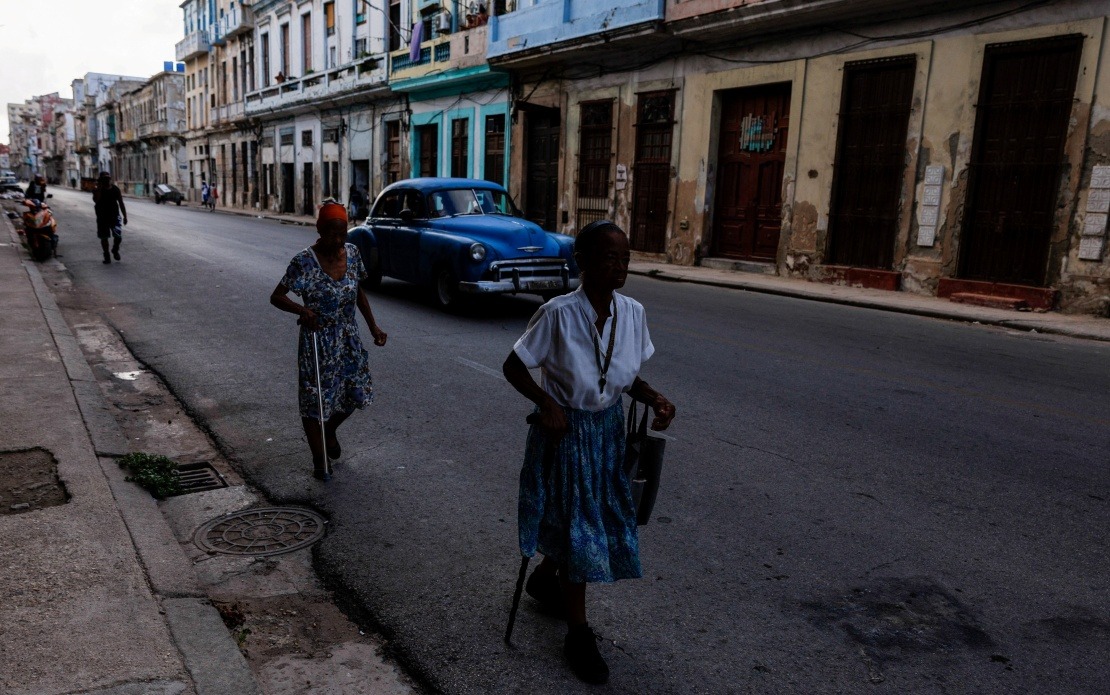
Cuba currently finds itself confronting its most severe economic contraction in recent decades, a situation that has profoundly destabilised daily life across the island. The nation is experiencing acute fuel shortages that have cascaded throughout the economy, while rolling power failures have become routine for citizens and businesses alike. Official reporting indicates that during the first half of 2026, the Cuban economy experienced sharp contraction, with average daily electricity outages reaching approximately twenty hours. The electricity deficit has climbed to 1,955 megawatts, a figure that underscores the scale of the energy crisis consuming the nation's productive capacity and quality of life.
Cuban authorities have systematically attributed much of this economic deterioration to increasingly stringent measures implemented by the United States. According to government statements, Washington has deliberately disrupted oil supplies destined for the island, leveraged its financial and commercial influence to pressure international companies from conducting business with Cuba, and restricted Havana's access to international credit and financing mechanisms. These characterisations reflect Cuba's perspective on how external pressure, particularly from the hemisphere's most powerful economy, has constrained its development options and amplified internal vulnerabilities.
The Trump administration has escalated sanctions pressure through multiple mechanisms in recent months. In May, the White House announced that President Trump signed an executive order imposing fresh sanctions targeting Cuban officials and entities, with the stated rationale of addressing repression within Cuba and neutralising purported threats to US national security and foreign policy interests. The administration's framing emphasises security and governance concerns, presenting sanctions as necessary protective measures rather than economic coercion. This divergence in framing—between Washington's security-based justifications and Havana's characterisation of sanctions as illegal economic warfare—illustrates the fundamental disagreement underpinning US-Cuba relations.
Earlier in January, Trump signed a separate executive order that declared a national emergency regarding Cuban oil supplies, establishing mechanisms to impose tariffs on goods originating from countries that sell or transport petroleum to Cuba. This move represents an unprecedented extraterritorial extension of sanctions authority, effectively penalising third parties for commercial engagement with the island nation. The measure demonstrates how contemporary sanctions regimes have evolved beyond direct bilateral instruments to encompass broader supply-chain disruptions and secondary enforcement mechanisms. For Cuban policymakers, such actions exemplify what they perceive as unilateral economic warfare incompatible with international law and norms.
The intersection of Cuba's economic crisis and escalating US sanctions creates a complex humanitarian and geopolitical situation with implications extending throughout the Caribbean and Latin America. Cuba's struggles resonate across the region as a case study in how sustained external economic pressure affects development trajectories and governance legitimacy. For Southeast Asian nations monitoring US geopolitical strategy, Cuba's experience offers cautionary lessons regarding the scope and durability of sanctions regimes, particularly how they can persist across multiple administrations and compound existing vulnerabilities. The Cuban government's rhetorical appeals to historical precedents and international solidarity suggest efforts to mobilise non-aligned movements and build counter-narratives to Western sanctions narratives.

