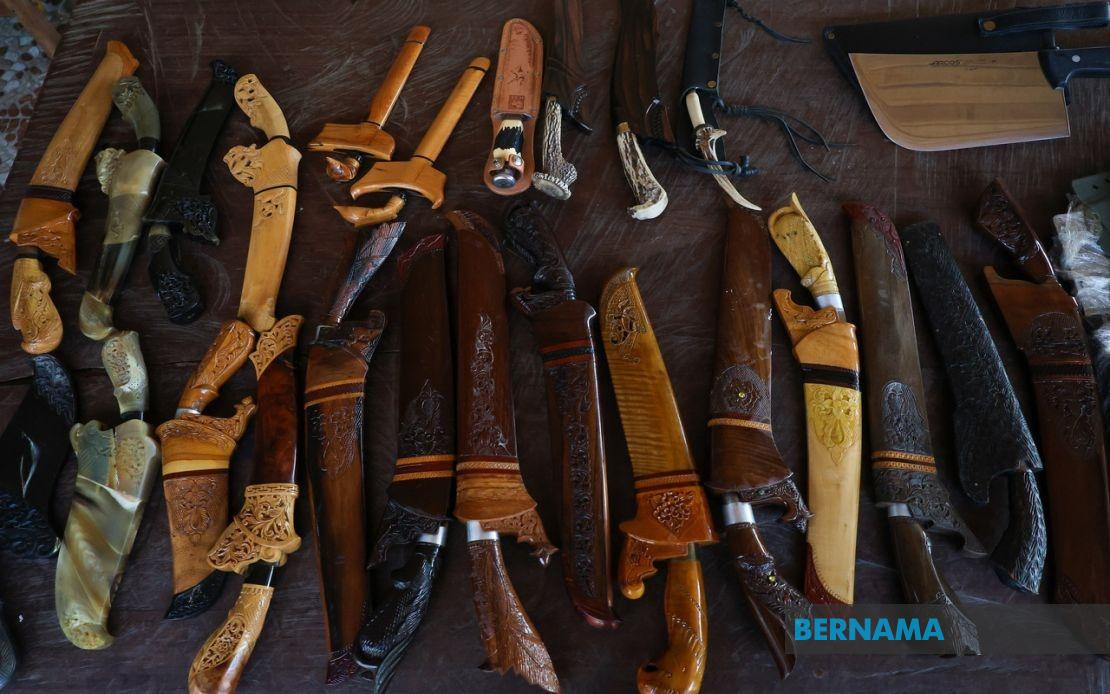
The bird-headed golok, an ornamental machete with a stylised avian hilt, has become an unlikely symbol of Kelantan's eroding blacksmithing heritage. As fewer artisans pursue the craft and established masters pass away without training successors, private collectors like Ahmad, 71, have emerged as custodians of what may otherwise be lost to history. His careful stewardship of more than 100 traditional and modern weapons—valued at approximately RM20,000—underscores a broader concern: that once a blacksmith dies, the distinctive knowledge, techniques and artistic vision they embodied vanish irretrievably unless deliberately transmitted to the next generation.
Ahmad's perspective reflects decades of intimate engagement with traditional metalwork. Roughly two decades ago, he began assisting a blacksmith friend in crafting weapon hilts and scabbards, work that kindled a deep appreciation for the artisanal methods underlying the craft. Over time, this initial curiosity evolved into systematic collection and preservation, driven by the recognition that handmade pieces embody something mass production cannot replicate: the fingerprint of individual makers whose names and legacies are often forgotten. Each blade, each hilt, each carving carries the accumulated experience and artistic sensibility of its creator, transforming functional objects into repositories of cultural memory.
The bird motif adorning traditional goloks carries significance extending beyond mere ornamentation. Ahmad traces the imagery to the Petalawali bird figure, a symbol found on ancient Kelantan Sultanate vessels historically deployed in important maritime missions. This historical lineage elevates the bird-headed design from decorative element to cultural artifact, linking contemporary blacksmiths to centuries of regional artistic tradition. The ergonomic advantage—the bird-shaped hilt provides superior grip and balance—further demonstrates how form in traditional craftsmanship seamlessly integrates practical function with aesthetic and symbolic meaning, a sophistication often absent in industrial alternatives.
Preserving these weapons against the ravages of time demands rigorous discipline. Ahmad maintains his collection in a dedicated cabinet, conducting thorough inspections every three months and applying protective oils to blade surfaces to inhibit rust and corrosion. This meticulous stewardship reflects an understanding that historical artifacts require active intervention to survive. Without such vigilance, the weapons would gradually deteriorate, their surfaces corroding and their wooden components deteriorating, ultimately rendering them illegible as historical documents. His conservation approach demonstrates that preservation of material culture is not passive accumulation but rather an ongoing commitment to maintaining physical integrity.
The geographic breadth of Ahmad's collection reveals the international dimension of traditional weapon appreciation. His acquisitions span Germany, Sweden, Denmark, England, the United States, Japan, China, Spain and Portugal, suggesting that collectors and craftspeople worldwide recognize the cultural and artistic value of such pieces. Within this global context, Malaysian blacksmithing traditions occupy a particular niche—distinctive enough to attract international interest yet threatened by domestic indifference toward traditional skills. Among his most prized possessions are a Sarawak knife with deer-antler hilt and a keris constructed from black kemuning wood with golden kemuning wood hilt, pieces that exemplify the regional diversity of Malaysian weapon-making traditions.
Despite repeated approaches from collectors willing to purchase items from his holdings, Ahmad has consistently declined to sell. His decision stems from a conviction that pieces crafted by now-deceased blacksmiths possess irreplaceable value precisely because their makers' particular skills and artistic approaches cannot be recreated. This refusal to monetise his collection, even when offered substantial sums, reflects a philosophy prioritising cultural preservation over financial gain. It also raises broader questions about how societies should value and protect artisanal knowledge: whether through private guardianship by dedicated individuals, institutional acquisition by museums, or some hybrid approach combining public and private stewardship.
The broader context of Kelantan's blacksmithing decline reflects patterns visible across Southeast Asia, where rapid industrialisation and urbanisation have disrupted traditional apprenticeship networks. Young people drawn to urban employment opportunities and modern careers abandon craft training in favour of pursuing credentials in commerce, technology and service industries. This generational rupture creates a vicious cycle: as fewer young people learn the craft, fewer mentors remain to teach, accelerating the discipline's decline. The knowledge embedded in a master craftsman's hands—how to read metal as it heats, the precise angle and force required for each strike, the intuitive adjustments necessary for each unique piece—cannot be transmitted through textbooks or digital media but only through sustained, hands-on apprenticeship.
Ahmad's vision for perpetuating Malaysia's blacksmithing heritage emphasises the balance between innovation and preservation. Rather than advocating for static recreation of historical methods, he articulates support for evolutionary development that maintains craft identity, artistic integrity and cultural meaning while allowing techniques to adapt to contemporary contexts and materials. This nuanced position recognises that living traditions necessarily evolve or calcify into museum pieces. The challenge lies in distinguishing between evolution that strengthens a craft and dilution that evacuates it of essential character. For Kelantan's blacksmithing, navigating this distinction while training new generations remains the paramount challenge.
The regional significance of Ahmad's preservation efforts extends beyond Kelantan to encompass Malaysian cultural identity more broadly. In an era of globalisation where local traditions face erosion from homogenising commercial forces, the maintenance of distinctive regional crafts contributes to national cultural resilience. Southeast Asian nations increasingly recognise that cultural heritage—including artisanal traditions—represents a strategic asset for tourism, cultural diplomacy and social cohesion. Malaysia's blacksmithing legacy, authentically rooted in regional history and artistic development, merits institutional support and policy frameworks that encourage knowledge transmission rather than leaving preservation to isolated enthusiasts.
The practical question remains: how can Malaysia institutionalise the transmission of blacksmithing knowledge before the remaining master craftsmen pass away? Government cultural agencies, heritage organisations and educational institutions possess resources for structured apprenticeship programmes, documentation projects and market development initiatives that individual collectors cannot provide. Ahmad's stewardship demonstrates personal commitment but cannot substitute for systemic interventions. Documenting the techniques of surviving master blacksmiths through detailed video recording, creating mentorship programmes that make apprenticeship economically viable, and developing market channels for contemporary blacksmith-made products could arrest the decline while Ahmad's collection stands as testimony to what risks permanent loss without urgent action.

