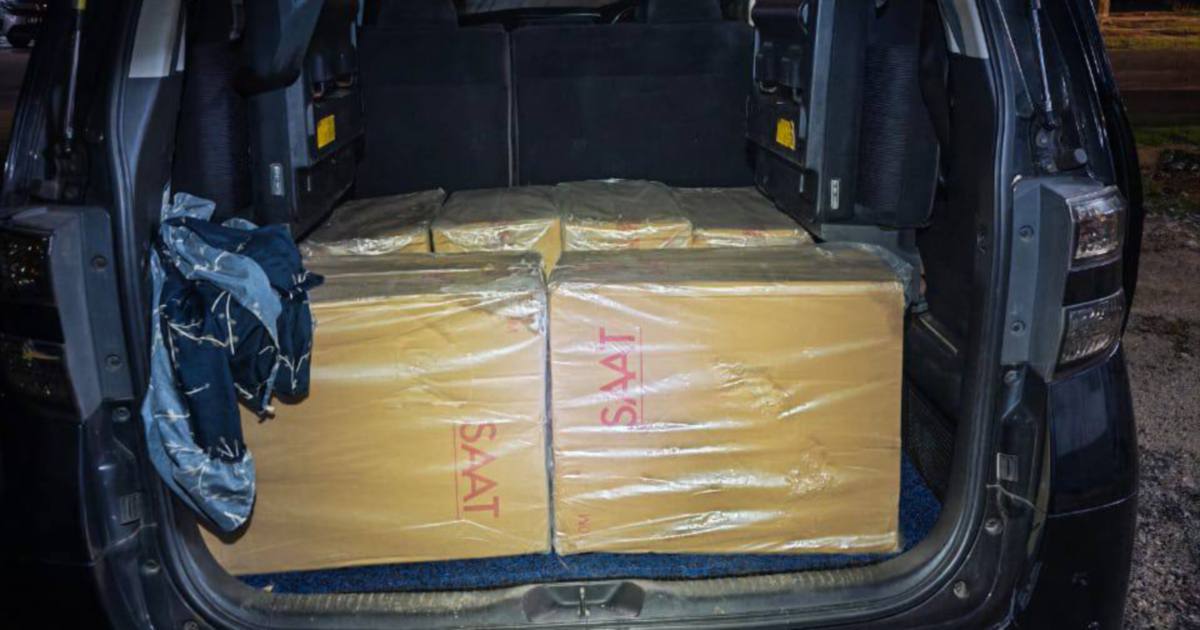
Early morning operations in Kota Baru have yielded a significant haul of contraband tobacco products as the General Operations Force intercepted a Toyota Vellfire carrying an estimated 60,000 cigarettes suspected of evading customs duty. The seizure, made near the Pasir Tumboh Bridge, represents a substantial blow against the smuggling networks that have long plagued the eastern corridor of Peninsular Malaysia. The intercepted shipment, valued at approximately RM112,200 in would-be tax revenue, underscores the persistent challenges faced by enforcement authorities in combating the illicit cigarette trade that continues to flourish across the border regions of Kelantan.
The arrested driver, a 37-year-old man, was taken into custody following the interception and is now assisting investigators with their inquiry into the origins and intended destination of the contraband consignment. The timing of the raid, conducted in the early hours of the morning, suggests a coordinated intelligence-led operation designed to intercept goods during periods when border surveillance and checkpoint activity typically diminish. Such timing reflects the evolving tactical approaches employed by enforcement agencies to outmanoeuvre smuggling operations that have become increasingly sophisticated in their logistics and distribution networks.
Kelantan's geographic position along Malaysia's northern border has long made it a critical theatre in the government's ongoing war against smuggling operations. The state serves as both a conduit for illegal goods transiting through the region and a significant market for contraband products themselves. The Pasir Tumboh Bridge, where this morning's interception occurred, represents a known transit point where authorities have previously detected illicit trafficking activities, making it a focal area for enforcement efforts.
The confiscated cigarettes highlight the economic dimensions of Malaysia's smuggling challenge, with the RM112,200 valuation reflecting not merely the retail worth of the products but the substantial revenue loss to the government through unpaid excise duties. These taxes represent critical funding streams for public health initiatives and general government operations. The proliferation of duty-unpaid cigarettes undermines legitimate commerce, creates unfair competitive disadvantages for licensed traders, and generates illicit profits that frequently funnel into broader criminal enterprises.
This seizure forms part of an increasingly visible enforcement drive against illicit tobacco products across Southeast Asia. Malaysia's excise regime on cigarettes remains among the region's higher tax structures, creating significant price differentials between legally imported products and smuggled alternatives. This price gap, while theoretically encouraging compliance and reducing smoking, paradoxically generates substantial criminal incentives for smuggling operations that can realize considerable profit margins by evading duty payments.
The General Operations Force's involvement in this operation reflects the multi-agency coordination that characterizes Malaysia's enforcement architecture. The GOF, typically focused on internal security matters, works in tandem with customs authorities, the Federal Police, and the Malaysian Anti-Corruption Commission to address the multifaceted challenges posed by organized smuggling syndicates. These networks frequently operate across state and national boundaries, requiring intelligence sharing and cross-border cooperation to effectively disrupt their operations.
For Malaysian readers and businesses, such seizures carry multiple implications. Legitimate retailers and importers face intensified pressure from black market competitors who avoid duty obligations entirely, enabling them to undercut official prices substantially. Consumers who purchase contraband cigarettes, while saving money in the short term, fund criminal organizations and deprive the government of revenues essential for healthcare provision and other public services. The public health dimension cannot be overlooked, as smuggled cigarettes often lack proper regulatory oversight and may contain harmful substances or counterfeit packaging.
The investigation into this particular case will likely extend beyond the immediate circumstances of the interception. Authorities typically pursue inquiries into the upstream suppliers responsible for sourcing the contraband, the distribution networks involved in moving the goods, and the retail outlets where such products ultimately reach consumers. Intelligence gathered from such operations contributes to broader understanding of smuggling routes, organizational structures, and the financial mechanisms through which these illicit enterprises operate.
Looking forward, this seizure represents one data point within a broader pattern of enforcement activity that reflects both the determination of Malaysian authorities to combat smuggling and the resilience of criminal networks that persist despite significant interdiction efforts. The continued success of such operations depends upon sustained intelligence gathering, coordinated multi-agency responses, and international cooperation with neighbouring countries, particularly Thailand, through which many smuggling networks operate. As long as substantial tax differentials exist between jurisdictions and demand for cheaper cigarettes persists, the economic incentives driving this criminal activity will likely ensure that smuggling remains a persistent challenge requiring ongoing vigilance and sophisticated enforcement responses.

