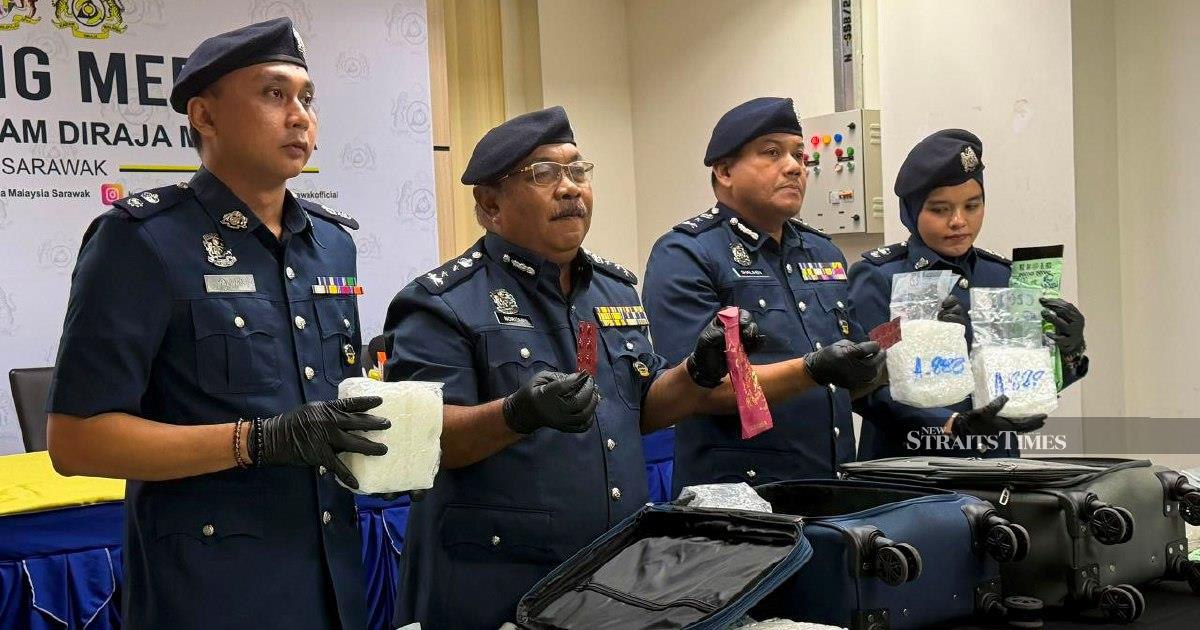
Law enforcement officials in Sarawak have successfully prevented what authorities describe as a major drug trafficking operation, with the Customs Department seizing controlled substances valued at RM1.32 million during routine screening procedures at Kuching International Airport on July 9. The intervention resulted in the detention of two individuals believed to be connected with the smuggling attempt, signalling heightened vigilance at the state's primary aviation gateway.
The discovery came during standard baggage inspection protocols that have been incrementally strengthened across Malaysian airports in recent years. Officers conducting the examination identified suspicious items concealed within luggage, prompting further investigation that revealed the presence of narcotics exceeding the threshold for a first-time supplier offence under Malaysia's Dangerous Drugs Act. The scale of the seizure underscores the ongoing challenges Malaysian authorities face in combating transnational drug trafficking networks that exploit regional transportation hubs.
Kuching International Airport, serving Sarawak's capital and broader Miri division, handles both domestic and international flights connecting Southeast Asia, China, and beyond. Its position as a major transport nexus makes it an attractive target for trafficking syndicates seeking to move contraband across regional borders. This interception represents one of several significant drug busts authorities have recorded at the facility over the past eighteen months, suggesting either increased smuggling attempts or more effective detection capabilities—likely a combination of both.
The two arrested individuals remain in Customs custody pending investigation and potential prosecution. Authorities have not yet disclosed their identities, nationalities, or suspected roles within the broader trafficking network, though such cases typically involve couriers recruited to transport drugs rather than organisational leaders. Understanding the supply chain behind attempted shipments proves crucial for law enforcement agencies attempting to dismantle trafficking operations at their source rather than merely intercepting individual consignments.
The Sarawak Customs Department's success reflects ongoing collaboration between federal and state-level authorities tasked with preventing drug movement across Malaysia's borders. Training enhancements, technological improvements in screening equipment, and information-sharing protocols have gradually upgraded detection capacity at major airports. However, smugglers continuously adapt their concealment methods, employing increasingly sophisticated hiding techniques within luggage, cargo, and traveller belongings to evade detection systems.
Regional drug trafficking represents a persistent security concern throughout Southeast Asia, with Malaysia occupying a critical position along trafficking routes linking major production zones in the Golden Triangle and Golden Crescent to consumer markets in East Asia. The narcotics trade generates enormous profits for criminal organisations, fuelling corruption and violence across the region. Every successful interdiction disrupts supply chains and removes product from criminal distribution networks, though law enforcement agencies acknowledge that even significant seizures represent only a fraction of total drug movements occurring across borders.
The July 9 operation comes amid broader Malaysian government efforts to enhance border security and counter-narcotics capacity. Investment in modern detection equipment, expanded officer training programmes, and increased deployment at critical chokepoints reflect recognition that drug trafficking poses substantial threats to public health, social stability, and economic productivity. Sarawak, as Malaysia's largest state by area with an extensive coastline and land borders with Indonesia and Brunei, faces particular vulnerabilities to smuggling activities.
Successful prosecutions following seizures depend significantly on evidence gathering and legal proceedings, with Malaysian courts applying stringent standards of proof. The two arrested individuals will likely face charges carrying substantial penalties, including lengthy imprisonment and potential substantial fines. Malaysia maintains some of Southeast Asia's strictest narcotics legislation, though implementation varies across jurisdictions and capacity constraints sometimes limit prosecution resources.
International cooperation has gradually improved enforcement effectiveness, with Malaysian agencies sharing intelligence with counterparts in neighbouring countries and beyond. However, fundamental challenges persist: porous borders, limited resources relative to trafficking volumes, and the enormous profit incentives driving criminal organisations ensure that drug smuggling will remain a significant law enforcement priority throughout the region for the foreseeable future. Individual successes like the Kuching interception provide tactical victories but underscore the scale of ongoing challenges.

