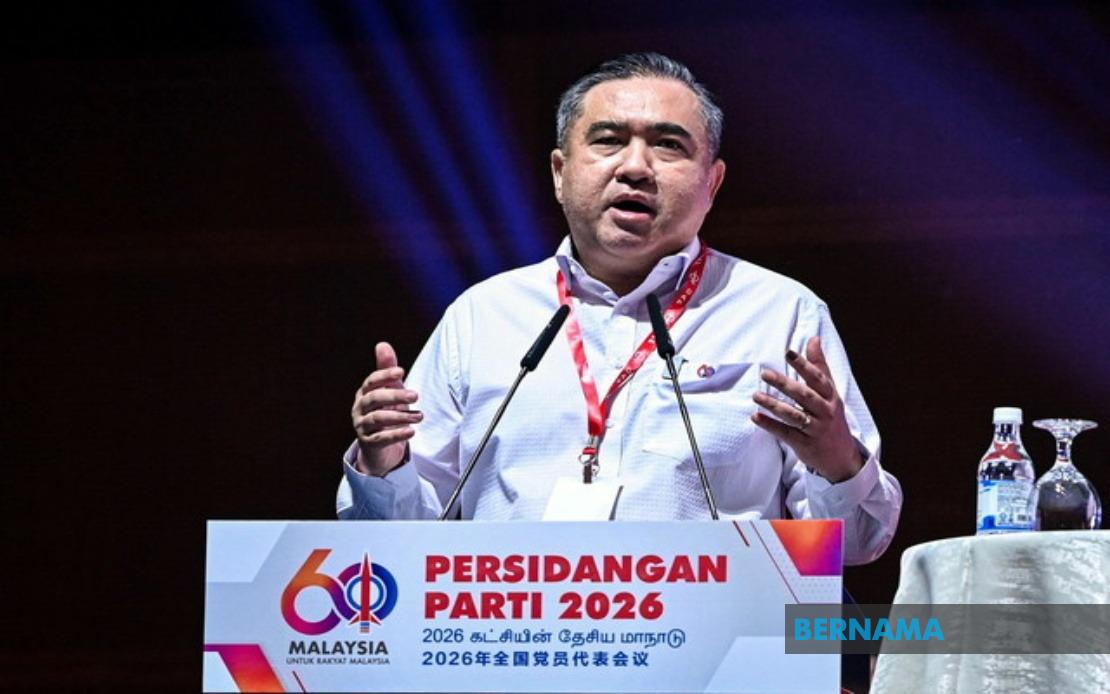
The Democratic Action Party has given its full backing to the government's plan to dismantle the Universities and University Colleges Act (AUKU) 1971, marking a significant step toward fulfilling reform pledges made during the party's recent national gathering in Putrajaya. Secretary-general Anthony Loke signalled the party's commitment to the initiative during his keynote address at the DAP 2026 National Conference at the Putrajaya International Convention Centre, reinforcing that the party views legislative change as central to its broader mission of transforming Malaysian governance. The backing reflects DAP's long-standing position on the statute, which the party has targeted through successive parliamentary sessions as incompatible with contemporary democratic expectations.
Prime Minister Datuk Seri Anwar Ibrahim unveiled the repeal proposal during his own address at the PKR 2026 National Congress, framing the move as responsive to sustained appeals from student bodies seeking broader freedom and expanded democratic participation within tertiary institutions. The Cabinet is scheduled to formally consider the proposal the following Wednesday, setting in motion what could become one of the government's most consequential educational policy shifts in recent memory. Anwar's framing emphasises that the decision stems directly from memoranda and representations filed by student leadership across the country, suggesting that campus activism has finally translated into executive receptiveness after years of limited progress.
The AUKU framework, enacted over five decades ago, has undergone seven modifications since its original implementation, reflecting gradual acknowledgement that the statute's original strictures no longer align with evolving campus expectations. A 2012 amendment granted students the right to engage in political party activity outside university grounds, a symbolic concession that nonetheless left core restrictions intact. More recent tweaks have chipped away at the law's more authoritarian provisions: the 2024 amendments transferred student disciplinary authority from vice-chancellors to newly established Student Disciplinary Committees, reducing the concentration of administrative power over misconduct cases. The same 2024 revisions permitted student councils and representative bodies to solicit funds and accept donations under specified regulatory conditions, granting financial autonomy previously denied to campus organisations.
Despite these incremental reforms, advocates have long contended that the legislation itself remains fundamentally constraining, embodying a regulatory philosophy rooted in Cold War-era anxieties about student mobilisation. Full repeal would signal a philosophical break with that paradigm, potentially catalysing broader institutional transformation across Malaysia's public university system. For many student activists, the proposed removal represents vindication of decades spent challenging restrictions that, they argue, have stifled campus discourse and artificially suppressed youth participation in national democratic life.
Loke's comments during the DAP conference indicated the party intends to leverage the momentum surrounding the AUKU repeal to advance a wider reform agenda. He specifically highlighted the pursuit of equitable access to higher education regardless of ethnic background, a longstanding DAP policy objective that intersects with broader social equality commitments. By linking the AUKU repeal to these complementary initiatives, DAP signals that it views the legislative change not as an isolated victory but as an opening chapter in more comprehensive restructuring of Malaysia's educational landscape. This framing suggests the party believes the political window for reform, currently open, should be capitalised upon to advance interconnected objectives that have long faced resistance from more conservative constituencies.
The party's positioning on this issue also reflects its strategic calculus within the broader coalition government. DAP operates as a junior partner within a coalition framework, meaning its ability to independently advance legislation is constrained. By publicly championing the AUKU repeal in response to the Prime Minister's announcement, the party both signals its activist credentials to its urban, educated voter base and validates Anwar's administration as genuinely committed to transformative change. This dynamic reveals how legislative initiatives can simultaneously serve multiple political functions—rewarding coalition partners, responding to grassroots pressure, and legitimating the government's reform narrative.
The prospective repeal carries implications that extend beyond university campuses into the broader question of what regulatory space the Malaysian state permits for youth activism and organised civil society. Throughout Southeast Asia, governments have navigated tension between maintaining public order and enabling free expression among younger generations. Malaysia's AUKU has long symbolised a particular regulatory approach—control-oriented rather than enabling—that other democratic societies have largely abandoned. The act's repeal would signal Malaysian policymakers' acceptance that student activism, even when critical of government, serves functions compatible with democratic health rather than representing an inherent threat requiring statutory constraint.
However, meaningful impact from the repeal will depend substantially on implementation and institutional culture change across Malaysia's public universities. Legislative change alone does not automatically transform organisational behaviour or attitudes held by university administrators accustomed to operating under restrictive frameworks. Many vice-chancellors and institutional leaders may require years to adjust to operating within a more permissive regulatory environment, and campus management practices may lag far behind statutory reform. Additionally, the repeal must be accompanied by clarifying legislation that defines boundaries of permissible conduct without re-creating the restrictions the original act imposed through alternative mechanisms.
Regional observers will likely monitor Malaysia's experience closely, as the country's approach to student freedoms influences how neighbouring governments approach similar questions. Should the repeal succeed in expanding academic debate and campus engagement without precipitating security concerns or institutional chaos, it may embolden policymakers elsewhere in Southeast Asia to revisit their own restrictive university regulations. Conversely, should problems emerge, governments may cite the Malaysian experience as cautionary evidence against liberalising campus governance frameworks.
For DAP specifically, the convergence of party advocacy with government action on this issue represents a rare alignment where sustained pressure from civil society and party activism has translated into concrete policy shift. The party's ability to claim credit for advancing a long-championed reform could reinforce its positioning as a serious advocate for institutional change rather than merely an electoral competitor. This dynamic underscores how coalition government, despite limiting individual partners' independent legislative capacity, can occasionally accelerate reform by concentrating pressure from multiple actors—student movements, opposition parties, and responsive policymakers—around shared objectives that have achieved sufficient political salience to overcome resistance from institutional incumbents resistant to change.

