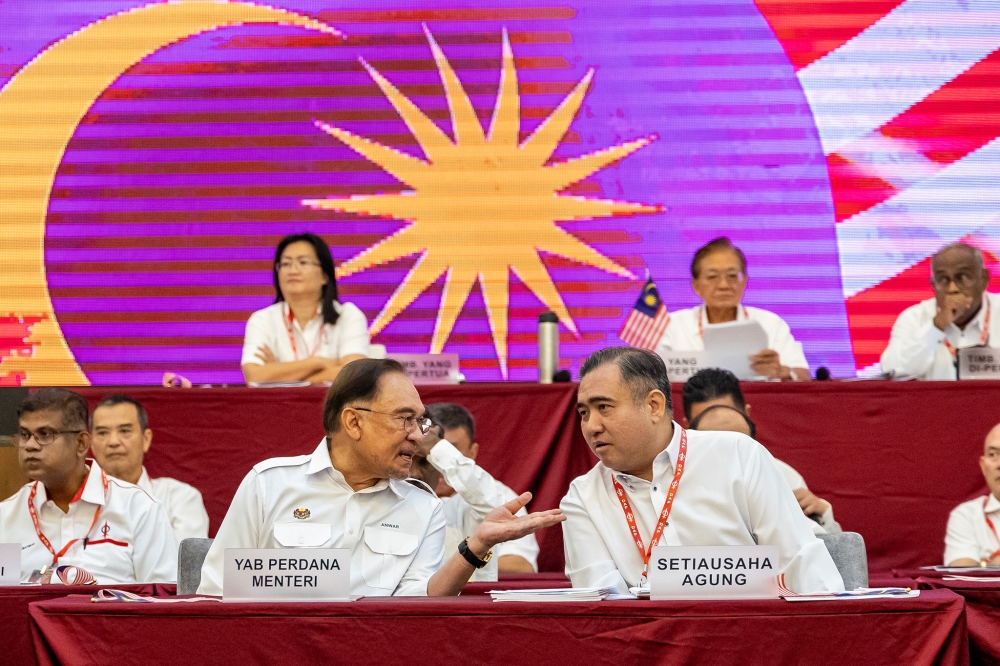
DAP shows no signs of abandoning Prime Minister Datuk Seri Anwar Ibrahim's Pakatan Harapan coalition despite growing frustration within party ranks over the speed of policy reforms. Speaking in Kuala Lumpur on July 17, party secretary-general Anthony Loke directly addressed recurring rumours of an exit strategy, stating categorically that such a departure remains off the table. His remarks underline the political reality facing Malaysia's ruling coalition as it navigates the competing demands of multiple parties with differing reform agendas.
Loke's intervention carries particular weight given DAP's role as Pakatan's dominant Chinese-based party and a consistent voice for institutional change. The party commands significant influence within the coalition's legislative numbers and has long championed progressive policies on judicial reform, transparency, and civil liberties. That a senior leader felt compelled to publicly reaffirm coalition loyalty suggests underlying tensions have reached a point where speculation about fractures has become impossible to ignore.
The core issue centres on the tension between political idealism and governing pragmatism. When Pakatan assumed office in 2022, following the November 2021 elections, the coalition carried expectations for sweeping institutional reform after years in opposition. Yet the mechanics of coalition government—with the need to build consensus across PH parties, regional allies, and independents whose support proves essential for parliamentary majorities—inevitably create friction. Loke's acknowledgement that "slower reforms are the price of governing" amounts to a frank admission that the coalition cannot deliver change at the pace party activists had envisioned.
This dynamic reflects a broader challenge confronting Malaysian politics. The country's fractured parliamentary landscape, where no single grouping commands an overwhelming majority, necessitates coalition building and compromise. What appeared as a clear reform mandate in 2022 has given way to the grinding realities of managing a diverse coalition with competing interests. For DAP members accustomed to opposition rhetoric about transformative change, the experience of negotiating with coalition partners on economic policy, religious affairs, and constitutional matters has proved sobering.
The potential departure of DAP would fundamentally reshape Malaysia's political configuration. The party represents significant urban support, particularly among Chinese and Indian voters who have traditionally backed opposition coalitions. Its departure would likely collapse the current government and force new elections, a scenario that Loke's statement suggests party leadership considers neither desirable nor imminent. Moreover, fractionalising the coalition at this stage would undermine the institutional changes already implemented and jeopardise ongoing reform initiatives.
Yet Loke's public remarks also signal to the party base that leadership acknowledges their grievances. By explicitly stating that compromise forms part of coalition governance, DAP signals realism rather than surrender. The party faces the delicate task of maintaining internal discipline while managing expectations about what a multi-party government can accomplish. This balance becomes increasingly important as public attention focuses on whether Pakatan can deliver tangible improvements in services, institutional integrity, and economic opportunity before the next general election cycle.
The background to current tensions includes several contentious issues. Education policy, particularly disputes over vernacular schooling and examination systems, has generated friction between Pakatan parties representing different communities. Economic policy debates have pitted social-spending advocates against those prioritising fiscal stability. Constitutional questions, especially those touching religious authority and federalism, have proven particularly fraught given differing perspectives among coalition members representing different regions and demographics.
Regional analysts view Malaysia's coalition stability as significant for broader Southeast Asian politics. The success or failure of Pakatan's experiment in managing a pluralistic coalition government carries implications for how other regional democracies navigate similar challenges. If the coalition collapses or fractures, it may signal broader instability in an important regional economy. Conversely, demonstrating that consensus-based governance can deliver sustainable development and policy progress would strengthen democratic confidence across Southeast Asia.
Loke's statement must be read alongside parallel developments within the coalition. Other coalition partners, including PKR and Amanah, also contend with internal pressures from activists seeking faster transformation. The stability Loke advocates requires all major players to exercise similar restraint and commitment to the governing project. Should consensus fray significantly, even categorical public statements carry limited weight.
Moving forward, DAP faces decisions about how it frames slower progress to its supporters. Rather than viewing measured reform as failure, party leadership appears intent on establishing that incremental institutional change, sustained over time, produces more durable results than radical restructuring. This philosophical repositioning represents a significant evolution for a party that built opposition credibility partly on demands for fundamental systemic change. Whether this reframing satisfies party activists who joined DAP specifically to pursue transformative politics remains an open question.
The July 17 statement ultimately reflects the inherent tensions within consensus-based coalition government, particularly in a democracy as regionally complex as Malaysia's. Loke's affirmation of DAP's commitment represents a stabilising move, but it also codifies an implicit acknowledgement that revolutionary change lies beyond the coalition's capacity. For Malaysian readers and regional observers, the statement suggests that while Pakatan governance will continue, the pace of institutional transformation will remain frustratingly gradual for those seeking rapid, comprehensive reform.

