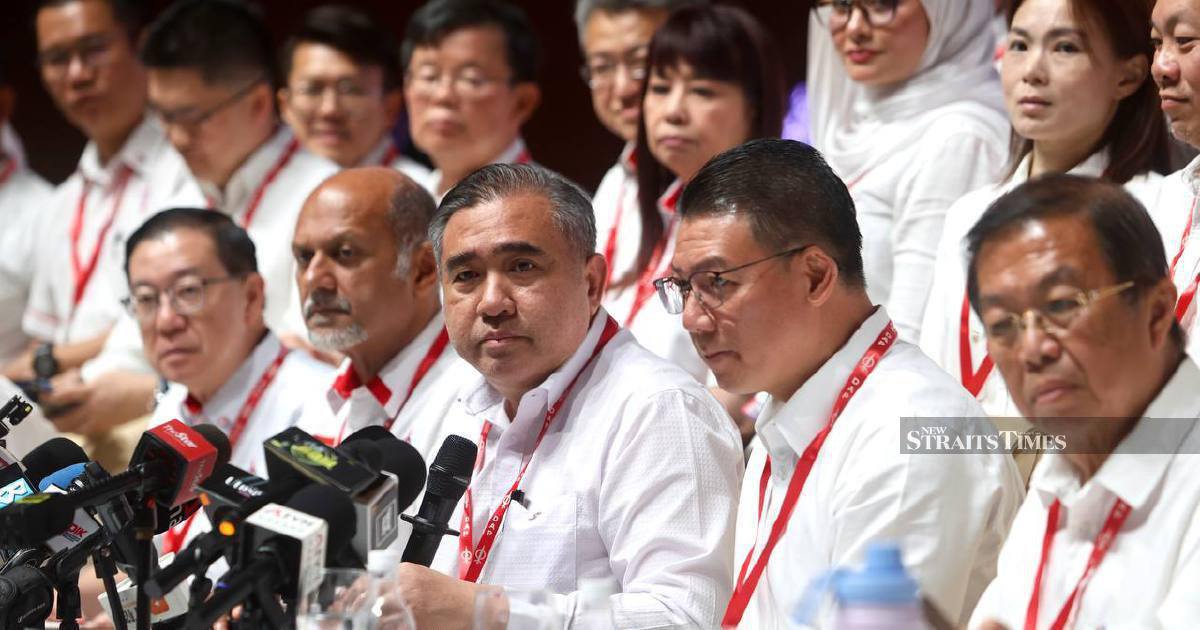
The Democratic Action Party has signalled its determination to preserve its partnership with Umno within the broader government coalition, even as internal friction mounts over the legal outcome affecting Barisan Nasional chairman Datuk Seri Ahmad Zahid Hamidi. This commitment to continued collaboration underscores the delicate balance required to maintain Malaysia's current political arrangement, a coalition that has been crucial to government stability since 2023.
The point of contention centres on the recent discharge not amounting to an acquittal—a legal ruling that has sparked considerable debate among coalition members. Unlike a full acquittal, this decision leaves the door open for fresh charges in the future, a distinction that has evidently caused discomfort within some sections of DAP's membership and leadership. The ruling involved serious corruption allegations previously directed at Zahid, whose position as Umno president and Barisan Nasional chairman makes any legal developments affecting him inherently significant for coalition dynamics.
For DAP, a party that has historically built its political identity around anti-corruption messaging and good governance principles, navigating this particular episode presents a genuine political challenge. The party must simultaneously maintain its principled stance on accountability while acknowledging the practical realities of governing within a multi-party coalition that includes traditional rivals. This tension reflects broader contradictions that have defined Malaysia's political realignment since the 2023 general election.
The coalition arrangement itself has been controversial since its inception. Many DAP supporters and civil society observers questioned whether the party's decision to join forces with Umno—an organisation long positioned as DAP's primary antagonist—represented a necessary compromise or a fundamental abandonment of core values. The Zahid ruling has reignited these doubts, particularly among activists and younger party members who view it as exemplifying the moral compromises inherent in the current political settlement.
Umno, conversely, has legitimate reasons for welcoming DAP's continued participation. Without the Chinese-majority party's representation and electoral machinery, particularly in urban and semi-urban constituencies, the government would face significant parliamentary arithmetic challenges. DAP's presence in cabinet and legislative processes has provided the administration with broader legitimacy and more diverse political representation than would be possible under Umno-dominated alternatives.
The DNAA ruling itself merits closer examination for its implications. This legal mechanism occupies an ambiguous space in Malaysian jurisprudence, neither fully exonerating nor definitively convicting. For observers concerned with the rule of law and the judicial system's independence, such outcomes raise questions about consistency and the clarity of legal conclusions. The controversy reflects wider anxieties about whether Malaysia's institutions are functioning impartially or whether political considerations influence legal proceedings—concerns that transcend the specific case.
From a Southeast Asian perspective, Malaysia's coalition arrangement offers important lessons about managing political diversity and preventing authoritarian consolidation. Countries throughout the region have grappled with similar questions about whether ideological opponents can credibly govern together and whether such arrangements strengthen or undermine democratic institutions. Malaysia's experiment remains closely watched as a test case.
Loke's public affirmation of continued cooperation appears calibrated to reassure both coalition partners and DAP's own membership. By reiterating the party's commitment to working relationships while acknowledging that tensions exist, the statement aims to project stability without appearing indifferent to concerns raised by party members critical of the arrangement. This rhetorical balancing act reflects the complex political positioning required of coalition partners in Malaysia's current configuration.
The sustainability of this coalition ultimately depends on demonstrating tangible governance benefits that justify the compromises involved. For DAP members who accepted partnership with Umno on the premise that working together would produce better policy outcomes, deliver development benefits, and strengthen democratic institutions, continued legal controversies affecting senior coalition partners test that justification severely. The party must show that membership in government has enabled it to advance its agenda on urban development, Chinese education, workers' rights, and anti-corruption measures—outcomes that would offset the political costs of association with controversial figures.
Looking forward, both parties face strategic calculations about the coalition's longevity. DAP must balance principled opposition to corruption with pragmatic necessities of maintaining government stability. Umno, meanwhile, must manage internal pressures from those who resent DAP's presence and leverage within the administration. Neither party has viable alternatives to the current arrangement that would produce more advantageous outcomes, which suggests the coalition, despite its manifest tensions, will likely persist through the current political cycle.
The incident also highlights Malaysia's broader democratic maturation. Rather than this dispute degenerating into confrontation or political crisis, coalition parties have managed tensions through communication and reaffirmation of shared interests. This approach, while sometimes leaving substantive issues unresolved, has enabled stable governance during a period when Malaysian democracy has required careful navigation and compromise among competing factions and principles.

