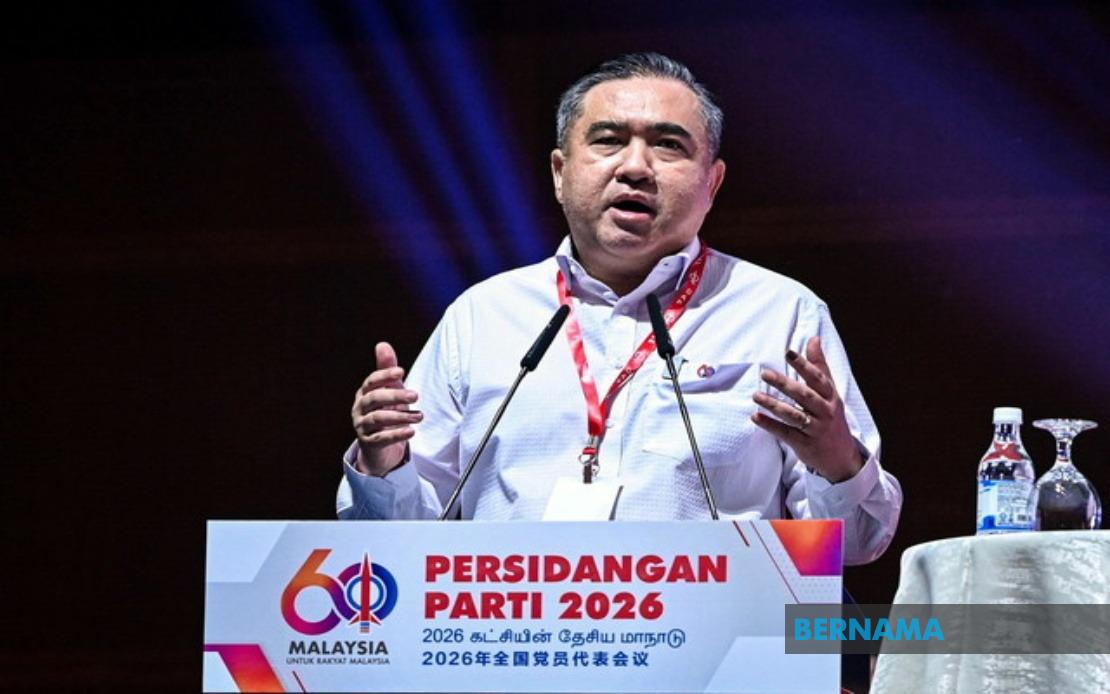
The Democratic Action Party has formally committed to staying within the federal government coalition until the 15th Parliament concludes its term, following a decisive delegate vote at the party's 2026 conference in Putrajaya. The decision represents a significant affirmation of the party's continued alignment with the current administration and signals stability in the coalition's composition through the remainder of the parliamentary cycle. Secretary-general Anthony Loke tabled the motion at the party's conference, framing the decision as a commitment to the unity government's agenda and the parties' shared legislative programme.
The voting process itself reflected an emphasis on democratic accountability within DAP's structures. Rather than relying on conventional voice votes or show-of-hands methods, conference delegates engaged in a secret ballot to determine the party's direction, a procedural choice designed to safeguard the integrity and transparency of the decision-making process. This methodology ensured that individual delegates could express their preferences without external pressure or influence, lending considerable weight to the mandate ultimately granted to party leadership.
The numerical results underscored the breadth of support for remaining in government. Of 2,106 ballot papers distributed, 1,857 delegates voted to continue participation in the coalition while 242 supported withdrawal, with seven spoilt ballots recorded. Conference Speaker Cha Kee Chin announced that the 1,857 votes in favour represented 88.2 per cent of those present and voting, indicating substantial consensus among the party rank-and-file. Approximately 4,264 delegates from 1,704 branches nationwide were eligible to participate, demonstrating the conference's comprehensive representative character across DAP's organisational structure.
DAP's decision to remain in the coalition carries material significance given the party's substantial representation in the Cabinet. Transport Minister Loke holds the most senior position, while fellow ministers Steven Sim oversee Entrepreneur and Cooperatives Development, Gobind Singh Deo manages Digital portfolio responsibilities, Nga Kor Ming administers Housing and Local Government, and Hannah Yeoh holds the Prime Minister's Department Federal Territories portfolio. This distribution of portfolios reflects DAP's role as a key component within the broader coalition structure.
Beyond Cabinet-level positions, DAP members occupy seven deputy ministerial roles that extend the party's influence across multiple government functions. Teo Nie Ching represents the party in Communications, Datuk Chan Foong Hin in Agriculture and Food Security, Wong Kah Woh in Education, and Liew Chin Tong in Finance. Additional deputy ministers M. Kulasegaran, Lim Hui Ying, and Mordi Bimol hold portfolios spanning the Prime Minister's Department law and institutional reform, women and family community development, and youth and sports respectively. These appointments position DAP members throughout the machinery of government, enabling the party to shape policy implementation and legislative priorities.
The decision carries implications for Malaysian political stability through 2028, when the current parliamentary term concludes. Coalition governments depend on sustained cooperation among constituent parties, and DAP's formal commitment to the arrangement provides predictability regarding the administration's parliamentary composition and legislative capacity. This continuity may facilitate long-term policy planning and reduce uncertainty surrounding government survival through the remainder of the term.
For Southeast Asian observers, DAP's reaffirmation of its coalition participation reflects broader patterns in regional politics where diverse parties negotiate power-sharing arrangements to govern effectively. Malaysia's unity government model, built on multiple parties with distinct ideological traditions and electoral bases, requires continuous negotiation and compromise. DAP's decision demonstrates that parties can maintain such arrangements while preserving internal democracy and allowing grassroots input on strategic questions.
The substantial opposition vote—while minority—warrants attention as it reflects legitimate debate within DAP regarding coalition participation. The 242 delegates voting for withdrawal represented meaningful party sentiment, likely reflecting concerns about compromises inherent in multi-party governance or philosophical disagreements with certain coalition partners or policies. Party leadership's ability to command 88.2 per cent support suggests effective communication of the rationale for continued participation, though the dissenting votes indicate ongoing internal discussion about coalition strategy.
DAP's position within the coalition also reflects the party's strategic calculation regarding its electoral interests and policy influence. Remaining in government provides platforms for advancing the party's legislative agenda, securing resources for constituencies represented by DAP members, and demonstrating governance competence to voters. The party can point to ministerial achievements and portfolio responsibilities as evidence of its capacity to serve Malaysian constituents effectively, a particularly important consideration given DAP's traditional urban support base and aspirations toward broader political influence.
Looking forward, the decision establishes a baseline expectation that DAP remains committed to the coalition framework through the current parliament, barring significant developments that might alter the political landscape. This commitment provides coalition partners and the government with confidence in DAP's continued cooperation on key votes and legislative priorities. However, the decision does not preclude DAP from negotiating improved terms, additional portfolio responsibilities, or policy concessions as circumstances evolve.
The timing of this conference decision, occurring mid-term in the parliamentary cycle, reflects prudent political management by DAP leadership. By securing explicit delegate mandate for continued coalition participation, the party provides clarity to coalition partners and voters alike regarding its intentions. This proactive positioning allows DAP to frame its coalition strategy as reflecting grassroots party sentiment rather than elite decision-making, thereby legitimising leadership choices and potentially pre-empting future internal challenges to coalition participation.
For Malaysian voters and political observers, the vote confirms that DAP remains a stabilising force within the coalition government, at least through the current parliamentary term. The party's large ministerial representation and deputy ministerial positions ensure continued DAP influence over government functions spanning critical areas including transport, digital infrastructure, housing, and finance. The decision thus shapes expectations regarding policy direction and coalition behaviour through the remainder of this parliament.

