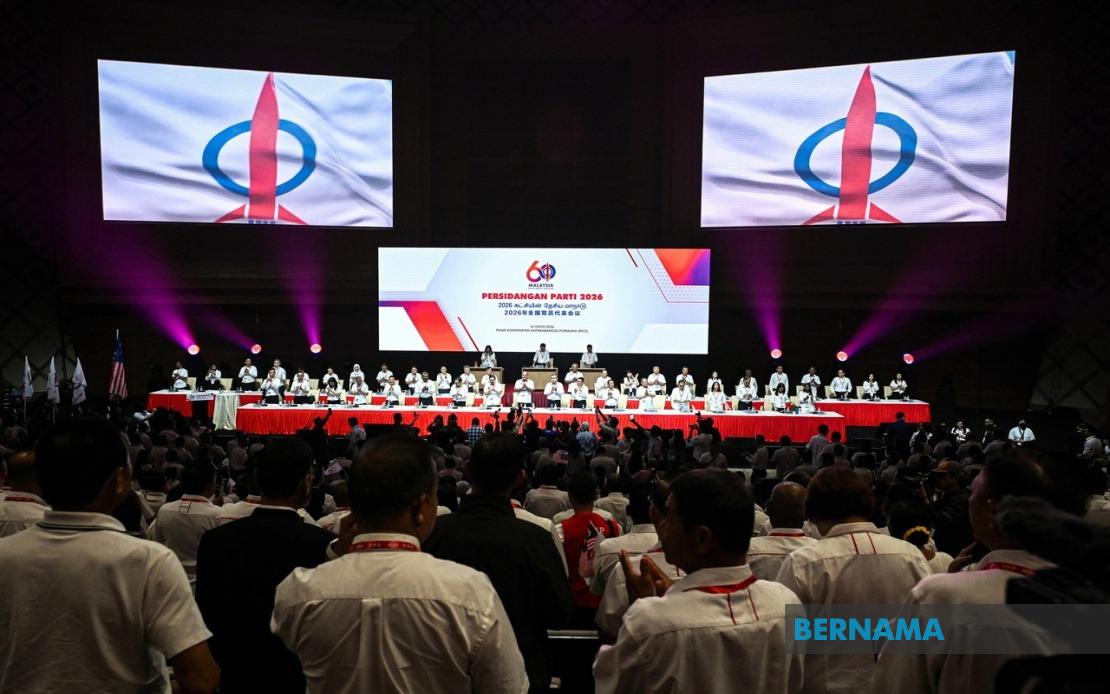
The Democratic Action Party's state delegates overwhelmingly endorsed continued participation in Malaysia's Unity Government coalition at the party's 2026 National Conference in Putrajaya on August 16, with fourteen representatives from across the country articulating their support during formal debate proceedings. The conference, held at Putrajaya International Convention Centre, represents a significant endorsement of DAP's current political positioning under Prime Minister Datuk Seri Anwar Ibrahim's administration, as the party grapples with ongoing questions about its role within the federal governing structure and its electoral viability heading toward the next general election.
The delegates articulated a diverse range of justifications for maintaining DAP's alignment with the coalition, collectively emphasising that withdrawal would undermine the party's ability to execute the institutional and economic reforms it pledged to voters during campaigning. Core arguments centred on the necessity of translating the electoral mandate into tangible policy outcomes, with speakers highlighting anti-corruption enforcement, cost-of-living initiatives, institutional strengthening, and protections for Malaysia's multi-racial society as priorities that required continued governmental influence to advance meaningfully. Beyond policy considerations, delegates expressed concern that departing the coalition would precipitate an early general election, creating unnecessary political turbulence and depriving the Unity Government of sufficient time to demonstrate competence and deliver measurable improvements in citizens' daily lives.
Jason Ng Thien Yong, representing Perak, exemplified the pragmatic tone adopted by conference delegates, acknowledging that DAP had faced electoral setbacks in several state contests whilst insisting that strategic patience within the coalition represented the more mature political position. His framing of the issue centred on the idea that remaining within government provided DAP with a platform to implement substantive changes from within the administrative apparatus rather than returning to opposition benches, where the party would forfeit direct influence over policy formulation and implementation. This argument carries particular resonance given DAP's historical role as an opposition party and its current positioning as a junior partner in a coalition dominated by other political entities, making the question of optimal leverage a substantive strategic concern.
Leong Ngah Ngah, a DAP veteran from Pahang, elevated the discussion by invoking the track record of the Anwar Ibrahim administration over its first three years in office, contending that demonstrable governmental successes across multiple policy domains justified continued coalition participation. The emphasis on maturity in decision-making appears calibrated to counter potential criticism from party grassroots elements who may view the coalition partnership as compromising DAP's ideological independence or diluting its reformist credentials. By characterising support for the coalition as the product of measured judgment rather than capitulation, delegates sought to reframe the political calculation as a sophisticated cost-benefit analysis rather than abandonment of principle.
Selangor delegate Muhammad Shakir Amerr Mohideen introduced an electoral recovery theme, arguing that DAP's presence within government and its demonstrated commitment to competent administration would rehabilitate the party's electoral standing in constituencies where it had previously lost ground. This framing suggests that DAP strategists view continued governmental participation as instrumental to rebuilding voter confidence, particularly in regions where the party's performance has deteriorated in recent electoral cycles. The implicit argument holds that opposition status would further diminish DAP's electoral prospects, whereas active governance provides tangible evidence of capability that voters can evaluate directly.
Melaka delegate Jason Tze-Xi Nathan articulated a communication advantage argument, suggesting that maintaining governmental participation would facilitate more credible public explanations for party decisions than would withdrawal, which he implied would require complex justifications and potentially expose internal divisions. This concern with political messaging reflects the broader reality that opposition parties in Malaysia frequently struggle to shape narratives effectively, whilst governing partners retain institutional platforms and media access that enhance their capacity to communicate directly with voters.
Sabah delegate Yap Wui Lip introduced a federalism dimension to the discussion, emphasising that DAP's continued governmental presence enabled advocacy for Malaysia Agreement 1963 (MA63) provisions and broader Sabah-specific interests within high-level policymaking forums. This intervention underscores how coalition participation serves multiple constituencies within DAP, accommodating both peninsula-focused delegates and representatives from East Malaysian states with distinct constitutional arrangements and policy priorities.
The conference assembled 4,264 delegates representing 1,704 eligible branches for the secret ballot determination of whether DAP would continue within the Unity Government through the conclusion of the sixteenth parliamentary term or withdraw from the coalition. This delegate count demonstrates the substantial organisational scope of DAP's internal democratic processes and the genuine deliberative character of the conference proceedings, where policy positions emerge through representative debate rather than executive fiat. The formal separation between the debate phase and the secret ballot phase reflects institutional commitments to democratic participation within party structures.
Secretary-general Anthony Loke's closing remarks articulated an important qualification to prospective approval of continued coalition participation, emphasising that party support for remaining in government would not constitute a blank authorisation for the Central Supreme Committee or the Prime Minister to pursue policies without constraint. Rather, Loke framed continuation as conditional upon sustained commitment to the reform and renewal agenda that justified the original decision to join the coalition, implicitly warning both internal party critics and potential coalition partners that DAP would maintain its capacity for independent advocacy and withdrawal if governmental partners failed to advance promised institutional changes.
The timing of this conference, coinciding with DAP's sixtieth anniversary, invested the proceedings with historical significance beyond immediate political calculations. As one of the three principal components of Pakatan Harapan alongside PKR and Amanah, DAP's strategic positioning within the coalition structure carries implications for the broader configuration of Malaysian electoral politics and the viability of the centre-left reformist coalition that has dominated national politics since the 2023 general election. The delegate consensus for continued participation signals that DAP's leadership maintains grassroots backing for its coalition strategy, though the substantial deliberative process itself suggests underlying tensions requiring active management to maintain party cohesion.
For Malaysian observers and regional analysts monitoring coalition stability and electoral dynamics, the conference outcomes underscore the continuing salience of institutional reform and anti-corruption commitments as central to governing coalition legitimacy, at least among DAP's activist membership. The emphasis on delivering cost-of-living relief, multiracial rights protection, and constitutional reform objectives reveals the substantive policy domains where coalition partners have organised their political messaging and where grassroots party members expect measurable progress. The apparent strength of delegate consensus for continued participation suggests that coalition partners can maintain their structural arrangement through the current parliamentary term, barring unforeseen political crises or catastrophic policy failures that might precipitate defections or internal party revolts.

