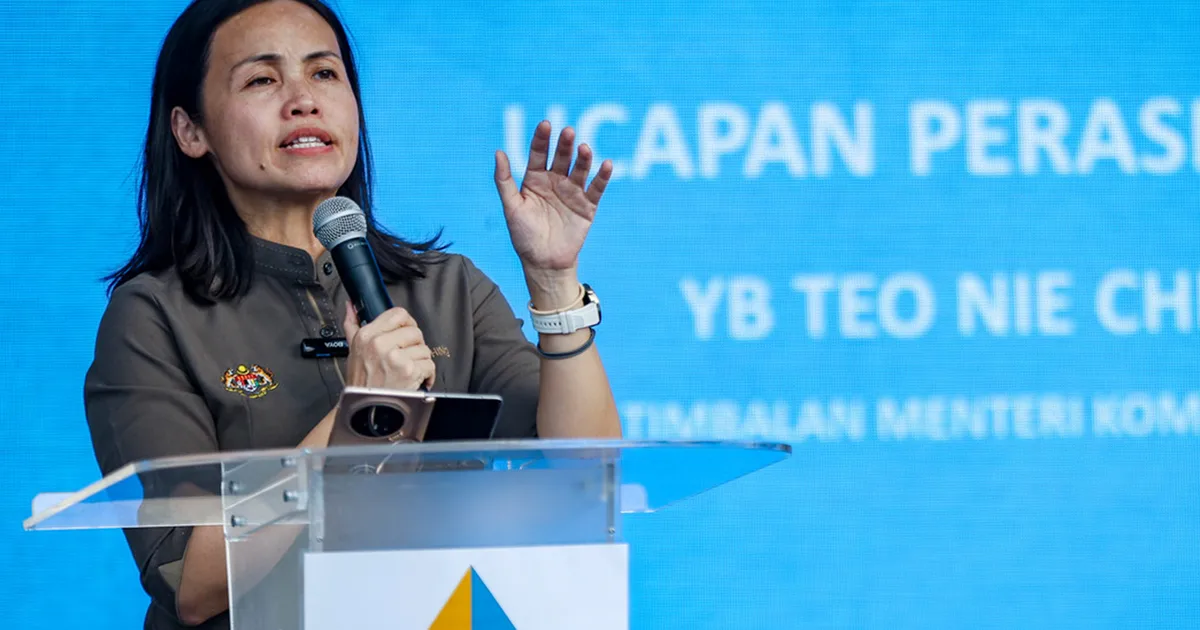
The DAP leader serving as deputy minister has raised alarm over a pattern of hostile activity unfolding across social media platforms, alleging that multiple accounts were created with the express purpose of attacking her reputation through false and inflammatory allegations. The targeted claims, according to her statement, attempt to connect her to gang-related criminality—charges she firmly refutes as entirely baseless fabrications designed to damage her political standing and public image.
This incident reflects a troubling trend in Malaysian politics where digital platforms have become battlegrounds for character assassination and the spread of misinformation. The systematic nature of the attack—involving freshly minted accounts—suggests a coordinated effort rather than organic criticism, raising questions about who orchestrated the campaign and what resources were deployed to amplify these unfounded allegations across social networks.
The allegations targeting the deputy minister reportedly included references to organised crime and gang activities, assertions that carry particular gravity in Malaysia's political discourse. Such claims, especially when circulated through algorithmic amplification on platforms like Facebook, TikTok, and X, can rapidly distort public perception and undermine political credibility regardless of their factual basis. The deliberate falsity of these statements makes the campaign particularly insidious, as it weaponises unverified allegations to manufacture reputational damage.
From a political perspective, the timing and coordination of such attacks often merit scrutiny. Whether this represents retaliation against DAP for policy positions, an effort to embarrass the ruling coalition, or internal factional warfare, the underlying motive remains consequential for understanding Malaysia's political dynamics. The DAP has historically faced intense opposition from rival parties, and digital-age smear campaigns have become commonplace across the nation's fractious political landscape.
The creation of brand-new accounts specifically for launching these attacks demonstrates considerable premeditation. Rather than representing the spontaneous expression of citizen concern, the deliberate establishment of anonymous platforms suggests sophisticated campaign infrastructure. This points to potential involvement by political operatives, hired digital marketing firms, or coordinated networks of activists aligned with specific interests hostile to the DAP leader's career advancement and influence.
For Southeast Asian observers, this pattern parallels concerning developments in the region's broader information ecosystem. Countries including the Philippines, Thailand, and Indonesia have witnessed similar campaigns where newly created accounts and bot networks amplify divisive content and fabricated allegations against politicians, journalists, and activists. Malaysia increasingly sits within this regional context of weaponised social media, where digital literacy and platform accountability remain inadequate to stem misinformation flows.
The deputy minister's willingness to publicly address the allegations represents a strategic choice to confront rather than ignore the smear campaign. By drawing attention to the coordinated nature of the attack and the falsity of the gang-related allegations, she aims to inoculate her reputation and alert supporters to the tactics being deployed against her. However, such counter-narratives can also inadvertently amplify the original false claims to audiences who might otherwise have remained unaware.
This episode underscores the vulnerability of Malaysian political figures to coordinated online harassment regardless of party affiliation. While the DAP leader's position as a high-profile female politician and member of an opposition-aligned coalition government may make her a particular target, similar attacks have been mounted against colleagues across party lines. The gendered dimensions of online political abuse in Malaysia remain under-examined, though evidence suggests that female politicians face disproportionate vitriol and sexualised attacks.
The broader implications for Malaysia's political health extend beyond individual reputation management. When social media becomes a primary vector for unverified allegations and character attacks, democratic deliberation suffers. Voters increasingly struggle to distinguish legitimate policy criticism from malicious fabrication, eroding faith in both political institutions and information sources. This environment benefits those with resources to dominate digital spaces rather than those with superior ideas or governance records.
Platform responses to such campaigns remain inconsistent and frequently inadequate. While Facebook, TikTok, and X possess technical capabilities to identify and remove coordinated inauthentic behaviour, their enforcement varies dramatically across markets and their transparency regarding Malaysian political content moderation remains limited. Calls for stronger regulation of social media in Malaysia have intensified, though proposals remain contested between those prioritising free expression and those emphasising consumer protection from coordinated disinformation.
Moving forward, the deputy minister's experience illustrates the necessity for Malaysian political actors to develop robust digital defence strategies. This includes documentation of coordinated attack patterns, engagement with platform trust and safety teams, and proactive communication with trusted media outlets and supporters. The alternative—remaining silent against such campaigns—allows false narratives to calcify and spread unchecked through network effects.
For the broader Malaysian electorate, this incident serves as a reminder to approach dramatic allegations circulating on social media with appropriate scepticism, particularly when originating from newly established accounts with limited history. Critical evaluation of source credibility, corroboration across multiple reputable outlets, and awareness of coordinated campaign tactics represent essential defences against digital-age political manipulation.

