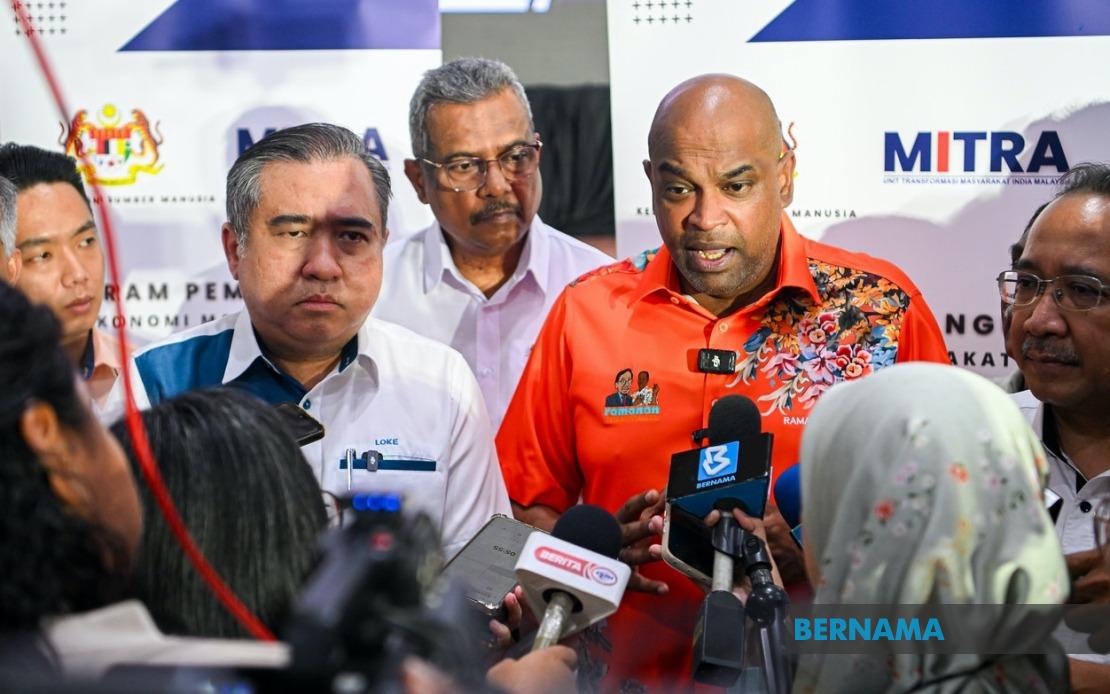
Transport Minister Anthony Loke, speaking in Seremban on July 7, firmly rejected allegations that the Democratic Action Party exerts undue control over the federal government and Negeri Sembilan state administration. The DAP secretary-general characterized such claims as a worn-out political tactic designed to undermine confidence in Pakatan Harapan, rather than substantive critiques of the coalition's governance record.
Loke emphasized that decision-making across both administrative levels follows an established consultative process involving all component parties in the ruling coalition. Before Prime Minister Datuk Seri Anwar Ibrahim finalizes any major policy direction, parties including DAP, UMNO, and PKR are afforded opportunities to present their respective positions and interests. This framework, Loke suggested, ensures that governmental choices reflect broader consensus rather than the preferences of any single organization.
The Transport Minister's remarks came in response to persistent opposition claims that Pakatan Harapan operates under DAP's strategic direction. Loke questioned the continued reliance on this particular line of criticism, implying that political opponents lack more substantive grounds for contesting the coalition's stewardship. He stressed that within this multiparty arrangement, constructive disagreement and the articulation of viewpoints constitute normal practice rather than evidence of dominance by one faction.
While acknowledging that each coalition member contributes its perspective to policy deliberations, Loke clarified that ultimate accountability rests with Anwar Ibrahim. The Prime Minister weighs inputs from all parties before making binding decisions, a structure designed to balance representation against the need for unified executive action. This model, he argued, prevents any single party from unilaterally imposing its agenda while maintaining collegial partnership among ideologically and ethnically diverse organizations.
Loke extended this reasoning to explain governance arrangements in Negeri Sembilan, where Menteri Besar Datuk Seri Aminuddin Harun similarly consults coalition partners before advancing state-level initiatives. This parallel structure underscores the coalition's commitment to inclusive decision-making across federal and state tiers, creating consistency in how power is exercised within Pakatan Harapan administrations.
Beyond refuting claims of DAP dominance, Loke addressed a separate controversy concerning the status of Malays in Negeri Sembilan. Opposition voices have periodically warned that the community faces marginalization under Pakatan Harapan stewardship in the state. Loke dismissed such rhetoric as recycled fearmongering, pointing to concrete indicators of Malay representation and protection within the current dispensation.
The Menteri Besar position itself, held by a Malay, represents structural safeguarding of community interests at the highest state administrative level, Loke contended. This appointment demonstrates that Pakatan Harapan has not displaced Malay leadership in Negeri Sembilan despite opposition narratives suggesting systematic exclusion. Beyond symbolic representation, he argued, state policies and development programmes continue protecting and advancing Malay welfare across economic, social, and cultural dimensions.
Since Pakatan Harapan assumed control of Negeri Sembilan's state government in 2018, Loke maintained that evidence demonstrates ongoing advancement of policies benefiting all communities proportionally. Rather than representing a reversal of historical commitments to the Malay-Muslim majority, the coalition's stewardship maintains continuity with longstanding protective frameworks. Opposition claims that Malays face existential threats under this arrangement, he suggested, represent political opportunism divorced from measurable reality.
Loke's remarks reflect broader coalition defensive positioning against sustained opposition criticism that has persistently questioned both DAP's internal influence and the government's treatment of majority-group interests. These criticisms resonate in Malay-Muslim majority constituencies, where historical sensitivities regarding communal status and constitutional protections remain politically salient. By framing such accusations as tired narratives lacking empirical foundation, Loke seeks to reposition Pakatan Harapan as a competent, representative administration rather than an instrument of minority dominance or majority subordination.
The Transport Minister's emphasis on collective decision-making protocols and established consultation mechanisms suggests the coalition recognizes the political necessity of demonstrating balanced power-sharing to skeptical constituencies. For Malaysian readers accustomed to coalition governance frameworks, Loke's exposition illustrates how multiparty administrations manage internal disagreements while projecting unified external authority. This balancing act remains perpetually contested terrain in Malaysian politics, where suspicions regarding hidden power structures and marginalized communities periodically resurface regardless of documented governance patterns.

