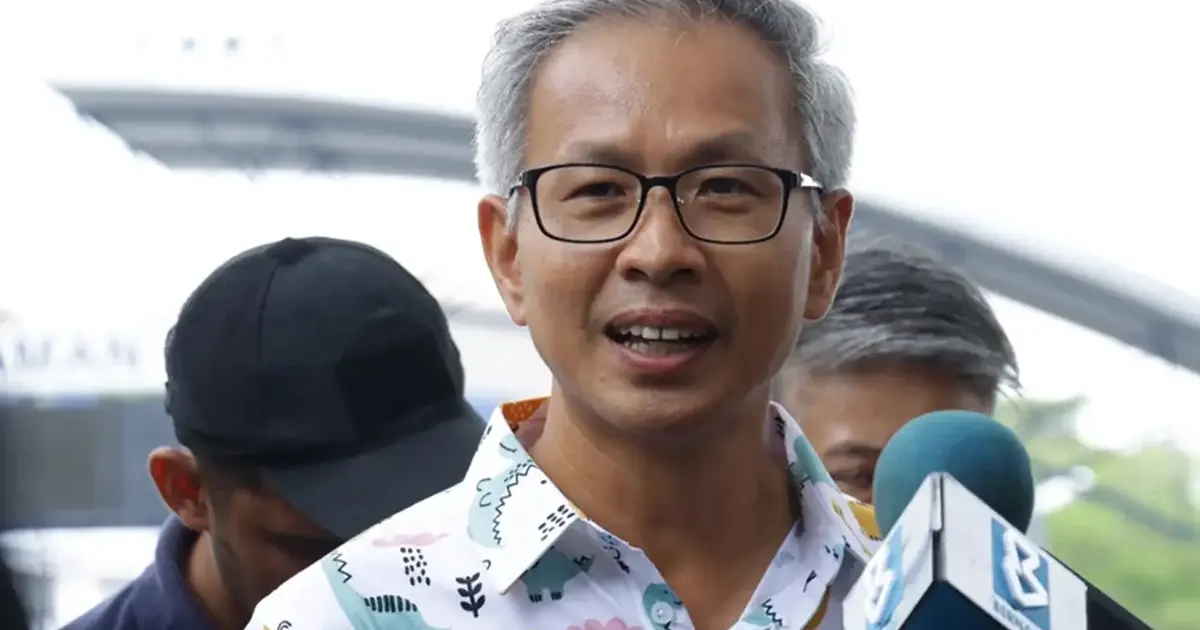
Malaysia's Home Minister has confirmed that Democratic Action Party leader Tony Pua remains subject to an active police investigation, following the submission of over 140 police reports that challenge his recent social media commentary on the nation's constitutional framework and foundational principles.
The controversy centres on a Facebook post in which Pua discussed matters relating to the constitutional monarchy system and the Rukun Negara—the five national principles that form the ideological bedrock of the Malaysian nation. This post triggered an unprecedented wave of public complaints, with concerned citizens filing the substantial number of reports to the police.
The decision to maintain the investigation underscores the sensitivity surrounding discourse on Malaysia's monarchy, a subject that commands considerable constitutional protection under Article 63 of the Federal Constitution. Any criticism or questioning of the institution, even when framed as intellectual debate, can invite legal scrutiny and public backlash. The volume of reports filed against Pua demonstrates the strong public reaction to perceived challenges against these founding institutions.
Pua, a prominent figure within the DAP and known for his outspoken commentary on governance and constitutional matters, has frequently engaged in public discussions on structural issues within the Malaysian political system. His digital presence has made him a visible voice in national conversations, though his interventions occasionally spark controversy among those who view certain topics as beyond the bounds of acceptable public discourse.
The Rukun Negara, established in 1970 following the May 13 incident, represents a social contract designed to unite Malaysia's diverse population around shared national values. These principles—belief in God, loyalty to the King, upholding the Constitution, rule of law, and mutual respect—hold profound historical significance. Public figures who discuss or appear to critique these foundations risk provoking strong reactions from citizens and potentially legal consequences from authorities interpreting their words as seditious or disrespectful.
From a regional perspective, Malaysia's approach to discourse around constitutional symbols reflects broader patterns across Southeast Asia, where many nations maintain robust legal frameworks protecting institutional dignity. Thailand, Myanmar, and Singapore all possess strict statutes governing speech about monarchy and state symbols. However, Malaysia's particular architecture—combining constitutional monarchy protections with the guarantee of free speech under Article 10—creates ongoing tension between competing rights.
The continuation of the police investigation signals that authorities have not yet closed the matter despite weeks or months potentially having elapsed since the initial reports. This extended scrutiny adds pressure on the political landscape as the DAP navigates its role within the broader opposition coalition and its strategic positioning ahead of electoral cycles. The investigation's duration also raises questions about investigative standards and the timeline for concluding such matters, issues frequently raised by civil rights advocates and opposition groups.
For Pua specifically, the investigation creates a challenging situation balancing his role as a vocal political figure and the legal jeopardy surrounding certain forms of public expression. His party colleagues and supporters view the investigation as politically motivated overreach, while critics and government-aligned groups see it as appropriate enforcement of laws protecting national institutions. The binary nature of Malaysian political responses to such controversies leaves little middle ground for nuanced discussion.
The incident also highlights the persistent vulnerability of digital platforms to weaponisation within Malaysia's political contests. Social media posts, unlike traditional journalism or parliamentary discourse which benefit from certain protections, can swiftly generate complaints and governmental action. This dynamic has implications for the broader health of political discourse, as public figures must calculate not only the intellectual or political merits of their statements but also the legal and reputational risks involved.
Civil society organisations and legal observers have periodically raised concerns about investigation procedures following complaint floods, questioning whether such high volumes of identical or near-identical reports warrant equal investigative resources or whether threshold mechanisms should filter repetitive claims. The absence of such mechanisms potentially allows coordinated complaint campaigns to trigger disproportionate official attention.
Moving forward, the investigation's resolution will carry implications extending beyond Pua himself. It may establish or reinforce precedent regarding acceptable boundaries for discussing constitutional and foundational matters in Malaysia's public sphere. Additionally, the manner of conclusion—whether through charging, cautioning, or closure—will signal the Home Ministry's interpretation of how these sensitive topics can be discussed within Malaysia's legal and social framework.
The case encapsulates the enduring challenge facing Malaysia as it seeks to balance institutional protection, democratic freedoms, and political competition. For regional observers, it demonstrates how constitutional structures and institutions, while necessary for national stability and unity, can sometimes function in ways that constrain the robust debate essential for healthy democracies. The investigation's ultimate outcome may influence how other public figures, journalists, and citizens approach commentary on Malaysia's founding principles and institutions.

