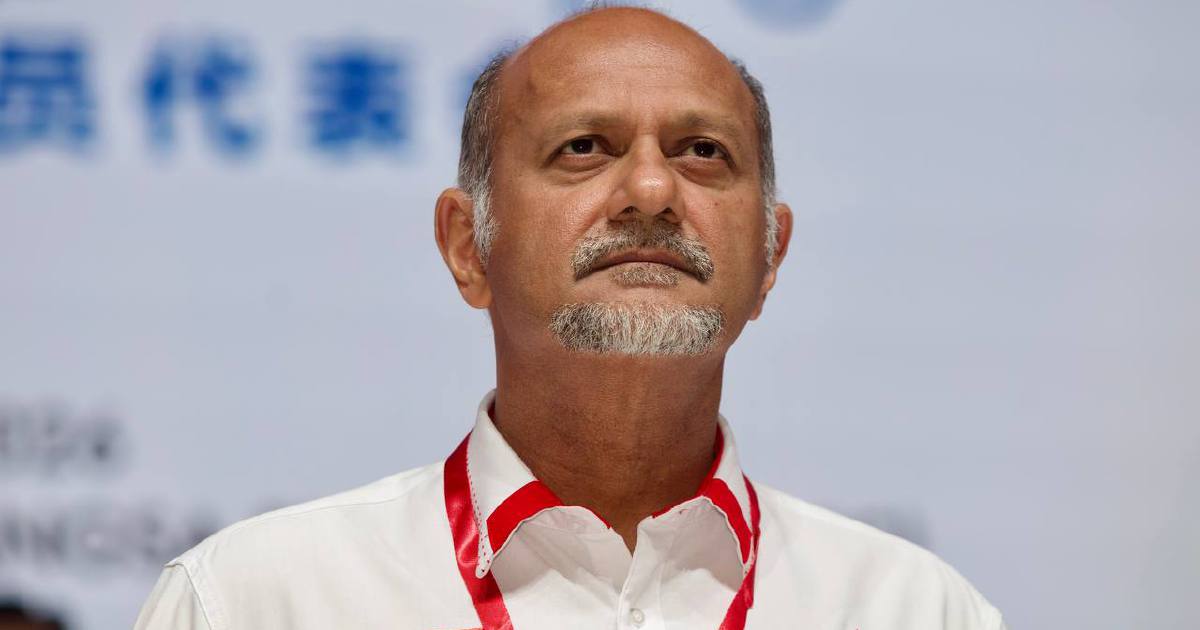
The Democratic Action Party is escalating calls for the government to pursue more ambitious structural changes, with party chairman Gobind Singh Deo directing his appeal toward Prime Minister Datuk Seri Anwar Ibrahim at a high-profile address in Putrajaya. The intervention reflects mounting impatience within the ruling coalition over the pace of transformational initiatives that were central to the unity government's electoral platform when it formed in late 2022.
More than three years into the administration's tenure, DAP's position as a key constituent in Malaysia's governing bloc places its leadership statements in a particularly sensitive political context. The party holds significant parliamentary representation and cabinet positions, granting it meaningful leverage to shape policy priorities. Gobind Singh Deo's public remarks suggest the DAP is willing to apply pressure on foundational governance issues where consensus may not yet exist across the coalition's diverse membership.
The push for institutional reform carries particular weight given Malaysia's historical governance challenges. Strengthening institutional frameworks—whether in financial oversight, anti-corruption enforcement, or judicial independence—remains unfinished business from the post-2018 political transition. The unity government inherited a system weakened by years of institutional degradation, and meaningful reconstruction requires sustained political will and technical expertise. DAP's emphasis on this dimension indicates the party views incremental progress as insufficient for consolidating democratic gains.
Economic reform represents an equally pressing concern for a coalition navigating persistent growth constraints and fiscal pressures. Malaysia's post-pandemic recovery has proven uneven, with inflation, employment volatility, and productivity growth presenting interconnected challenges. Structural economic improvements—whether addressing supply-chain vulnerabilities, upgrading skills development, or reforming subsidy regimes—demand coordinated action across multiple ministries and stakeholder groups. The complexity of these initiatives often conflicts with the political calculus of governing coalitions juggling competing interests.
The timing of DAP's intervention is strategically significant. With the unity government approaching the halfway mark of its potential five-year term, coalition members face mounting pressure to demonstrate tangible policy achievements before the next election cycle dominates political attention. Earlier reform momentum risks dissipating as parties prioritise electoral positioning, making mid-term reinvigoration essential for delivering on governance mandates.
Within Malaysia's coalition framework, DAP traditionally advocates for meritocratic governance, regulatory transparency, and market-oriented economic policies. These positions sometimes create friction with coalition partners holding different ideological orientations or sectional constituencies. By directing its appeal through the Prime Minister, Gobind Singh Deo appears to be seeking executive leverage to overcome potential blockages at the cabinet or parliamentary level.
The institutional reform agenda likely encompasses several domains where progress has stalled or proven incomplete. Anti-corruption mechanisms, procurement transparency, civil service modernisation, and parliamentary oversight mechanisms all remain areas where technical improvements could strengthen governance. The DAP's influence in these discussions stems partly from its urban, educated voter base that prioritises clean government and rule of law.
Economic reform initiatives under consideration probably address labour market flexibility, entrepreneurship support, digital transformation in public services, and rationalisation of government expenditure. These measures frequently generate constituency pushback, particularly where they threaten incumbent interests or require short-term adjustment costs. The unity government's broad membership base complicates swift implementation of such reforms.
For Malaysian observers and regional analysts, DAP's public pressure reveals underlying coalition tensions that persist despite the government's stated unity framework. The fact that policy acceleration must be explicitly demanded by coalition members indicates that voluntary coordination mechanisms may be insufficient. This dynamic has broader implications for Malaysia's political stability and the efficacy of coalition governance models in pursuing structural change.
The Prime Minister's response to these calls will offer clues about executive priorities and coalition power dynamics heading into the government's final years. Whether Anwar Ibrahim signals renewed commitment to accelerated reform or emphasises consolidation of existing progress will influence both coalition stability and public perceptions of government effectiveness. DAP's willingness to apply public pressure suggests the party reserves the option of escalating demands if private negotiations prove unproductive.
For Southeast Asia's largest economy, the outcome of this internal coalition debate carries significance beyond Malaysian borders. Regional investors, neighbouring governments, and international institutions monitor Malaysia's institutional and economic trajectory as an indicator of the nation's medium-term growth prospects and policy consistency. Coalition dysfunction or reform stagnation could undermine confidence in Malaysia's governance framework.
The DAP's intervention ultimately reflects the challenge inherent in broad-based coalition governance: balancing consensus-building with purposeful action. As the unity government enters its second half, the pressure to demonstrate substantive achievement will likely intensify across multiple political constituencies, creating opportunities for parties like DAP to exert greater influence on policy direction and implementation timelines.

