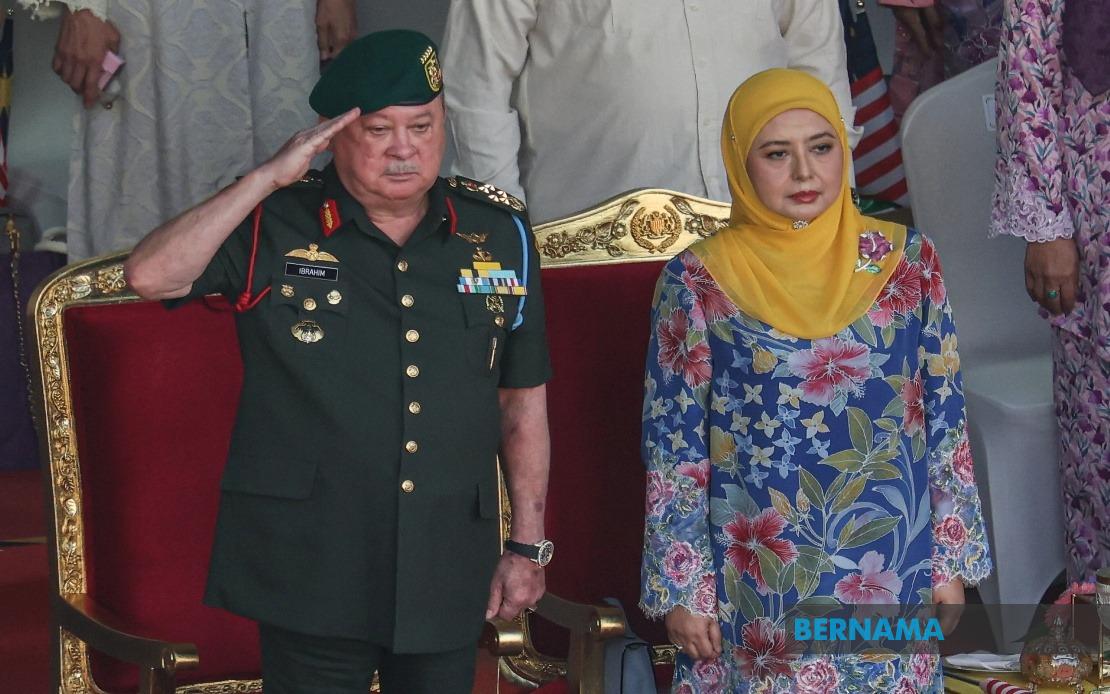
Dataran Putrajaya transformed into a sea of patriotic fervour on August 31 as tens of thousands of Malaysians, regardless of age or ethnic background, descended upon the Federal Government's administrative heart to observe the nation's 69th year of independence. The sprawling plaza, filled with the unmistakable energy of citizens united in celebration, provided the perfect backdrop for National Day 2026, which carried the aspirational theme of Malaysia MADANI: Kesejahteraan Dinikmati—encapsulating the government's vision of shared prosperity and national wellbeing.
Putrajaya's selection as host venue for the main national celebrations underscores the capital's enduring symbolic significance in Malaysia's contemporary political narrative. The city has shouldered this ceremonial responsibility on eight occasions, most recently in 2025, reflecting a deliberate strategy to situate the nation's identity affirmations within its administrative centre. The choice also demonstrates the government's confidence in the infrastructure and logistical capabilities of Putrajaya to accommodate large-scale public gatherings that require sophisticated coordination across security, ceremonial, and crowd management dimensions.
The proceedings commenced with the arrival of Prime Minister Datuk Seri Anwar Ibrahim and his wife, Datuk Seri Dr Wan Azizah Wan Ismail, at 7.53 am, setting the stage for the formal ceremonial program. Within minutes, Their Majesties Sultan Ibrahim and Raja Zarith Sofiah graced the occasion with their presence at 8 am, an arrival marked by the distinctive spectacle of five military helicopters performing a precision flypast while trailing the Jalur Gemilang. This aerial dimension, accompanied by the national anthem Negaraku and the ceremonial composition Hormat Diraja, elevated the proceedings beyond conventional ground-based pageantry, creating a multisensory experience that resonated across the assembled multitude.
The ceremonial architecture of the celebration reflected Malaysia's constitutional and civic dimensions. The formal raising of the Jalur Gemilang by the 41st Battery of the Royal Artillery Regiment (Ceremonial), overseen by Major Hafizan Mat Ghani, incorporated a 14-gun salute explicitly representing the nation's constituent states—a detail that grounds Malaysia's federal structure within the symbolic vocabulary of national commemoration. This fusion of constitutional reality with ceremonial performance illustrates how the nation continues to reinforce its foundational political framework through public ritual.
Beyond the dignitaries—including Deputy Prime Minister Datuk Seri Dr Ahmad Zahid Hamidi and Communications Minister Datuk Seri Fahmi Fadzil, who chairs the National Day and Malaysia Day celebrations committee—the gathering included diplomatic representatives and foreign delegations. Their presence signals Malaysia's positioning within the international community while affirming the country's continued alignment with global diplomatic protocols. For Southeast Asian observers, such multinational participation underscores Malaysia's role as a stable, institutionally coherent nation-state that maintains both internal cohesion and external respectability.
The recitation of the Rukun Negara emerged as a particularly resonant moment within the broader ceremonial sequence. Led by Malaysian Fire and Rescue Department Deputy Commissioner Datuk Abdul Razak Muda, the recitation involved 69 fire and rescue personnel alongside sign language interpreter Nur Alyanatasha—a deliberate inclusive gesture that extended the civic affirmation beyond auditory participation to encompass deaf and hard-of-hearing citizens. This incorporation of accessibility mechanisms within state ceremony reflects evolving norms regarding national inclusion and the recognition that patriotic observance must accommodate diverse participation modalities.
The symbolic climax arrived with the seven-fold invocation of Merdeka, the cry that traditionally punctuates Malaysia's independence observances. As this resonant proclamation echoed across Dataran Putrajaya, the assembled crowds raised their miniature Jalur Gemilang flags in spontaneous unison—a collective gesture that transforms individual patriotic sentiment into visible, collective expression. This moment encapsulates what National Day celebrations fundamentally accomplish: the temporary dissolution of Malaysia's considerable internal divisions into a unified public body, however fleeting that unity may prove.
For Malaysian readers, the significance of such national gatherings extends beyond ceremonial aesthetics. National Day celebrations serve as periodic affirmations of the constitutional settlement that emerged from independence negotiations in 1957, a foundational agreement that established Malaysia's multicommunal political compact. In an era when polarization across ethnic, religious, and political lines frequently dominates news cycles, large-scale gatherings at Dataran Putrajaya function as counterbalancing demonstrations of underlying national cohesion. The deliberate mobilization of diverse ethnic groups and age cohorts sends a tacit message that, notwithstanding legitimate disagreements on policy and governance, Malaysians retain a shared commitment to the nation's continued existence and prosperity.
The Malaysia MADANI theme woven throughout the 2026 celebrations carries particular weight in the current political moment. Articulated by Prime Minister Anwar Ibrahim since his administration's formation, this concept attempts to reconcile Malaysia's plural nature with a developmental agenda emphasizing equitable prosperity distribution. The theme's emphasis on kesejahteraan (wellbeing) suggests an implicit acknowledgment that economic performance and distributive justice constitute legitimate measures against which contemporary governance effectiveness is assessed. For Southeast Asian observers monitoring Malaysia's trajectory, the adoption of such thematics reveals an administration conscious of the need to address popular anxieties regarding cost-of-living pressures, employment prospects, and social equity.
The participation of Datuk Seri Fahmi Fadzil, the Communications Minister, in his capacity as chair of the National Day celebrations committee illustrates the government's recognition that cultural commemoration intersects fundamentally with political communication. His portfolio responsibility for both communications infrastructure and ceremonial oversight suggests an understanding that contemporary national celebrations must successfully transmit symbolic messages through multiple channels—from physical gatherings at Dataran Putrajaya to broadcast coverage reaching households nationwide and digital content circulating across social platforms. The coordination of these parallel streams represents a sophisticated understanding of how modern states construct and maintain national narratives.
From a broader Southeast Asian perspective, Malaysia's annual National Day celebrations serve as a regional barometer of institutional stability and social cohesion. Unlike some neighboring nations where independence commemorations risk becoming flashpoints for political contestation or venues for sectarian tensions, Malaysia's Dataran Putrajaya gatherings have achieved a remarkable degree of routinization and procedural regularity. This normalization of large-scale patriotic assembly, achieved despite genuine plural divisions, potentially offers instructive lessons for regional peers navigating comparable multicommunal challenges.
The visible presence of citizens from diverse geographical origins and ethnic backgrounds—deliberately referenced in coverage descriptions as people "from near and far"—underscores an often-overlooked dimension of National Day observance: the event functions simultaneously as tourist attraction, family outing, and civic obligation. Families traveling to Putrajaya incur genuine economic costs and undertake logistical exertion to participate. Such voluntary expenditure of resources testifies to the residual affective power of independence commemoration in structuring Malaysian national identity, even amid secular trends toward privatized consumption and reduced civic participation observable across affluent democracies worldwide.
As Malaysia enters its seventh decade of independence, the 2026 celebrations at Dataran Putrajaya crystallized a nation attempting to reconcile historical memory with contemporary aspirations. The ceremonial invocation of Merdeka, performed annually yet perpetually regenerating emotional resonance, anchors Malaysians to a foundational historical rupture—the moment of departure from colonial subjection and the assumption of national sovereignty. Yet each iteration also projects forward, suggesting that independence's meaning remains incomplete, requiring ongoing national commitment and civic participation to fully realize. In this sense, National Day celebrations function less as backward-looking commemoration of achieved independence than as forward-looking assertions that Malaysians remain engaged in the perpetual work of nation-building, prosperity-generation, and intercommunal coexistence that independence first made possible.

