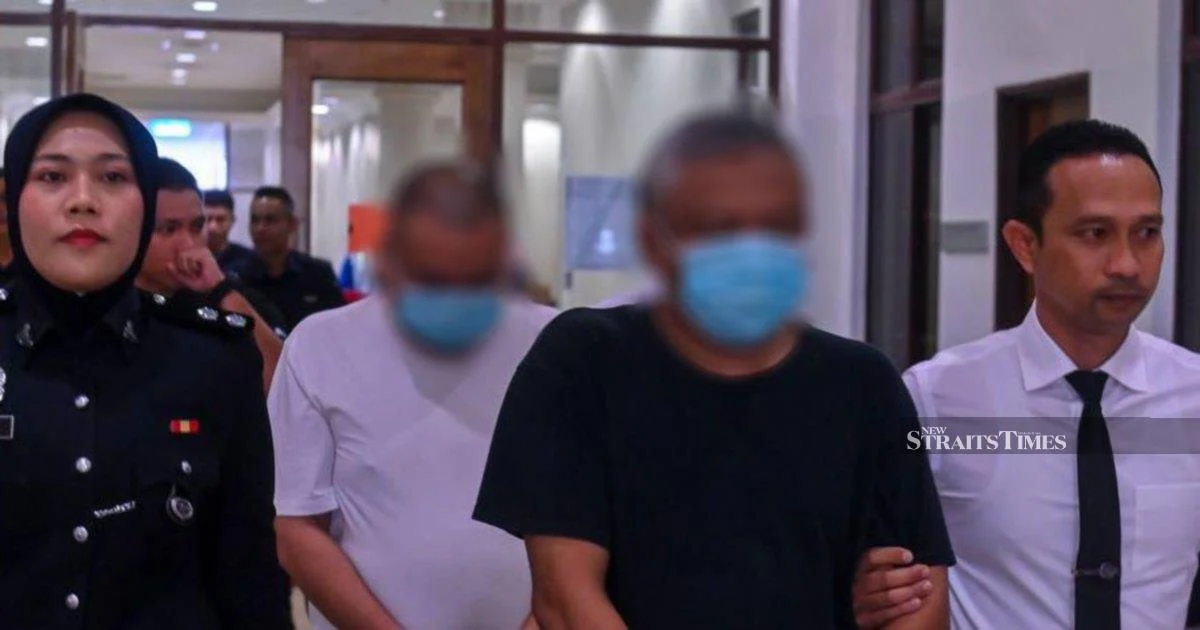
Police in Kuantan have taken into custody a businessman holding the title of Datuk and his assistant in connection with a fraud scheme centred on a counterfeit letter purporting to bear the official insignia of the Tengku Mahkota of Pahang. The arrests mark another significant case in a continuing pattern of identity fraud and forgery targeting high-ranking Malaysian figures and state institutions, a trend that has become increasingly common as perpetrators seek to exploit the prestige and authority associated with royal personages and government bodies.
The incident underscores the vulnerability of official seals and letterhead designs to exploitation by sophisticated fraudsters operating within Malaysia's business circles. Such forgery cases typically involve attempts to leverage the credibility attached to royal endorsements to secure loans, gain commercial advantage, or defraud investors. In this instance, the alleged misuse of the Tengku Mahkota's coat of arms suggests that the perpetrators were attempting to lend legitimacy to fraudulent claims or transactions.
The involvement of an assistant in the scheme indicates a coordinated operation rather than an isolated criminal act. The division of labour between a principal suspect and an accomplice is characteristic of organised fraud networks that have emerged across Malaysia and Southeast Asia. Such collaborative approaches to white-collar crime typically involve one party handling the procurement or creation of forged materials while another manages communications with victims or handles the logistics of the fraud.
Forged royal documentation has become a preferred tool for various types of financial fraud across Malaysia. Previous cases have involved the misuse of royal names and official letterhead in schemes ranging from land transactions to business financing. The involvement of someone with an official Datuk title adds another troubling dimension, as it suggests that even those who have been honoured by the state may seek to abuse their elevated status and social positioning for criminal gain.
The Pahang royal institution represents one of Malaysia's most historically significant sultanates, and offences involving the deliberate forgery of royal documentation are treated with considerable gravity by law enforcement authorities. Such crimes carry implications beyond simple fraud, as they represent an affront to the dignity and authority of the state's premier institution. The Pahang authorities would have been alerted immediately following discovery of the forged letter.
The mechanics of modern forgery have evolved significantly with technological advancement. Digital printing capabilities now allow sophisticated criminals to reproduce official letterhead, watermarks, and security features with remarkable accuracy. Investigators must therefore employ increasingly specialised forensic document examination techniques to distinguish authentic correspondence from high-quality counterfeits. This arms race between forgers and law enforcement represents a substantial challenge for authorities across Malaysia and the wider region.
The timing and context of this arrest reflect ongoing scrutiny by Malaysian law enforcement of fraud operations that target financial institutions, investors, and government entities. The establishment of dedicated anti-fraud task forces within various state police jurisdictions has enhanced detection capabilities, though perpetrators continue to develop new methodologies to evade detection. The involvement of established businesspeople in such schemes suggests that financial desperation or criminal opportunism can affect individuals across all socioeconomic strata.
Investigations into the matter would likely extend beyond the two arrested individuals to examine the broader network through which the forged letter was circulated and utilised. Authorities typically trace the paper source, identify where printing occurred, and determine which parties received the fraudulent documentation. This investigative approach helps dismantle the supporting infrastructure that enables such schemes to operate.
The case raises important questions about the security protocols surrounding official royal documentation and letterhead throughout Malaysia's state institutions. While the Pahang palace maintains stringent controls over its official materials, this incident suggests that improving authentication systems and implementing additional security features might be necessary. Many Malaysian government institutions have gradually upgraded to more sophisticated security measures, though uniform implementation remains inconsistent across different bodies and departments.
For Malaysia's business community, this case serves as a cautionary reminder about the risks of fraud within commercial transactions. Investors and lenders should exercise heightened vigilance when encountering documentation that purports to carry royal approval or governmental backing. Verification protocols should be strengthened to ensure that all claims of official endorsement are authenticated directly with the relevant institutions rather than relying solely on the appearance or letterhead presented by potential partners.
The broader implications for Southeast Asia are significant, as forged official documentation crosses state boundaries and can be deployed in transnational fraud schemes. Cooperation between Malaysian law enforcement and regional authorities remains essential to disrupting fraud networks that may operate across multiple jurisdictions. The arrest of these individuals contributes to ongoing efforts to raise awareness about such risks and improve defences across the region's financial and business sectors.

