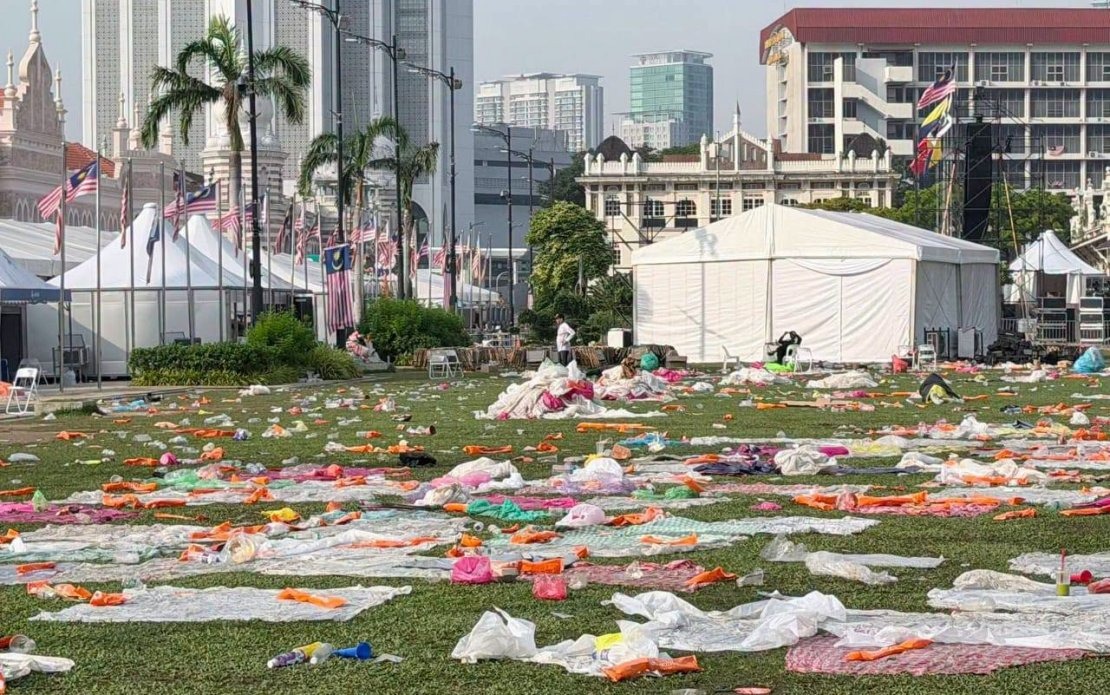
Kuala Lumpur City Hall (DBKL) has mobilised its cleaning teams to restore Dataran Merdeka following the departure of thousands of spectators who gathered in the early hours to witness the 2026 FIFA World Cup final between Spain and Argentina. The sprawling public plaza, which served as an impromptu open-air stadium for over 25,000 football enthusiasts, was left scattered with rubbish once the match concluded with Spain's 1-0 victory.
The incident has prompted DBKL to issue a reflective public statement that extends beyond the immediate cleanup operation. Rather than simply announcing the logistical arrangements for waste removal, the municipal authority used the opportunity to articulate broader concerns about civic responsibility and public stewardship in Malaysia's capital city. Officials acknowledged that while the gathering itself represented a vibrant expression of community spirit and shared passion for football, the aftermath revealed a troubling disconnect between celebratory freedom and respect for shared spaces.
Dataran Merdeka occupies a unique position within Malaysia's national consciousness. As the historic location where the country's independence was first proclaimed, the venue carries symbolic weight that transcends its function as a public gathering space. DBKL's statement emphasised this dimension, noting that the condition in which citizens leave the location directly reflects their valuation of the nation's heritage and dignity. This framing transforms the litter problem from a mere sanitation issue into a matter of national pride and collective identity.
The municipality's response demonstrates increasing frustration with the pattern of public facilities being left in poor condition after mass gatherings. Rather than accepting that cleanup is simply part of managing large events, DBKL articulated a challenge to the underlying assumption that organised maintenance crews should routinely repair damage caused by negligent crowds. The statement specifically questioned whether a thriving metropolis should depend entirely on government staff to remediate spaces after the public has departed.
This cleanup episode arrives amid broader international attention on Malaysia's major venues and public spaces. As cities compete for the right to host major sporting events and cultural gatherings, the standard of venue maintenance and crowd behaviour has become increasingly scrutinised. The contrast between enthusiastic participation and irresponsible departure at Dataran Merdeka underscores a challenge facing major Southeast Asian cities that attract large transient populations to public events.
The World Cup final viewing represented a significant moment for Malaysian football fandom, drawing an unexpectedly large crowd to experience the match collectively rather than in homes or commercial venues. This demonstrates sustained interest in major international football tournaments among Malaysian audiences and suggests considerable appetite for shared viewing experiences in public settings. However, the organisational aftermath raises questions about how cities can accommodate such spontaneous or lightly organised mass gatherings without compromising public infrastructure.
DBKL's messaging strategy reveals a shift towards appealing to civic consciousness rather than merely implementing enforcement measures. The authority encouraged residents to regard Kuala Lumpur as a shared home requiring collective care, rather than presenting cleanup as a responsibility exclusively borne by government employees. This approach recognises that sustainable solutions to public cleanliness require voluntary compliance rather than relying solely on increased surveillance or penalties.
The incident also highlights infrastructural gaps in accommodating spontaneous large gatherings. Dataran Merdeka, while spacious and symbolically appropriate, may lack adequate waste management facilities designed for crowds of 25,000 or more. Without sufficient rubbish bins, recycling stations, or clearly marked disposal areas strategically positioned throughout the venue, even well-intentioned crowds may struggle to maintain cleanliness. The planning implications for future major public events merit consideration by city authorities.
From a regional perspective, this situation reflects challenges shared across Southeast Asian capitals experiencing rapid urbanisation and growing middle-class populations with international leisure interests. Cities including Bangkok, Jakarta, and Singapore have grappled with similar tensions between accommodating public enthusiasm for international events and maintaining urban cleanliness standards. The solutions implemented in these contexts may offer valuable models for Malaysian authorities managing comparable circumstances.
DBKL's statement ultimately advocates for a cultural shift in how Malaysians relate to public spaces. The authority posited that genuine urbanism involves not merely what transpires during celebrations but the condition left behind afterwards. This philosophy extends beyond football matches to encompass all public gatherings, from concerts and festivals to political rallies and community events. Successfully embedding this ethos would require sustained messaging and education rather than one-off responses to specific incidents.
Looking forward, Kuala Lumpur's experience with the World Cup final viewing offers opportunities for municipal learning. Future large gatherings at Dataran Merdeka might benefit from enhanced waste management infrastructure, clear signage promoting responsible disposal, and potentially designated cleanup zones or voluntary community participation programmes. Such measures could facilitate larger public events without compromising the venue's historical significance or requiring excessive burden on government services.
The broader question posed by this incident concerns how rapidly developing Asian cities balance accessibility of public spaces for mass participation in globally connected experiences with maintaining standards of urban cleanliness and respect for heritage sites. Malaysia's approach, emphasising shared responsibility rather than punitive measures, reflects an optimistic view of civic consciousness that may prove influential for other regional cities facing identical challenges.

