Kuala Lumpur City Hall (DBKL) has unveiled a package of three operational improvements designed to reduce bureaucratic friction and accelerate business activity across the capital. The measures, developed through consultations with traders' associations, reflect a broader push to make the regulatory environment more responsive to the needs of small and medium enterprises that form the backbone of the city's commercial ecosystem.
The centrepiece of the initiative is a standardised fee structure for outdoor seating. Traders seeking to place tables and chairs on five-foot ways—the covered walkways fronting shophouses that have long been contested spaces in Malaysian urban management—will now pay a flat rate of RM30 per month per set. This replaces what appears to have been a more opaque or variable system, establishing clarity for business owners planning their operations and managing costs. Applications flow through DBKL's branch offices organised by parliamentary constituency, with decisions based on location suitability and pavement width. Critically, the approval conditions explicitly protect pedestrian access, wheelchair navigation, and emergency service routes, suggesting DBKL is attempting to balance commercial activity with public safety and accessibility standards.
The second reform targets minor building works, a category that has historically ensnared traders in lengthy permit cycles despite the low-risk nature of cosmetic upgrades. Tasks such as replacing tiles or ceiling panels that involve no structural modification now require only a simple form notification to DBKL. Issuance happens directly at branch level without the apparent delays of centralised review. This approach acknowledges that excessive compliance machinery for low-consequence works wastes administrative resources and frustrates legitimate business improvement, while concentrating scrutiny on genuine structural and safety risks. The acceleration of these permits through decentralised processing may prove particularly valuable for food operators seeking rapid facility upgrades between service periods.
Perhaps the most operationally significant measure concerns the reopening of premises ordered closed for hygiene violations. Previously, traders faced uncertain and potentially lengthy delays before resuming operations after remediation. Under the new framework, DBKL will consider reopening applications as early as 24 hours after cleaning completion, provided inspection confirms full compliance with hygiene and food safety standards. This accelerated timeline reflects feedback from operators that closure periods created financial hardship and competitive disadvantage, particularly for smaller establishments with thin margins. However, DBKL has been explicit that reopening remains discretionary and contingent on inspection verification—an important safeguard against pressure to rubber-stamp approvals and compromise food safety oversight.
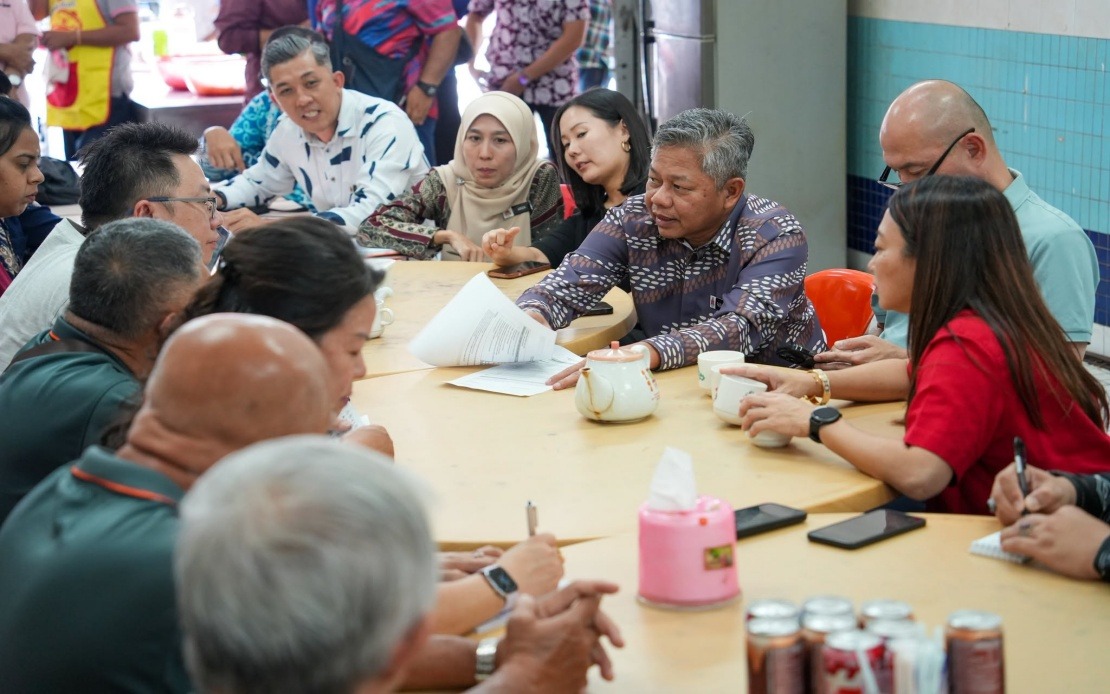
The measures emerge from a series of stakeholder engagements that included Minister in the Prime Minister's Department (Federal Territories) Hannah Yeoh, Kuala Lumpur mayor Datuk Seri Fadlun Mak Ujud, and representatives from the Selangor and Kuala Lumpur Chinese Coffee Shop and Tea Shops Owners' Association, as well as the Malaysian Muslim Restaurant Owners' Association (PRESMA). These consultations signal recognition that business-friendly governance requires listening to operators and responding to practical pain points rather than imposing top-down solutions. The involvement of both Chinese and Muslim restaurant associations underscores the cross-community consensus on regulatory burden, a notable point in a city where food premises span diverse cultural and commercial traditions.
The underlying philosophy guiding these reforms is the standardisation and clarification of processes. DBKL has stated that transparent, consistent rules provide traders with certainty in decision-making and planning, while simultaneously guiding officers' discretion and reducing opportunities for inconsistent enforcement across different branches. This addresses a perennial challenge in large municipal systems: the gap between official policy and street-level implementation. When branch officers operate under ambiguous guidelines, decisions become unpredictable, creating informal incentives for facilitation payments or favourable relationships. Standardisation does not eliminate discretion but channels it within clearer boundaries, a principle increasingly recognised in governance reform across the Southeast Asian region.
For Malaysian businesses and potential investors, these measures signal a gradual shift in how Kuala Lumpur's municipal authority approaches its role. Rather than viewing traders primarily as sources of revenue or regulatory compliance subjects, there is acknowledgment that a vibrant, diverse commercial base requires enabling conditions. The RM30 monthly fee for outdoor seating, while modest, is transparent and predictable—merchants can factor it into operating budgets without surprise increases. Simplified minor works permitting reduces the transaction costs and time sunk into administrative navigation, freeing resources for actual business improvement. Faster hygiene-violation reopenings reduce the punitive dimension of enforcement, aligning penalties more closely with the severity of actual risk rather than imposing extended closures that exceed remediation timeframes.
The reforms also reflect evolving international best practice in business-friendly regulation. Many cities globally have moved toward tiered regulatory approaches that apply proportionate scrutiny based on risk level—light-touch processes for low-risk activities and more intensive review for genuine hazards. DBKL's separation of minor cosmetic works from structural permits mirrors this logic. Similarly, linking reopening timelines to actual remediation completion rather than fixed waiting periods introduces incentives for prompt corrective action and reduces unnecessary economic punishment for technical violations.
Implementation will be crucial to the reforms' success. The emphasis on standardised, branch-level processes depends on capacity building, training, and monitoring to ensure consistent interpretation and prevent backsliding into discretionary or corrupt practices. DBKL's acknowledgment that procedures will not compromise safety, hygiene, accessibility, or public interest indicates awareness that speed cannot come at the expense of protection. The challenge will be maintaining this balance in practice, particularly under resource constraints or pressure from competing interests.
For the broader Southeast Asian context, Kuala Lumpur's approach offers a model of incremental regulatory improvement driven by engagement with business communities rather than external pressure or ideology. The focus on reducing unnecessary process complexity while strengthening clarity and consistency may resonate in other regional cities facing similar informal-sector governance challenges. As digital tools and data systems expand municipal capacity, cities increasingly have the ability to standardise and democratise access to permitting, reducing opportunities for opacity and favouritism.

