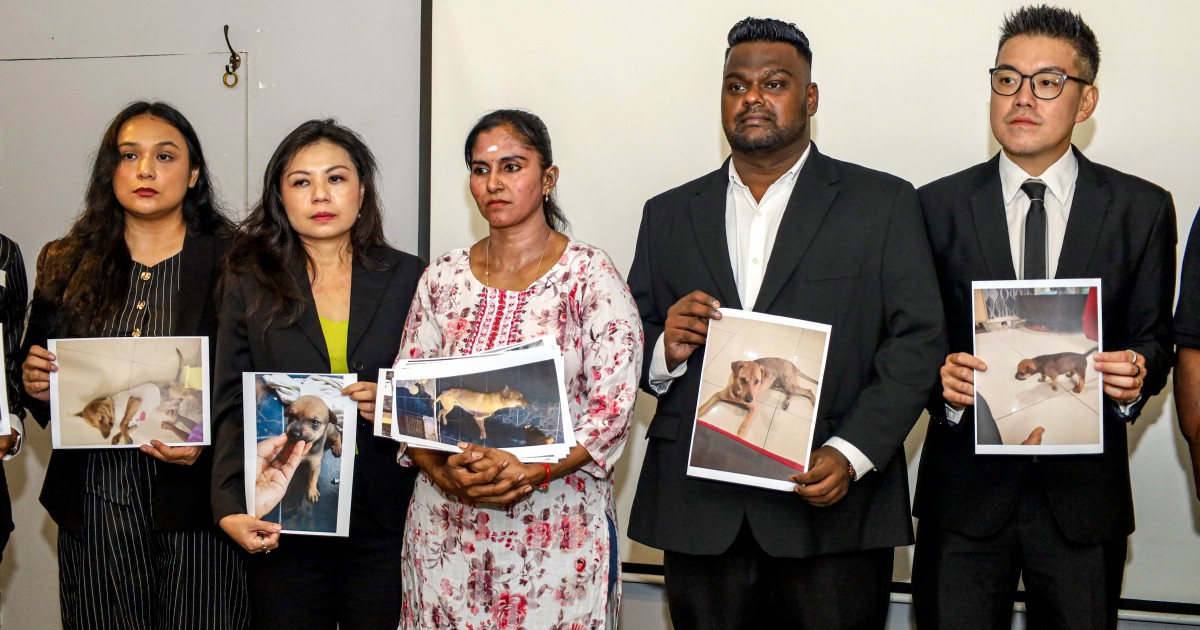
The death of Rocky, a domesticated dog in Taman Teluk Gedung Indah, Port Klang, has become the focal point of a broader conversation about animal welfare and the operational standards governing stray animal removal in Malaysia's urban centres. The incident, which allegedly involved the beating of the animal during an attempt to capture stray dogs in the residential area, has prompted the pet's owner to demand greater accountability and transparency from authorities responsible for managing such operations.
The incident unfolded in one of Port Klang's established residential communities, where residents have become increasingly sensitive to the methods employed during animal-catching initiatives. Rather than accepting the incident as an isolated occurrence, the owner's pursuit of investigation reflects growing public concern about how contractors and officials execute these operations—a matter that extends beyond this single case to encompass systemic questions about training, oversight, and adherence to established protocols throughout the country.
Animal-catching operations represent a necessary municipal function, tasked with managing stray populations that can pose health and safety risks to communities. However, the procedures governing these activities remain inconsistently documented across different local authorities in Malaysia. Standard Operating Procedures vary between councils, and enforcement of humane capture methods is often inadequately monitored. The incident involving Rocky highlights a critical gap between what policies prescribe and what actually occurs on the ground during field operations.
The demand for transparency is particularly significant given Malaysia's evolving relationship with animal welfare standards. While the country has made legislative strides through the Animal Welfare Act, enforcement remains patchy, and incidents involving municipal workers or contractors frequently surface with minimal public scrutiny. The owner's insistence on a thorough investigation signals a shift in public consciousness—residents are increasingly unwilling to accept vague explanations or dismissive responses when animals are injured or killed during government-contracted services.
Port Klang, as a major industrial and residential hub in Selangor, experiences persistent challenges with stray animal populations. These dogs often congregate in residential areas, creating genuine concerns among homeowners about safety and disease transmission. Yet the solution must be proportionate and humane. The tension between municipal pest management and animal welfare represents one of the most delicate balancing acts for local authorities, and Rocky's case exemplifies how poorly executed operations undermine public trust in both objectives.
Investigating this incident thoroughly requires examination of multiple dimensions. First, authorities must establish whether the personnel involved received adequate training in humane animal-catching techniques. Second, the investigation should clarify what provocation or circumstances led to the alleged beating, and whether the animal was actually a stray or was mistakenly targeted as one. Third, supervisory oversight during the operation should be reviewed—were officials present to monitor compliance with procedures? Fourth, the response from supervisory bodies immediately following the incident must be assessed for adequacy and transparency.
The owner's call for clarity resonates with broader sentiment among Malaysian pet owners and animal welfare advocates, who argue that contractor accountability mechanisms are frequently absent or ineffective. Many municipal animal-catching contracts specify humane capture protocols, yet little independent verification occurs to ensure compliance. Workers operate in relative isolation, and complaints often go unaddressed until they generate public pressure or media attention, as in Rocky's case.
For Taman Teluk Gedung Indah residents, the incident raises practical questions about how future stray animal problems will be addressed. Will residents now hesitate to report genuinely problematic strays, fearing disproportionate responses? Conversely, will the municipality become more cautious about deploying catching teams, potentially allowing stray populations to increase unchecked? These dynamics reveal how a single poorly handled incident can create broader dysfunction within municipal services.
The investigation into Rocky's death should establish baseline expectations for Port Klang's authorities and potentially inform standards across Selangor and beyond. If the alleged beating is confirmed, it would constitute abuse of animals under municipal care, meriting disciplinary and potentially criminal consequences. If the animal was a household pet rather than a stray, it raises questions about operational procedures for identifying and separating domestic animals from actual strays—a distinction that should be fundamental to any competent catching operation.
This incident arrives amid growing sophistication in how Malaysian urban communities discuss animal welfare. Social media has amplified individual cases into broader conversations about systemic issues, and local authorities increasingly understand that dismissing such incidents risks reputational damage and public backlash. The transparency demanded by Rocky's owner is not an unreasonable request; it represents basic accountability that should be routine in any professional operation involving animal handling.
Moving forward, Selangor's municipal authorities should use this moment to review and standardise animal-catching procedures across all councils. This would include mandatory humane training certification for all personnel, surprise compliance audits, clear complaint mechanisms accessible to the public, and prompt communication of investigation outcomes. Building public confidence in these services requires not just policy changes but demonstrated commitment to implementation and transparency.
The death of Rocky, while tragic for his family, offers an opportunity for systemic improvement. Whether authorities seize this moment to strengthen animal welfare standards and operational transparency will signal to residents whether their concerns about municipal accountability are taken seriously or merely tolerated until public attention fades.

