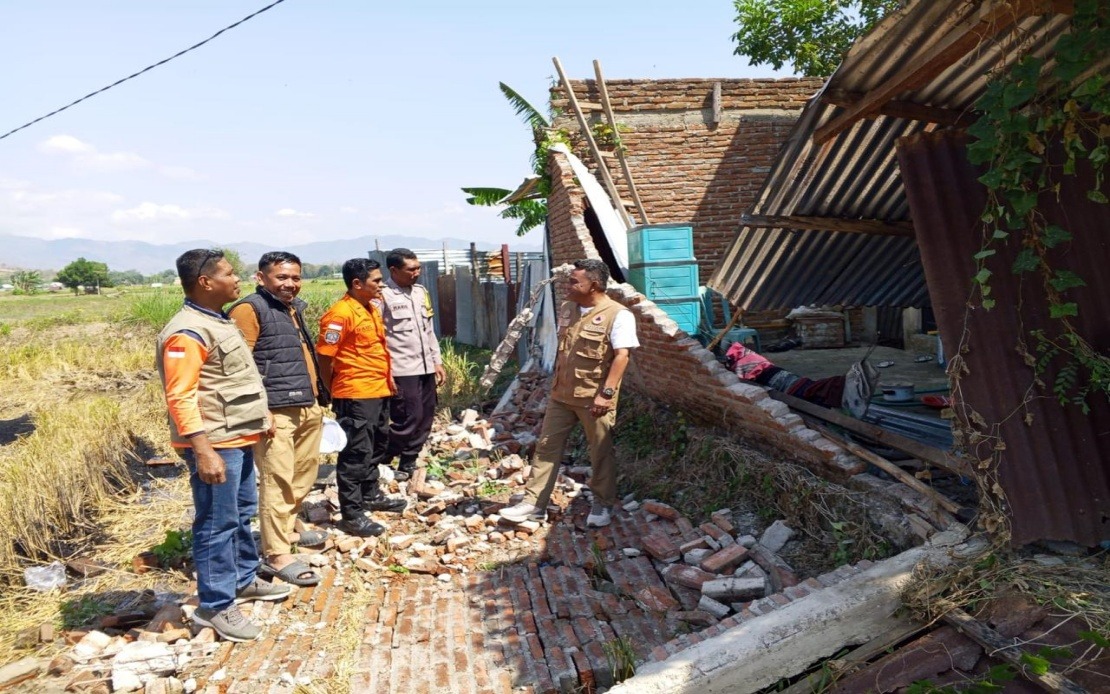
An overwhelming humanitarian crisis has unfolded across Indonesia's Flores Island in East Nusa Tenggara following a devastating magnitude 7.7 earthquake that struck in the pre-dawn hours of Saturday. The disaster has claimed at least 38 lives, with rescue operations now in full swing as authorities race to locate and extract survivors from the rubble of collapsed structures. Suharyanto, chief of the National Disaster Management Agency (BNPB), disclosed that the casualty figures remain fluid as search teams continue their grim work, with additional deaths anticipated as the scope of destruction becomes clearer.
The seismic event occurred at 4.58 am local time, with its epicentre positioned approximately 30 kilometres beneath the seafloor near Mbay at a depth of 15 kilometres. The underwater location meant that initial fears of a tsunami quickly materialised, prompting authorities to issue an immediate coastal warning across the region. However, subsequent monitoring of sea levels indicated minimal surge activity, and the tsunami alert was downgraded by 7.31 am, allowing some residents to return to damaged coastal areas to assess their homes and begin recovery efforts.
Beyond the confirmed fatalities, the health crisis extends further into the affected population. According to Suharyanto's statement during a Saturday press conference, two individuals sustained critical injuries requiring urgent medical attention, whilst an additional 11 residents suffered less severe harm. The broader displacement challenge has proven more manageable, with approximately 2,000 residents having evacuated to safety of their own volition before the full extent of the destruction materialised. This self-evacuation reflects both the community's resilience and the building experience with seismic events in this tectonically active zone.
The physical infrastructure across Flores has sustained substantial damage that extends far beyond individual structures. Dozens of residential buildings lie in ruins or severely compromised, whilst several community health centres—critical resources for a disaster-stricken population—have been damaged or rendered temporarily non-functional. The disaster has created secondary hazards in the form of landslides that have obstructed vital road networks, complicating both rescue access and the delivery of emergency supplies to isolated pockets of survivors. Airport facilities and port infrastructure have also suffered material damage, though critically, the runway surfaces remain functional for emergency airlift operations.
Recognising the urgency of the situation, the Indonesian state has mobilised a coordinated response involving multiple agencies and services. Personnel from Basarnas, the National Search and Rescue Agency, have been deployed alongside military and police units to conduct systematic searches through damaged buildings. This tri-agency approach reflects Indonesia's established disaster response protocols, pooling specialised rescue expertise with security force logistics capabilities. The immediate priority remains extracting any living residents who may be trapped beneath debris before their survival window narrows.
Aerospace assets have proven instrumental in supplementing ground-based rescue efforts. The BNPB has deployed two helicopters and a fixed-wing aircraft to perform dual functions: evacuating injured residents to medical facilities in less-affected areas and delivering time-sensitive aid supplies to communities cut off by landslides. This air capability provides an alternative logistics chain when terrestrial routes remain compromised, a critical advantage in the mountainous terrain of Flores.
The restoration of transportation networks represents an equally urgent concern for authorities attempting to stabilise the disaster zone. The Public Works Ministry has despatched specialist teams equipped with heavy machinery to clear landslide debris from primary and secondary roads. Restoring these arteries will enable not only relief supply movements but also the evacuation of patients requiring advanced medical care and the deployment of additional personnel to secondary incidents. Communications infrastructure damage, whilst less detailed in initial reports, has been identified as requiring restoration to coordinate ongoing rescue and recovery operations.
Material assistance has begun flowing into affected communities, addressing the immediate survival needs of displaced and traumatised populations. Relief distribution focuses on core necessities including food provisions, potable drinking water supplies, clean water for sanitation, temporary shelter tents, electrical generators for facilities, and other essential items. The breadth of this support matrix reflects the diverse needs of earthquake survivors confronting destroyed homes, disrupted supply chains, and the psychological impact of sudden disaster.
Autorities have cautioned that the current accounting remains incomplete, with both casualty and damage assessments expected to evolve as rescue operations penetrate deeper into affected settlements and as structural engineers complete damage surveys. Saturday marked merely the first calendar day of the crisis, meaning comprehensive situational awareness may require several additional days to develop as teams access previously unreachable areas and conduct detailed building-by-building assessment. This iterative process, whilst sobering in its implications, represents standard disaster response methodology in major seismic events where initial figures frequently underestimate final impacts.
For Malaysia and broader Southeast Asia, the Flores earthquake serves as a stark reminder of the seismic vulnerabilities affecting the region. Straddling multiple tectonic plate boundaries, Indonesia regularly experiences significant earthquakes, yet preparedness disparities between urban centres and remote island communities remain pronounced. The rapid mobilisation of Indonesian response capabilities demonstrates institutional learning from previous disasters, though the ongoing rescue challenges underscore persistent infrastructure limitations in reaching vulnerable populations during natural catastrophes affecting less developed regions.

