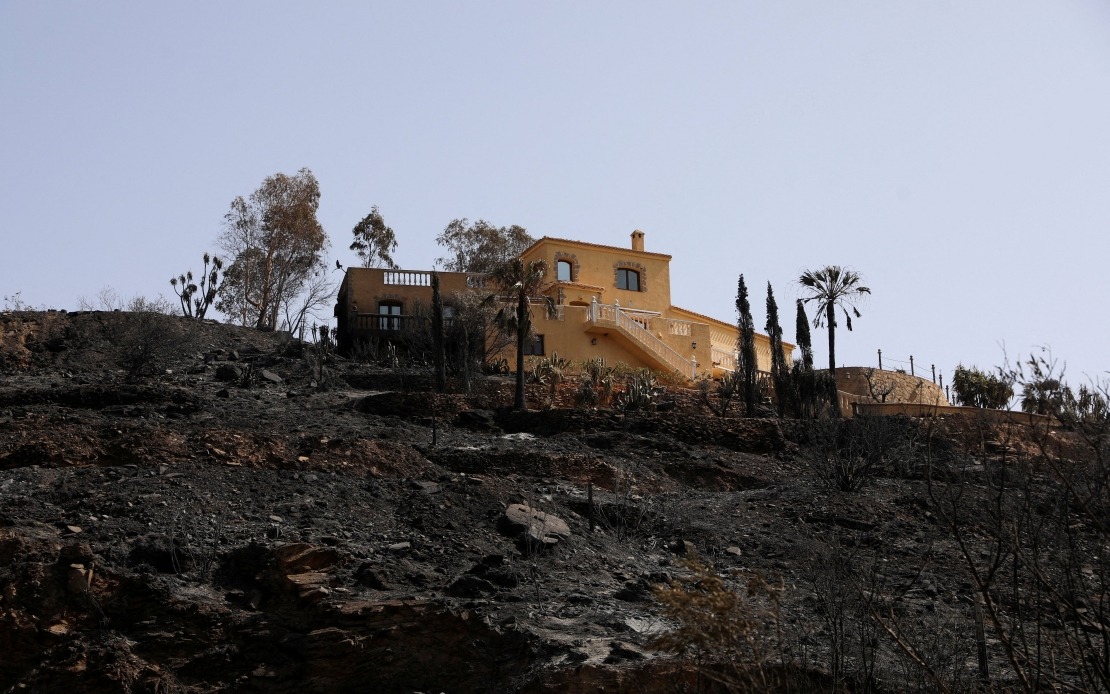
A devastating wildfire that swept through the southeastern Spanish province of Almeria has resulted in at least 13 deaths, with regional authorities confirming on Sunday that the uncontrolled spread has finally been halted. The blaze, which ignited near the Los Gallardos municipality in the autonomous community of Andalusia, had consumed approximately 7,000 hectares of land before firefighters managed to contain its advance. The fire represents one of the most destructive incidents to affect the region in recent years, drawing international attention and prompting renewed discussions about climate vulnerability across Europe.
The human toll continues to mount as search and rescue operations progress. Seven individuals remain hospitalised following the disaster, with three of those cases classified as serious, according to the latest figures released by regional health authorities. Additionally, ten people have been officially registered as missing, leaving families anxiously awaiting confirmation of their whereabouts. Spanish public broadcaster RTVE highlighted that a significant portion of those impacted by the catastrophe are foreign nationals, reflecting the region's popularity as a destination for international residents and tourists during the summer months.
The incident began on Thursday when the wildfire broke out near Los Gallardos, a municipality in Almeria. The initial rapid spread of the flames forced emergency services to launch a comprehensive evacuation effort affecting thousands of residents across the affected zones. Approximately 600 residents were permitted to return to their homes on Saturday, marking the first phase of the repatriation process. Following the stabilisation announcement, regional authorities moved to lower the alert level and authorised the remaining roughly 1,000 evacuees to head back to their residences, signalling an improvement in the situation though not yet declaring it fully resolved.
Investigators are working to determine what sparked the initial ignition, with preliminary indications suggesting that the collapse of an electricity pole or related power infrastructure may have been responsible. This hypothesis points to potential infrastructure vulnerabilities that could be exacerbated during extreme weather conditions typical of southern Spain's summer season. The investigation remains ongoing as authorities seek to establish definitive causation and assess whether negligence or maintenance failures played a role in the disaster.
Juanma Moreno, the head of Andalusia's regional government, provided an update on Sunday afternoon confirming that the wildfire was no longer advancing and had been successfully contained within defined perimeter boundaries. However, Moreno cautioned that substantial work remained ahead before authorities could confidently declare the blaze fully controlled and extinguished. His comments reflected the reality that even when a fire's spread is arrested, the process of complete suppression and ensuring no rekindling occurs can extend over days or weeks depending on conditions and remaining fuel sources.
Moreno characterised this incident as the most serious wildfire to strike Andalusia in contemporary history, underscoring the severity and scale of what residents and emergency personnel have endured. The regional leader used the crisis as a platform to urge both the general public and government institutions to confront climate change with greater seriousness and urgency. His remarks aligned with growing scientific consensus about the intensification of extreme weather phenomena across the Mediterranean basin, where rising temperatures have extended fire seasons and increased the ferocity of blazes when they occur.
The relationship between climate change and wildfire behaviour has become increasingly evident to Spanish policymakers and environmental experts. Moreno specifically noted that shifting climate patterns are generating increasingly complex conditions that make fire management exceptionally challenging. The phenomenon of unprecedented wildfire sizes and destructive capabilities reflects broader environmental shifts that authorities across Europe are struggling to address through conventional firefighting and prevention mechanisms.
For Malaysian and Southeast Asian observers, the Almeria wildfire serves as a sobering illustration of climate-related hazards that transcend traditional geographic boundaries and wealth disparities. While tropical regions like Malaysia experience different fire dynamics, typically associated with agricultural burning and forest clearance, the Spanish situation demonstrates how climate destabilisation creates novel risks even in developed nations with advanced emergency response infrastructure. The scale of evacuation, the complexity of coordinating rescue operations, and the challenge of investigating causes amid ongoing environmental crises present universal lessons for disaster management planning across diverse regions.
The incident also highlights the vulnerability of infrastructure systems, particularly electricity networks, during periods of extreme heat and drought stress. In Malaysia and Southeast Asia, where monsoon patterns and tropical climate conditions differ markedly from Mediterranean zones, the underlying principle that infrastructure requires climate adaptation remains universally applicable. The hypothesis that electrical infrastructure failure triggered the Spanish blaze suggests that systems designed for historical climate conditions may prove inadequate as temperature regimes shift globally.
Regional authorities in Andalusia face extended recovery operations encompassing not only firefighting completion but also assessment of environmental damage, support for affected residents and businesses, and reconstruction efforts. The presence of international residents among the casualties and displaced persons adds complexity to recovery coordination, requiring multilingual support systems and coordination across borders. This dimension echoes challenges that Southeast Asian nations occasionally encounter during major disasters affecting cross-border populations and communities.
The stabilisation of the Almeria wildfire, while representing progress, comes only after substantial loss of life and ecological damage has occurred. The incident underscores that even in European contexts with sophisticated emergency response systems, the combination of extreme climatic conditions and infrastructure vulnerabilities can overwhelm conventional disaster management approaches. For policymakers internationally, including those in Malaysia and the broader ASEAN region, the Spanish experience reinforces the necessity of integrating climate resilience into infrastructure design, land management practices, and emergency preparedness frameworks before catastrophe strikes rather than attempting response after disaster has unfolded.

