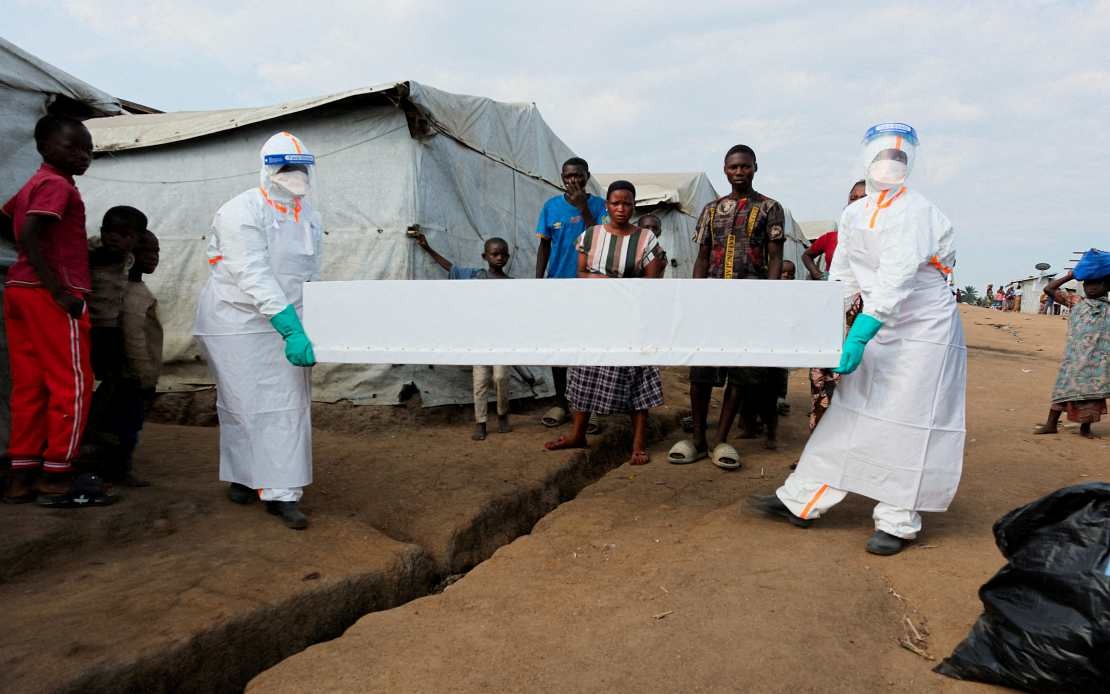
The Democratic Republic of Congo's Ebola crisis has escalated beyond a significant threshold, with confirmed cases now surpassing 1,000 as the outbreak continues to spread through vulnerable communities. Health authorities reported the grim milestone on Sunday, with 1,003 confirmed cases and 254 deaths recorded since the declaration of the epidemic on May 15. The infection rate represents a concerning mortality rate of 25.3 per cent, underscoring the severity of the current strain ravaging the central African nation.
The outbreak's trajectory raises alarm bells across the region and globally, particularly given the warning issued last week by the Africa Centres for Disease Control and Prevention. The continental health body cautioned that without immediate and effective intervention, the current epidemic could potentially eclipse the devastating 2014-2016 West African outbreak, which claimed more than 11,000 lives across Guinea, Liberia and Sierra Leone. That comparison alone illustrates the existential threat the disease now poses to the Democratic Republic of Congo and neighbouring nations, including those in Southeast Asia with trade and travel connections to Central Africa.
Despite the alarming numbers, the Democratic Republic of Congo's Health Ministry has attempted to project a sense of controlled response. Officials stressed that response teams maintain active investigations, epidemiological surveillance and prevention measures throughout the affected territories. The ministry's statement reflects efforts to assure both the domestic population and international observers that systematic containment protocols remain in place, though the scale of transmission suggests these measures face significant challenges.
Health Minister Roger Kamba provided a nuanced assessment of the response's progress, acknowledging both successes and setbacks. Recovery cases have reached at least 100, indicating that some patients have successfully cleared the virus and returned to their communities. However, Kamba also revealed a troubling decline in the contact follow-up rate, a metric critical to containing Ebola's spread. Contact tracing represents the backbone of outbreak control, as identifying and monitoring individuals exposed to confirmed cases allows authorities to isolate infectious individuals before they transmit the virus further. The deterioration in this rate suggests either resource constraints, community resistance, or logistical challenges hampering response efforts.
The current patient load reflects the intensity of ongoing transmission within affected areas. A total of 365 patients remain either isolated or hospitalised, representing both active cases requiring medical intervention and individuals under observation for symptom development. This substantial number of hospitalised patients strains health systems in the provinces of Ituri, North Kivu and South Kivu, where the outbreak concentrates. These regions, already challenged by insecurity, limited infrastructure and resource scarcity, now face the additional burden of managing a highly infectious and deadly disease.
A critical discovery concerning the Ebola strain has emerged from joint research conducted by scientists from Uganda's Department of National Health Laboratory and Diagnostic Services alongside Congo's Institute of National Biomedical Research. The team identified the current pathogen as Ebola Bundibugyo, and crucially determined that this strain originated from a new wildlife spillover event rather than resurgence of a previously documented outbreak. This finding eliminates the possibility that the current epidemic stems from hidden transmission chains persisting from earlier incidents, suggesting instead that human contact with infected animal reservoirs triggered this distinct outbreak. Understanding the zoonotic source remains essential for implementing appropriate prevention strategies targeting both human populations and animal-human interfaces.
The wildlife origin of Ebola Bundibugyo underscores a broader pattern of emerging infectious diseases jumping from animal populations to humans. Central Africa's biodiverse ecosystems harbour numerous pathogens with pandemic potential, and increasing human encroachment into wildlife habitats elevates spillover risk. For Malaysia and other Southeast Asian nations, this reality carries particular significance given the region's own rich biodiversity and expanding human-wildlife interaction in areas like Sabah and Sarawak. The Ebola crisis in Congo serves as a sobering reminder of the transnational threat posed by zoonotic diseases and the necessity for robust surveillance systems across borders.
The Health Minister emphasized that intensified community communication campaigns, enhanced diagnostic capacity and improved case management form the cornerstone of the response strategy. Community engagement proves essential in Ebola control, as public understanding, trust and cooperation directly influence whether individuals with symptoms seek medical care promptly and whether contacts comply with isolation measures. Historical experience from West Africa demonstrated that communities resistant to health interventions or mistrustful of authorities can become vectors for rapid transmission. Rebuilding public confidence in the Democratic Republic of Congo's health system and response efforts presents a significant challenge alongside the epidemiological dimensions of containment.
For Southeast Asian observers, the Democratic Republic of Congo's Ebola situation carries several implications. First, it demonstrates the reality that highly infectious, high-mortality diseases remain endemic threats in certain world regions, capable of rapid escalation if conditions align unfavourably. Second, it illustrates how health system capacity, community trust and effective communication determine epidemic outcomes as much as medical interventions. Third, it reinforces the importance of international cooperation, disease surveillance networks and preparation for potential importation of exotic pathogens into the region. Malaysia's position as a major aviation and shipping hub means that infectious disease threats originating thousands of kilometres away warrant serious domestic preparedness consideration.
The crossing of the 1,000-case threshold represents not merely a statistical milestone but a reflection of sustained transmission within Democratic Republic of Congo's population. While response teams continue their work, the apparent decline in contact follow-up capacity suggests that the outbreak may be outpacing the resources and systems deployed to control it. The international community watches closely, aware that inadequately contained Ebola in Central Africa poses potential consequences far beyond the continent's borders. Regional health authorities across Africa and beyond must strengthen surveillance and preparedness in recognition that Ebola's next chapter could unfold in unexpected locations without sufficient warning systems in place.
%22%2F%3E%3C%2Fpattern%3E%3C%2Fdefs%3E%3Crect%20width%3D%22100%25%22%20height%3D%22100%25%22%20fill%3D%22url(%23ph1dyt3g)%22%2F%3E%3Crect%20width%3D%22100%25%22%20height%3D%22100%25%22%20fill%3D%22url(%23ph1dyt3p)%22%2F%3E%3Ctext%20x%3D%2250%25%22%20y%3D%2250%25%22%20text-anchor%3D%22middle%22%20dominant-baseline%3D%22central%22%20fill%3D%22rgba(255%2C255%2C255%2C0.95)%22%20font-family%3D%22Georgia%2C%20'Times%20New%20Roman'%2C%20serif%22%20font-weight%3D%22700%22%20font-size%3D%22170%22%20letter-spacing%3D%22-0.02em%22%3ESelangor%3C%2Ftext%3E%3C%2Fsvg%3E)
%22%2F%3E%3C%2Fpattern%3E%3C%2Fdefs%3E%3Crect%20width%3D%22100%25%22%20height%3D%22100%25%22%20fill%3D%22url(%23ph3uv4ig)%22%2F%3E%3Crect%20width%3D%22100%25%22%20height%3D%22100%25%22%20fill%3D%22url(%23ph3uv4ip)%22%2F%3E%3Ctext%20x%3D%2250%25%22%20y%3D%2250%25%22%20text-anchor%3D%22middle%22%20dominant-baseline%3D%22central%22%20fill%3D%22rgba(255%2C255%2C255%2C0.95)%22%20font-family%3D%22Georgia%2C%20'Times%20New%20Roman'%2C%20serif%22%20font-weight%3D%22700%22%20font-size%3D%22272%22%20letter-spacing%3D%22-0.02em%22%3EQatar%3C%2Ftext%3E%3C%2Fsvg%3E)