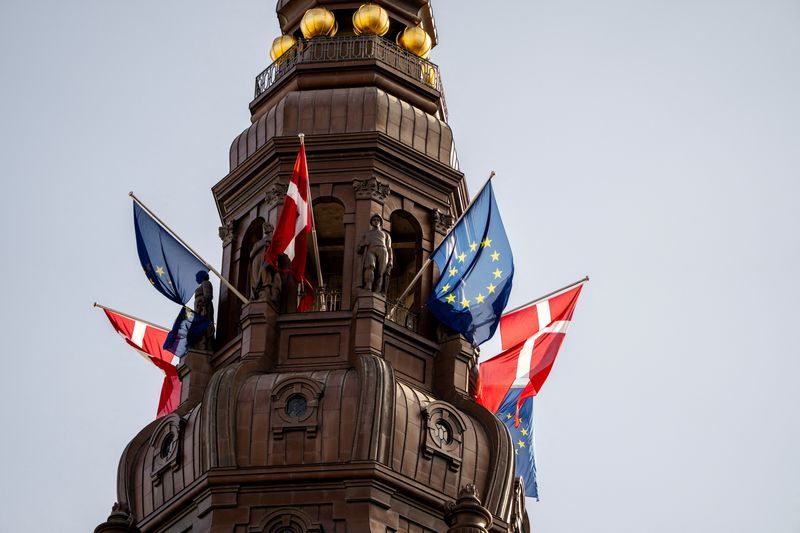
Denmark's government has formally joined an ongoing European Court of Justice dispute between Belgium and major technology companies, filing written arguments in support of Belgium's position on digital publishers' rights. The Culture Ministry announced the intervention on Monday, underscoring Copenhagen's conviction that the outcome of this high-stakes case carries significant implications for how European media outlets—including Danish news organisations—can secure fair compensation for their content on digital platforms.
The case originated in 2023 when Streamz, Google, Meta, Spotify, and Sony lodged a legal challenge against Belgium's implementation of Article 15 of the Digital Single Market Directive, a landmark European Union law designed to protect press publishers' intellectual property rights. The tech companies argued that Belgium's interpretation of these provisions violates broader EU legal principles, effectively challenging the scope and enforceability of rules that require platforms to negotiate licensing agreements or pay fees when they republish news content on their services.
Denmark's participation at the oral hearings scheduled for July 6 and 7 signals a deliberate escalation of the Nordic country's commitment to safeguarding media independence across Europe. By entering the case on Belgium's side, Denmark is positioning itself alongside Member States defending the principle that technology corporations should bear financial responsibility when they profit from journalistic content. This intervention reflects a broader European concern that without robust enforcement of publishers' rights, the economic viability of traditional media—already under pressure from digital disruption—could deteriorate further.
The Danish delegation, led by the Culture Ministry as part of a formal procedural team, intends to focus the court's attention on a central issue: establishing clear accountability mechanisms for technology platforms. Denmark will argue that Meta, Google, Spotify, and their counterparts cannot be permitted to exploit publishers' work without providing commensurate financial returns. This argument goes beyond mere regulatory compliance; it strikes at the fundamental tension between the open internet principle and the protection of intellectual property that underpins the Digital Single Market framework.
Culture Minister Zenia Stampe has been unequivocal about the stakes, asserting that technology giants should be prohibited from utilising media content without compensation. Her statement reflects a position increasingly shared across Northern Europe, where governments have watched their domestic media sectors contract amid competition from free, advertiser-supported digital platforms. The minister further emphasised that inadequate protection for publishers ultimately harms Danish media entities and, by extension, weakens democratic discourse by reducing the resources available for independent journalism.
For Malaysian and Southeast Asian observers, this dispute carries significant lessons. The Digital Single Market Directive represents one of the most comprehensive attempts by a regional bloc to regulate technology companies on behalf of content creators. The European outcome could influence how other regions, including ASEAN nations, approach their own emerging frameworks for digital content rights. If European courts rule in favour of the tech companies, it would signal that platform business models—built on aggregating content without necessarily compensating creators—enjoy legal protection even within highly regulated markets. Conversely, a ruling supporting Belgium and Denmark would establish a precedent for jurisdictions seeking to enforce stronger creator protections.
The underlying legal question centres on how broadly Article 15 should be interpreted. The tech companies contend that the provision overreaches, potentially capturing incidental references to news articles that platforms display through algorithms or news aggregation functions. Publishers and supporting governments argue the opposite: that any meaningful republication of journalistic content for commercial purposes triggers the obligation to pay. This definitional struggle has profound consequences for the business model sustainability of digital news services across Europe and beyond.
Denmark's intervention also reflects the country's historical prioritisation of media pluralism and press freedom as cornerstones of democratic governance. The Nordic approach to regulating technology companies typically emphasises shared responsibility, holding both platforms and governments accountable for preserving space for professional journalism. By entering the Streamz case, Denmark reinforces this philosophy at the European level, signalling that media sustainability is not merely an economic concern but a democratic necessity.
Beyond the immediate Streamz dispute, Denmark has demonstrated its commitment to publisher protection by participating in a separate, landmark European copyright case examining Google's use of press material to train artificial intelligence systems. This dual engagement suggests a coordinated Danish strategy to establish enforceable principles across multiple dimensions of tech-media relations. The question of whether platforms can scrape content for machine learning purposes represents the next frontier in digital rights disputes, potentially even more consequential than current licensing agreements as AI capabilities expand.
The European Court of Justice's decision will resonate far beyond Belgium and Denmark. Media organisations worldwide are watching how Europe resolves this tension between digital innovation and content creator rights. For smaller European nations and developing regions, a strong ruling protecting publishers could provide template legislation for their own digital frameworks. Conversely, a victory for the tech companies would reinforce the current global paradigm where platforms operate with minimal obligations to compensate the human creators whose work generates engagement and advertising revenue.
Denmark's legal arguments will likely emphasise that technology platforms function as modern publishers themselves, curating and presenting content to audiences for profit, and should therefore assume traditional publisher responsibilities including fair compensation for source material. This framing challenges the fiction that platforms are merely neutral conduits and forces courts to confront the reality that algorithmic content distribution has economic value extracted from creators who retain no bargaining power.
The case also highlights growing frustration among European governments with the current global digital economy, where substantial profits accumulate in technology centres while content-producing nations subsidise these ecosystems through undercompensated creative work. Denmark's intervention embodies a European demand for rebalancing, asserting that regulatory frameworks must protect local creative industries from exploitation by multinational technology corporations.

