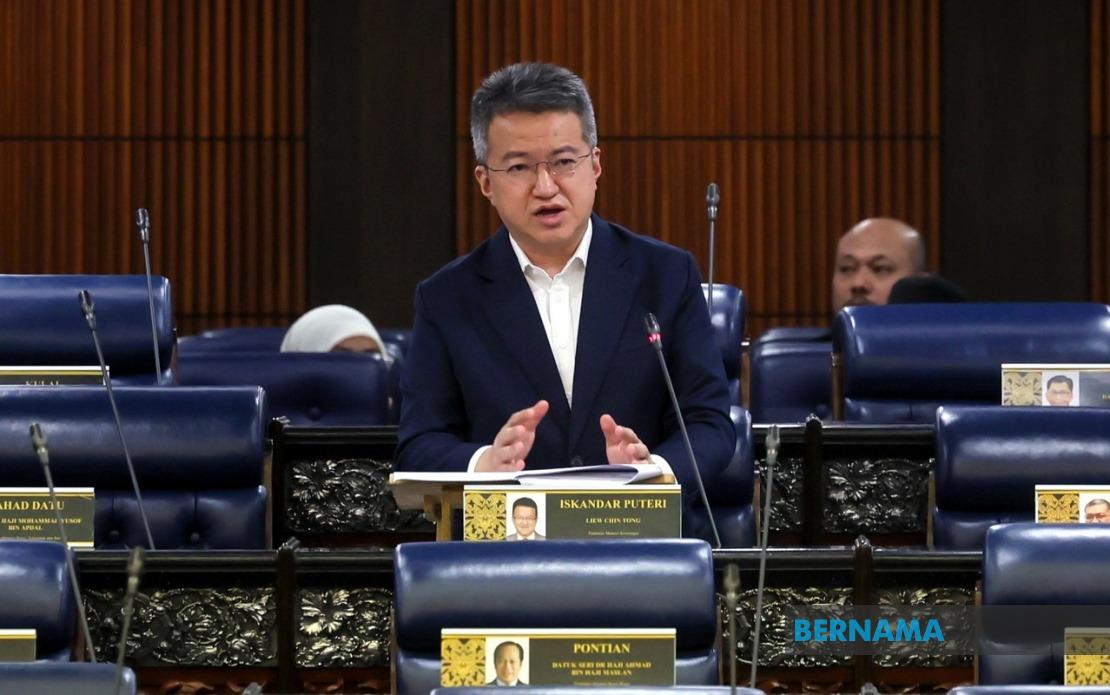
Deputy Finance Minister Liew Chin Tong has categorically denied allegations that Jho Low, the fugitive businessman at the centre of the 1Malaysia Development Berhad scandal, entered Malaysia under cover of a Chinese delegation last year to negotiate a settlement. The brief but emphatic denial came during parliamentary question time on July 9, when Liew was pressed by MUDA MP Syed Saddiq Syed Abdul Rahman about media reports of the purported clandestine meeting.
The speculation surrounding Jho Low's possible movements reflects the lingering intrigue surrounding one of Asia's largest financial scandals. The fugitive, whose full name is Low Taek Jho, remains a central figure in investigations across multiple jurisdictions, and any suggestion of his return to Malaysia carries significant political and legal implications. The allegation, which emerged from media sources, suggested that negotiations over a potential 1MDB repayment package had taken place involving the Ministry of Finance—claims the government has now firmly refuted.
Liew's response addressed the broader context of Malaysia's ongoing efforts to recover the enormous sums misappropriated through 1MDB. The deputy minister outlined the government's multifaceted approach, emphasising that authorities continue to pursue asset recovery through both criminal prosecutions and civil litigation. This two-pronged strategy has already yielded notable results, particularly in cases involving individuals at the top echelons of the former administration.
The most prominent conviction remains that of Datuk Seri Najib Tun Razak, the former Prime Minister whose direct involvement in the 1MDB scheme led to a landmark December 2025 High Court verdict. Najib received a 15-year prison sentence and faced a financial penalty of RM11.38 billion after the court found him guilty on 25 separate counts encompassing money laundering and the abuse of his official position to solicit bribes. This outcome represented a watershed moment in Malaysia's anti-corruption efforts, demonstrating that even former heads of government are not immune to prosecution.
Beyond Najib, the government has pursued other figures implicated in the scandal. The civil proceedings against Datin Seri Rosmah Mansor, Najib's wife, target approximately US$380 million in damages related to luxury acquisitions allegedly financed through diverted 1MDB funds. The purchases in question—primarily high-end handbags and jewellery—became emblematic of the extravagant lifestyle enabled by the misappropriated billions, capturing international media attention and compounding the reputational damage to Malaysia.
Jho Low himself remains the subject of parallel enforcement actions. Authorities have filed both criminal and civil claims against the alleged principal architect of the 1MDB fraud scheme. The civil claim alone represents a staggering US$3.78 billion, equivalent to approximately RM15.4 billion. Despite his absence from Malaysian jurisdiction, the government continues to pursue these cases, reflecting the determination to hold him accountable and recover stolen assets wherever they may be located.
The scale of the 1MDB losses extends far beyond individual conviction figures or specific asset recoveries. Liew characterised the damage across four distinct categories, each representing a different dimension of harm to the nation. The direct financial losses captured the immediate sums stolen; opportunity costs reflected the investments and development projects that never materialised due to diverted funds; irrecoverable losses acknowledged that significant portions may never be retrieved; and the damage to Malaysia's international reputation represented perhaps the most intangible yet consequential impact.
This reputational dimension has proven particularly consequential for Malaysia's standing in regional and global contexts. The 1MDB scandal attracted unprecedented international scrutiny, prompting investigations in multiple countries and damaging Malaysia's image as a financial hub committed to transparency and accountability. The recovery efforts undertaken by successive governments have been partly motivated by the imperative to demonstrate that Malaysia takes financial integrity seriously and has mechanisms in place to address even systemic corruption at the highest levels.
The denial of Jho Low's alleged presence also carries implications for Malaysia's border security and diplomatic relations. Any suggestion that a high-profile fugitive could re-enter the country undetected would raise uncomfortable questions about surveillance capabilities and inter-agency coordination. By firmly rejecting the allegation, the government reasserts its commitment to preventing any return by individuals wanted for serious crimes.
Looking forward, the trajectory of 1MDB-related prosecutions and recoveries will remain significant both as a legal matter and as an indicator of Malaysia's broader commitment to institutional accountability. The cases against Najib, Rosmah, and Jho Low will continue to be closely watched both domestically and internationally, with implications for how Malaysia addresses high-level financial crime and whether the country can fully emerge from the shadow of the scandal.
The parliamentary exchange also underscores the ongoing political sensitivity of 1MDB. Despite the change of government since the scheme's exposure, questions continue to be raised about loose ends, alleged secret negotiations, and the ultimate fate of remaining stolen assets. Each new allegation prompts careful official responses that attempt to balance reassurance about progress with acknowledgement of the scale and complexity of the recovery challenge. For Malaysian observers and the broader region, the 1MDB saga remains a cautionary tale about the dangers of institutional capture and the long-term work required to restore trust and accountability.

