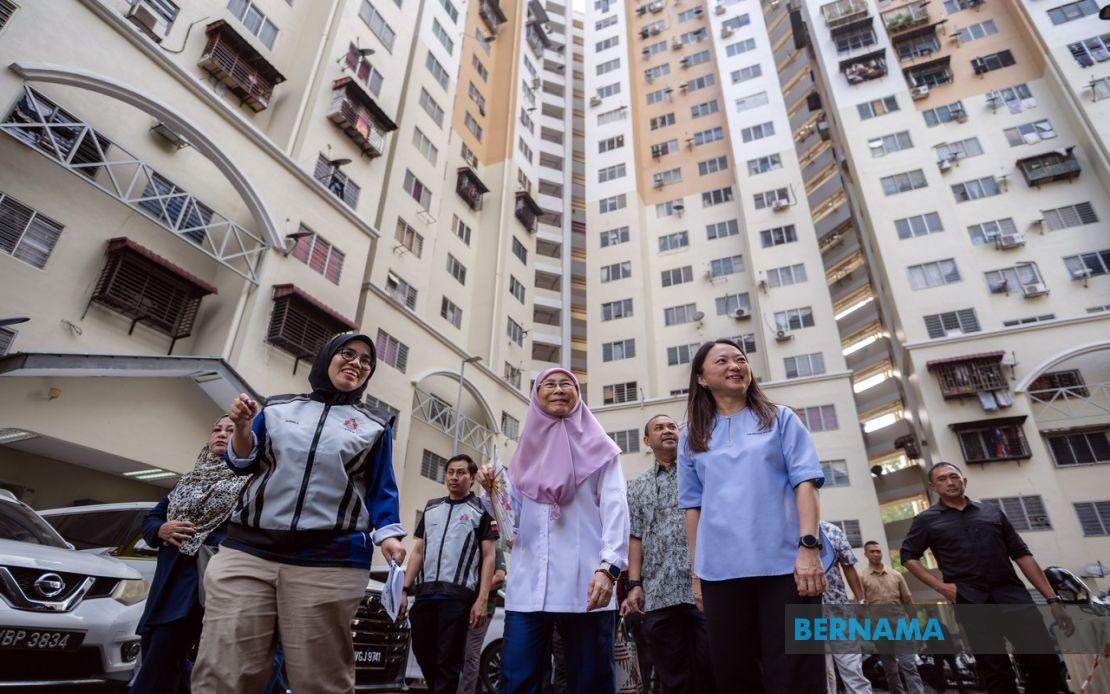
The federal government has marked another milestone in its public housing renovation programme with the successful completion of upgrading works at the Desa Tun Razak People's Housing Project in Kuala Lumpur. The RM9.6 million project represents tangible progress within a broader modernisation strategy that encompasses 61 similar facilities across the capital, with 22 now finished and the remainder expected to be concluded by year's end.
Minister in the Prime Minister's Department (Federal Territories) Hannah Yeoh underscored the significance of this development during an inspection of the completed works, emphasising that the undertaking reflects a deliberate shift away from reactive, piecemeal maintenance towards a systematic and well-funded approach to public housing preservation. The government's decision to allocate an additional RM300 million in the current financial year signals recognition that sustained investment in affordable housing infrastructure is essential to maintaining liveable communities for lower-income households. This additional tranche of funding secured cross-party support from all Kuala Lumpur Members of Parliament, suggesting broad consensus on the importance of such initiatives regardless of political affiliation.
The motivation behind this comprehensive upgrading strategy becomes clear when examining the specific work completed at Desa Tun Razak, which has served more than 8,000 residents since its establishment in 1998. The facility had experienced several fire incidents in the preceding year, exposing critical gaps in safety infrastructure that demanded urgent rectification. Rather than address these problems incrementally, the government seized the opportunity to conduct holistic improvements encompassing electrical system overhauls, structural repairs, and fire prevention enhancements. This integrated approach minimises disruption to residents and ensures that complementary improvements—such as upgraded drainage systems and fire riser installations—work in concert to elevate living standards.
Kuala Lumpur Mayor Datuk Fadhlun Mak Ujud provided detailed breakdowns of expenditure, revealing how the RM9.6 million allocation was distributed across distinct categories of work. The largest component, RM7 million, was directed towards comprehensive repainting and cosmetic improvements that extend the visual appeal and perceived value of the residential environment. A further RM1.68 million targeted the installation and upgrading of fire prevention systems and electrical infrastructure—critical safety measures that address the specific vulnerabilities identified through recent incidents. Road resurfacing accounted for nearly RM1 million of the budget, addressing deterioration that affects both accessibility and safety for residents and emergency service vehicles.
The completion of Desa Tun Razak represents progress within a densely populated urban context where housing pressures remain acute. Kuala Lumpur's PPR facilities serve as anchors of affordable housing stock in an increasingly expensive property market, making their maintenance and enhancement directly relevant to the broader challenge of preserving economic diversity within the capital. As residential property values escalate throughout the metropolitan area, the preservation and upgrading of public housing projects becomes increasingly important in preventing the displacement of lower and middle-income households to peripheral locations far from employment centres and essential services.
Parking constraints identified at the Desa Tun Razak facility highlight ongoing tensions between building density and infrastructure capacity within established residential areas. The Kuala Lumpur City Hall commitment to identify suitable vacant land for temporary parking solutions demonstrates awareness that upgrading housing infrastructure must extend beyond structural improvements to address the practical mobility and convenience concerns of contemporary residents. This incremental approach to expanding parking availability reflects the spatial constraints inherent in densely developed urban environments where land availability is limited and competing demands for space remain persistent.
Bandar Tun Razak Member of Parliament Datuk Seri Dr Wan Azizah Wan Ismail's remarks during the project inspection highlighted the reciprocal responsibility between government investment and community stewardship. Her emphasis on fostering a culture of property care recognises that infrastructure improvements alone cannot ensure long-term asset preservation without corresponding behavioural change among residents. This framing acknowledges that public housing success depends not merely on initial capital expenditure but on sustained commitment from inhabitants to maintain shared facilities and respect communal spaces. The messaging serves as a gentle reminder that government provision of housing and amenities represents an investment in community welfare that requires corresponding commitment from beneficiaries.
The RM300 million allocation announced for the current year provides sufficient resources to complete all 61 PPR upgrading projects in Kuala Lumpur should implementation timelines remain on track. Achieving this target would represent substantial progress in addressing the accumulated maintenance backlog that typically affects public housing stocks, particularly facilities that have operated for two decades or more. The systemic approach adopted here contrasts with ad hoc repair strategies that characterise maintenance practices in many developing economies, where budgetary constraints often force administrators to respond reactively only when critical failures occur.
This initiative carries implications extending beyond Kuala Lumpur. As Malaysia's capital and largest metropolitan area, patterns established here often influence policy approaches in other major urban centres. Should the PPR upgrading programme deliver measurable improvements in resident satisfaction, safety outcomes, and asset preservation, the model may serve as a template for similar initiatives in Selangor, Penang, Johor Bahru, and other high-density urban areas where public housing serves substantial populations. The cross-party political support securing at the federal level strengthens the prospect that such programmes might transcend electoral cycles, providing the long-term stability necessary for sustained infrastructure investment.
Looking forward, the completion of the Desa Tun Razak project and the 21 others demonstrates momentum within Malaysia's public housing modernisation agenda. Success in delivering the remaining projects on schedule and budget would validate the systematic approach adopted and potentially justify continued or expanded investment in similar programmes. For residents of Desa Tun Razak and comparable facilities throughout Kuala Lumpur, completion of these upgrades should translate into tangible improvements in daily living conditions, enhanced safety, and renewed confidence that government remains committed to preserving the quality of affordable housing stock essential to urban social cohesion and economic functionality.

