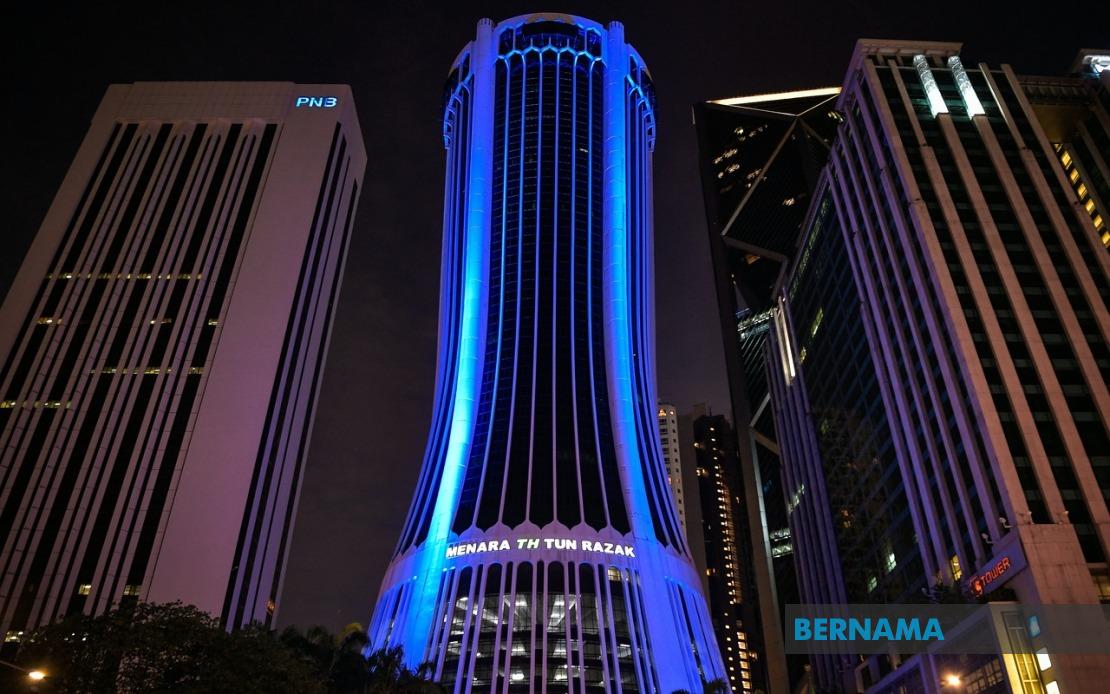
The release of a Royal Commission of Inquiry report examining Tabung Haji's management and operations has not substantially eroded public confidence in the institution, with depositors continuing to view the Islamic financial body through the lens of religious duty rather than conventional banking scrutiny. For the Muslim majority in Malaysia, Tabung Haji transcends its function as a savings and investment vehicle, embodying instead a sacred responsibility to facilitate one of Islam's five pillars—the pilgrimage to Mecca. This spiritual dimension appears to anchor depositor loyalty even as governance questions remain unresolved.
Tailor Atiqah Shah Hadi, 40, exemplifies this resilience. She has maintained her Tabung Haji account since her father opened it during her childhood, never wavering in her commitment despite the institutional turbulence. When she checked her account status recently, she learned her anticipated turn for the hajj pilgrimage falls in 2033—over a decade away. Rather than viewing this extended timeline as discouraging, she frames it as motivation to continue regular contributions, confident that her accumulated savings will fulfil her religious aspiration when the opportunity arrives. Her steadfast approach reflects a broader cultural pattern among Malaysian Muslims for whom Tabung Haji serves as a dedicated pathway to spiritual obligation, insulated from conventional economic anxieties.
Muhammad Haikal Abdul Halim, a 35-year-old civil servant, presents another case of unwavering institutional loyalty. Although he acknowledges being aware of problems surrounding Tabung Haji's stewardship of hajj administration, he has never seriously contemplated withdrawing his existing savings. More tellingly, he intends to establish an automatic monthly salary deduction arrangement to accelerate his accumulation. Based on current waiting list projections, he anticipates undertaking the hajj in 2032, compelling him to intensify savings immediately. His confidence extends beyond his own participation; he plans to open Tabung Haji accounts for his three young children, deliberately positioning them within the institution's long-term infrastructure. This intergenerational approach suggests families view Tabung Haji as fundamental to their Islamic identity rather than discretionary financial service.
Academic perspectives underline the structural foundations that might sustain depositor confidence through institutional reform. Dr Saizal Pinjaman, director of the Centre for Economic Development and Policy at Universiti Malaysia Sabah, identifies two critical pillars: rigorous safeguarding of depositor capital and strengthened long-term financial viability. He emphasizes that Tabung Haji must derive profit calculations from thoroughly audited accounts that comprehensively reflect losses, investment impairments, and asset deterioration. These financial determinations cannot float free from economic realities but must account for market fluctuations and structural fundamentals. Saizal argues that maintaining adequate reserves to absorb market volatility represents a prerequisite for stability, with profit distribution to depositors permissible only when genuine financial balance permits sustainable payment schedules.
Transparency in operational costing emerges as another pillar. Saizal advocates consistent public disclosure regarding the actual expenditures Tabung Haji incurs or currently bears for hajj facilitation. Such clarity would ground depositor expectations in operational reality rather than aspirational projections, enabling informed confidence calibrated to institutional capacity. Without such transparency, faith becomes vulnerable to disillusionment when expectations diverge from deliverable reality. Yet the appetite among depositors for pursuing such details appears modest, suggesting that religious commitment may actually reduce demand for the granular financial accountability that would be standard in conventional banking relationships.
Dr Noor Nirwandy Mat Noordin, a senior lecturer at the Centre for Media and Information Warfare Studies at Universiti Teknologi MARA, offers a more optimistic institutional assessment. He characterizes Tabung Haji's post-crisis trajectory as one of genuine recovery and strengthening, noting that the organization has achieved international recognition as one of the world's premier hajj management bodies in recent years. This external validation provides institutional legitimacy that may reinforce domestic depositor confidence. From his perspective, the evidence suggests Tabung Haji possesses the operational capacity and strategic direction to discharge its mandate to Malaysia's Muslim population with effectiveness, excellence, and deserved community pride.
The durability of depositor confidence despite governance scrutiny reveals important dynamics about how Malaysians relate to Islamic institutions. Religious obligation appears to function as a stabilizing force that conventional financial metrics cannot easily disrupt. Depositors acknowledge institutional problems abstractly but compartmentalize them from personal commitment, applying different evaluation standards than they might to secular financial institutions. The hajj waiting list, extending years or even decades into the future, further insulates Tabung Haji from immediate accountability pressure. Depositors accumulate savings gradually with no expectation of imminent redemption, reducing their sensitivity to near-term performance volatility.
This psychological framework creates organizational resilience but also potential complacency. Institutions protected by religious commitment may face reduced pressure to implement the governance reforms, financial transparency, and operational efficiency improvements that would strengthen them substantively rather than merely benefit from depositor forbearance. The challenge for Tabung Haji lies in recognizing that maintaining long-term institutional health requires proactive management excellence, not merely reliance on the religious commitment of its constituency.
For Southeast Asian policy observers, Tabung Haji's situation illustrates how religious financial institutions operate under different social contracts than conventional banks. Depositor behavior, institutional legitimacy, and accountability frameworks all carry distinct characteristics when religious obligation constitutes the primary relationship foundation. As Islamic finance expands across the region, understanding these dynamics becomes increasingly important for regulators, institutional leaders, and depositors themselves. The institution's ability to preserve both spiritual purpose and financial soundness will ultimately determine whether depositor confidence proves justified or merely reflects temporary forbearance masking deeper structural vulnerabilities.

