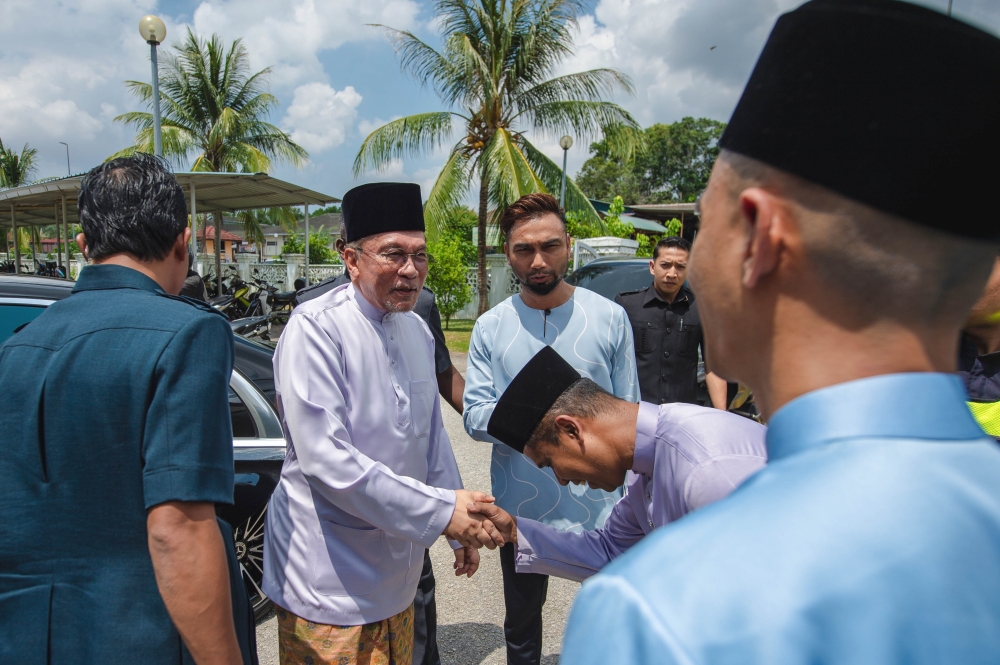
Prime Minister and Finance Minister Datuk Seri Anwar Ibrahim has struck a cautious tone about Malaysia's economic performance, recognising that headline growth figures mask persistent hardship for large segments of the population. Speaking after the release of stronger-than-anticipated second-quarter gross domestic product results, Anwar emphasised that the government fully grasps the reality of suffering among ordinary Malaysians and the micro, small and medium enterprises that form the backbone of the nation's business ecosystem.
The remarks underline a growing awareness within the highest levels of government that macroeconomic gains are not translating uniformly into improved living standards across society. Anwar's acknowledgment represents a departure from purely celebrating economic statistics, instead reflecting a more nuanced understanding that statistical aggregates can obscure divergent outcomes experienced by different communities and business segments. This positioning suggests the administration recognises the political and social importance of demonstrating empathy towards those left behind by overall growth.
Malaysia's economic expansion in the second quarter exceeded analyst expectations, a development typically welcomed by policymakers and market observers. However, the divergence between top-line growth and grassroots economic conditions has become increasingly apparent. Many household surveys and anecdotal evidence indicate that despite recovery in certain sectors, purchasing power remains constrained for middle and lower-income Malaysians, who contend with persistent inflation in essential goods ranging from food to utilities.
MSMEs constitute more than 90 per cent of Malaysian businesses and employ a substantial portion of the workforce, yet access to financing, rising operational costs, and competitive pressures from larger corporations continue constraining their expansion prospects. Many operators report that cost-of-doing-business pressures have tightened margins, limiting capacity for wage growth or expansion hiring. The government's recognition of these difficulties signals potential recalibration of policy priorities, potentially towards targeted support mechanisms rather than broad-based stimulus.
The timing of Anwar's remarks carries significance given Malaysia's position within Southeast Asia's economic hierarchy. As the region's third-largest economy, Malaysia serves as a bellwether for broader regional trends. If policymakers here are openly acknowledging gaps between aggregate growth and household welfare, similar dynamics likely manifest across neighbouring economies facing comparable structural challenges—supply chain fragmentation, rising input costs, and shifting global demand patterns.
For Malaysian readers and businesses assessing their own economic prospects, this government acknowledgment offers both clarification and uncertainty. Clarification comes from official recognition that personal financial struggles are not imaginary but reflect genuine structural challenges. However, the statement provides limited specificity regarding new interventions or policy adjustments, leaving many wondering whether acknowledgment will translate into concrete relief measures such as adjusted subsidies, enhanced MSME credit schemes, or accelerated wage growth initiatives.
The MSME sector particularly warrants closer attention given its centrality to employment and social stability. Small business operators managing thin margins face accumulating pressures from labour costs, rental expenses, supply chain disruptions, and digital transformation demands. Many lack capital buffers to weather prolonged downturns or invest in productivity-enhancing technology. Government support structures, while existing, often involve cumbersome application processes that smaller operators struggle to navigate, particularly in rural and secondary urban areas.
Anwar's framing also reflects awareness that public sentiment increasingly tracks lived experience rather than official statistics. Malaysians comparing their current purchasing power to previous years frequently report that income gains lag cost-of-living increases. This perception gap between official economic narratives and personal financial reality has become a significant political liability for governments across the region. By explicitly acknowledging hardship, the Prime Minister attempts to demonstrate governmental responsiveness and understanding.
Looking forward, the critical test involves whether government policy evolves beyond acknowledgment towards substantive intervention. Possibilities include enhanced targeted cash transfers, expanded MSME lending facilities with reduced collateral requirements, subsidised training programmes, or sector-specific support for industries disproportionately affected by recent disruptions. The effectiveness of such measures depends critically on design and implementation quality, areas where Malaysian government programmes have historically faced challenges including leakage, bureaucratic delays, and inequitable distribution.
Regional observers will monitor Malaysia's policy response closely. Economic policymakers across Southeast Asia grapple with similar contradictions between aggregate growth and distributed welfare. How Malaysia navigates this tension could influence policy approaches elsewhere. The fundamental challenge remains converting overall economic expansion into broadly distributed prosperity—a requirement for sustained growth, social cohesion, and political stability that extends beyond Malaysia's borders.

