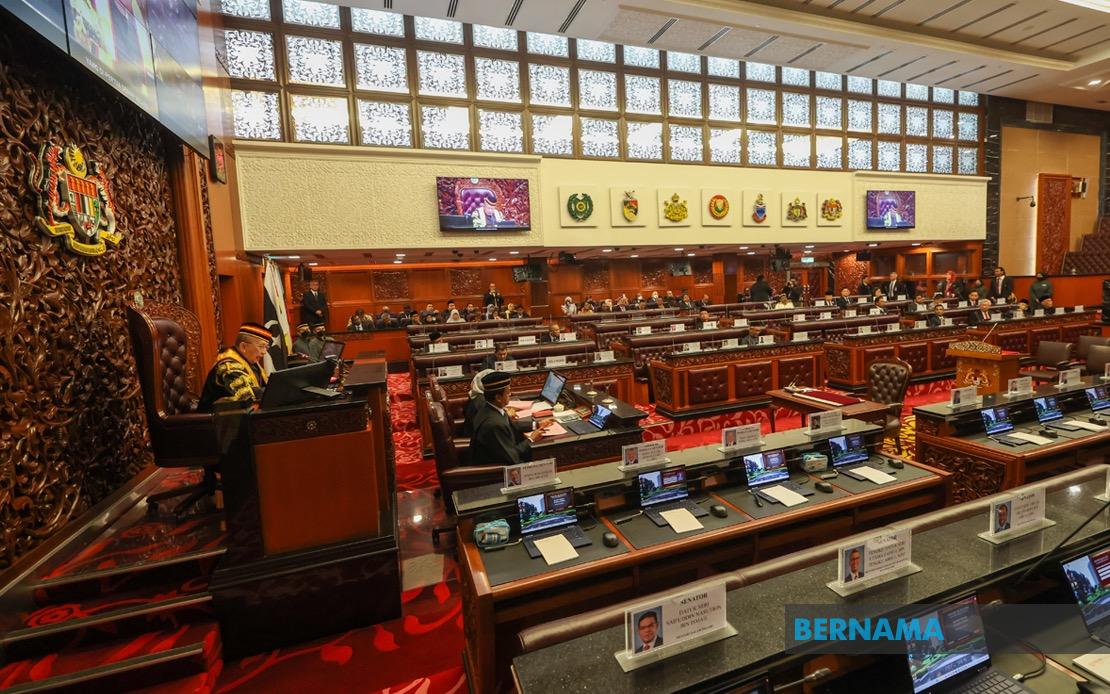
Malaysia's Dewan Negara has formally concluded its Second Meeting of the Fifth Session of the 15th Parliament following a 10-day sitting that yielded legislative progress on governance and statistical oversight. The chamber successfully passed two Bills with substantial implications for national financial management and data collection infrastructure: the National Trust Fund (KWAN) Bill 2026 and the Statistics Bill 2026. These legislative measures represent the government's broader agenda to tighten administrative controls, modernise institutional frameworks and position the nation for sustained economic growth amid evolving global circumstances.
The National Trust Fund Bill, introduced by Deputy Finance Minister Liew Chin Tong, signals renewed commitment to discipline in managing the country's reserve assets. The legislation establishes stricter governance protocols and withdrawal mechanisms designed to protect the integrity of these financial reserves. Simultaneously, the Statistics Bill introduced by Deputy Economy Minister Datuk Mohd Shahar Abdullah creates a modernised legal architecture for national data collection and analysis. In an era where informed policymaking depends on robust empirical foundations, this legislative upgrade reflects recognition that existing statistical frameworks require updating to meet contemporary demands.
The parliamentary sitting, which commenced on July 20, occurred against a backdrop of global economic uncertainty. On the opening day, government representatives addressed the Dewan Negara with assurances that measures would be implemented to shield public welfare from geopolitical shocks, particularly tensions in West Asia. The government outlined intentions to secure critical supply chains, moderate inflation pressures, provide targeted industrial support and build broader economic resilience. This contextual framing demonstrates how parliamentary discussions increasingly incorporate external risk factors that demand proactive national responses.
Prime Minister Datuk Seri Anwar Ibrahim's commentary regarding the Retirement Fund (KWAP) illustrated the government's desire to establish balanced expectations about sovereign fund performance. The pension fund reported a net profit of RM12.9 billion, achievements that require careful interpretation. While acknowledging the positive financial result, the Prime Minister recognised that KWAP's investment experience in eFishery, which ultimately proved unsuccessful, provides instructive lessons for future capital allocation decisions. This candid assessment suggests maturation in how state institutions discuss investment outcomes, moving beyond purely celebratory narratives toward evidence-based evaluation.
State postal services received parliamentary attention as a persistent governance challenge. Pos Malaysia continues implementing its transformation programme targeting operational losses through network restructuring, digital service expansion and cost management discipline. The government simultaneously explores establishing a dedicated Postal Service Fund as a long-term financial instrument, indicating recognition that Malaysia's postal infrastructure requires sustained investment rather than short-term fixes. This approach mirrors challenges facing legacy postal operators across developed economies grappling with declining mail volumes and technological disruption.
Energy security emerged as a critical parliamentary preoccupation during the sitting. On July 23, the government briefed legislators on establishing a strategic petroleum reserve, an initiative that requires weighing fiscal costs against operational necessity, governance architecture and international precedent. Concurrently, the recently finalised 20-year fuel supply agreement with Russia, encompassing petrol, diesel, crude oil and gas, received parliamentary scrutiny as a component of the National Energy Transition Roadmap. This diversification of supply sources reflects pragmatic recognition that energy independence requires multiple sourcing arrangements and international partnerships despite broader geopolitical complexities.
Foreign direct investment received substantive parliamentary discussion, with particular emphasis on Japanese commitment to Malaysia's electrical and electronics sector. Between 2021 and 2025, approved Japanese investments reached RM10.5 billion across 46 projects, anticipated to create 9,009 jobs. These investments underscore Malaysia's enduring attractiveness as a high-technology manufacturing destination and strengthen the nation's position within regional electronics supply chains. For Malaysian policymakers, sustaining this investment momentum requires continued commitment to industrial infrastructure, skilled workforce development and stable operational frameworks.
Competitiveness metrics featured prominently in parliamentary deliberations. On July 27, Deputy Economy Minister Mohd Shahar reported that Malaysia remains aligned to achieve top-12 global ranking in the World Competitiveness Index by the conclusion of the 13th Malaysia Plan, supported by improved positioning in the 2026 World Competitiveness Ranking. This performance trajectory reflects years of economic reform and structural improvements, though maintaining momentum demands sustained policy consistency and continued institutional strengthening. The parliament received this update within a framework acknowledging that competitiveness represents an ongoing competitive process rather than a destination.
Development financial institutions received renewed regulatory oversight through Bank Negara Malaysia's introduction of a Performance Measurement Framework effective from July 1, 2027. This framework advances beyond conventional financial metrics to encompass development impact, governance quality and operational efficiency. Such comprehensive assessment recognises that development banks serve multifaceted mandates requiring evaluation beyond pure profitability, a conceptual evolution increasingly embraced by multilateral development institutions globally.
The electric vehicle ecosystem generated parliamentary discussion reflecting Malaysia's technological ambitions. The Ministry of Investment, Trade and Industry confirmed that the sector would remain primarily driven by private investment without government-imposed pricing controls on public charging infrastructure. As of May 31, the nation had installed 6,416 public EV chargers nationwide, representing tangible infrastructure development. This market-driven approach permits competitive innovation while government maintains supportive frameworks, a model increasingly adopted across Southeast Asia as nations pursue decarbonisation objectives.
Fiscal sustainability remained central to parliamentary concerns. The Finance Ministry reported that the federal fiscal deficit has narrowed for the fifth consecutive year, reflecting sustained implementation of economic and fiscal reform measures. Expenditure controls implemented during the first half of 2024 yielded approximately RM5 billion in spending restrictions while maintaining critical public service delivery. Simultaneously, federal debt remained within statutory limits, demonstrating that fiscal discipline need not compromise essential government functions. This achievement carries implications for Malaysian investors, creditors and economic stakeholders by demonstrating governmental commitment to sustainable financial management.
Deputy Finance Minister Liew's commentary on expenditure management underscored that improved public financial efficiency derives from deliberate administrative choices rather than indiscriminate budget reductions. By identifying discretionary spending for restraint while preserving investments in education, healthcare and infrastructure, the government articulates a differentiated approach to fiscal consolidation. Such disciplined budgeting, if sustained across electoral cycles and administrations, establishes credibility with international credit rating agencies and facilitates maintenance of competitive borrowing costs.
The conclusion of this parliamentary session, with the President's adjournment to a date to be announced, marks a cycle of legislative activity addressing contemporary governance challenges. The passage of the KWAN and Statistics Bills provides concrete deliverables, while broader parliamentary discourse reveals a government grappling with interconnected challenges spanning energy security, investment attraction, fiscal discipline and technological transition. For Malaysian stakeholders and regional observers, these proceedings demonstrate how Southeast Asia's second-largest economy approaches the complex task of managing institutional modernisation, economic competitiveness and fiscal responsibility within an uncertain global environment.

