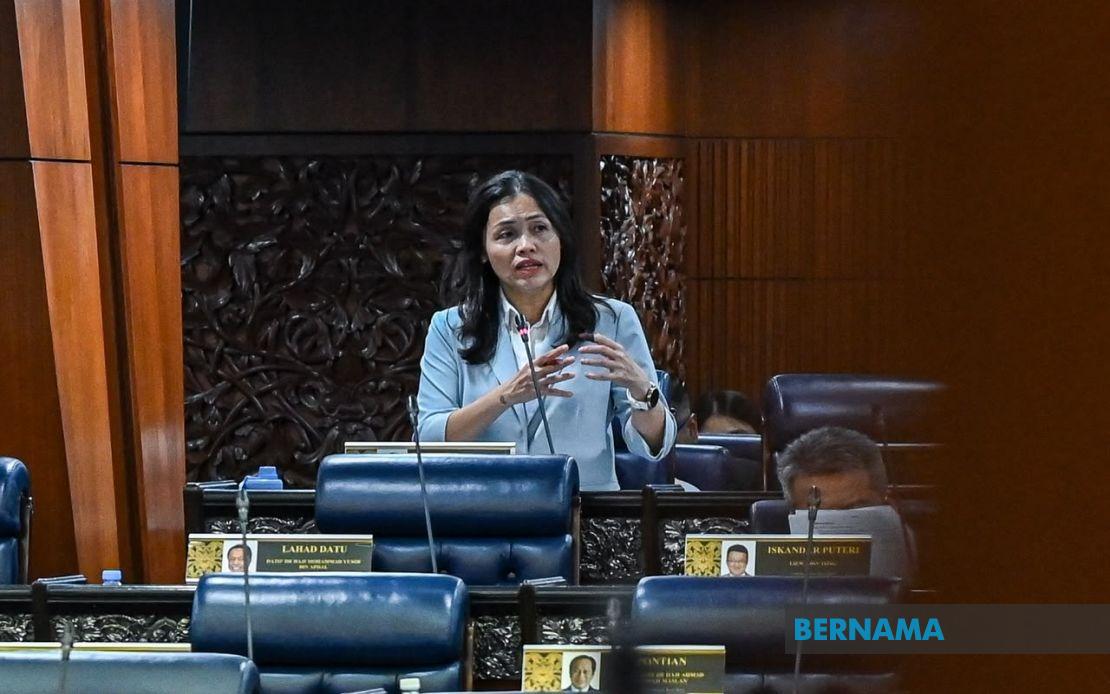
Parliament successfully endorsed the Communications and Multimedia (Amendment) Bill 2026 on July 15, marking a significant step toward modernising Malaysia's legal infrastructure governing digital communications. The legislation aims to align regulatory frameworks with the accelerating pace of technological innovation while addressing emerging geopolitical challenges that increasingly threaten critical digital infrastructure. Deputy Communications Minister Teo Nie Ching emphasised that the amendments represent a carefully calibrated response to global shifts in technology and security, ensuring that Malaysia's communications sector maintains robust safeguards without unnecessary economic burden on citizens.
Central to the amendments is the introduction of a National Universal Service Provision (USP) initiative that weaves national security considerations into the country's communications architecture. Rather than expanding regulatory authority into domains managed by other government agencies, the framework deliberately remains confined to communications and multimedia matters. Specifically, the USP addresses network facility installation and the delivery of application and network services, positioning security not as an afterthought but as a foundational element of how Malaysians access digital connectivity. This integrated approach reflects international best practices where security and accessibility are treated as complementary objectives rather than competing priorities.
One of the bill's most significant assurances concerns affordability. Teo clarified that the USP initiative will not trigger additional consumer charges, a reassurance that carries weight given historical instances where infrastructure upgrades translated into higher user fees. The USP Fund derives its financing exclusively from contributions by licensed telecommunications operators under the existing legislative framework, creating a cost-sharing mechanism that distributes expenses among industry participants rather than users. This structure protects household budgets while ensuring that telecommunications companies invest proportionally in national security and service resilience.
The initiative particularly benefits Malaysians residing in underserved regions where communication infrastructure remains sparse or fragmented. Rural, interior, coastal and island communities across the nation have long faced digital exclusion—a gap that directly undermines economic opportunity and social inclusion. The USP initiative explicitly targets enhancement of service security, reliability and business continuity, recognising that robust communications infrastructure serves multiple purposes simultaneously: emergency response, economic participation and national defence. During parliamentary debate, Datuk Suhaimi Nasir from Libaran highlighted how communication gaps become life-threatening during disasters, when rapid information flow and coordination capabilities determine survival outcomes.
Rural connectivity emerged as a dominant concern throughout the legislative discussion. Multiple parliamentarians underscored that no geographical area should remain without adequate communications infrastructure, particularly given Malaysia's diverse topography and the critical role communications play during natural disasters or public health emergencies. The amendments acknowledge this imperative by establishing mechanisms through which USP funds support network facility deployment in previously underserved territories. For a nation where emergency response capabilities increasingly depend on reliable digital infrastructure, this focus represents enlightened policy rather than optional enhancement.
Datuk Mohd Suhaimi Abdullah raised an important accountability question regarding the Kumpulan Wang USP (USP Fund), requesting public disclosure of current balances and detailed spending plans. His intervention reflects legitimate concern that new security mandates could inadvertently divert resources away from rural infrastructure development. Transparency regarding fund allocation becomes especially important in contexts where multiple objectives—security hardening, rural expansion, service quality improvement—compete for finite resources. Clear communication about budgetary priorities helps stakeholders understand whether security enhancements genuinely complement or potentially compromise rural service expansion goals.
Cyber-related threats prompted Datuk Shahelmey Yahya to advocate for proactive public education regarding digital manipulation techniques. He suggested that authorities periodically gazette emerging forms of digital deception, enabling citizens to recognise and defend against evolving cyber threats targeting personal information and financial security. This proposal acknowledges that infrastructure protection alone proves insufficient without corresponding public awareness and individual vigilance. As financial transactions increasingly move online and digital identity becomes central to accessing government services, population-level cybersecurity literacy becomes a critical national asset.
Yahya's recommendation also addressed institutional capability, specifically urging the Malaysian Communications and Multimedia Commission (MCMC) to deepen its in-house cybersecurity expertise. Overreliance on external consultants for technical security assessments creates vulnerabilities and dependency that compromises long-term institutional autonomy. Building sustained technical capacity within regulatory agencies ensures that Malaysia develops homegrown expertise capable of understanding threats contextualised within the Malaysian operating environment, rather than applying generic international frameworks that may not capture local vulnerabilities or threat vectors.
The parliamentary debate itself demonstrated broad cross-party consensus supporting the amendments, with 18 members participating in substantive discussion before passage by majority vote. This legislative alignment on communications policy suggests recognition across the political spectrum that digital infrastructure security constitutes a non-partisan national interest. Whether represented by Barisan Nasional or Perikatan Nasional members, parliamentarians converged on the principle that Malaysia's communications ecosystem requires explicit security hardening and that rural connectivity expansion remains an ongoing obligation.
For Malaysian consumers and businesses, these amendments establish a clearer regulatory foundation for digital interactions while signalling government commitment to protecting critical infrastructure from emerging threats. The USP initiative creates dedicated mechanisms for addressing rural digital divides without imposing tariff increases, potentially breaking the cycle where infrastructure expansion becomes synonymous with consumer cost escalation. At the regional level, Malaysia's approach to integrating security into universal service frameworks may offer lessons for neighbouring Southeast Asian nations grappling with similar challenges of balancing accessibility with resilience in rapidly evolving digital ecosystems.

