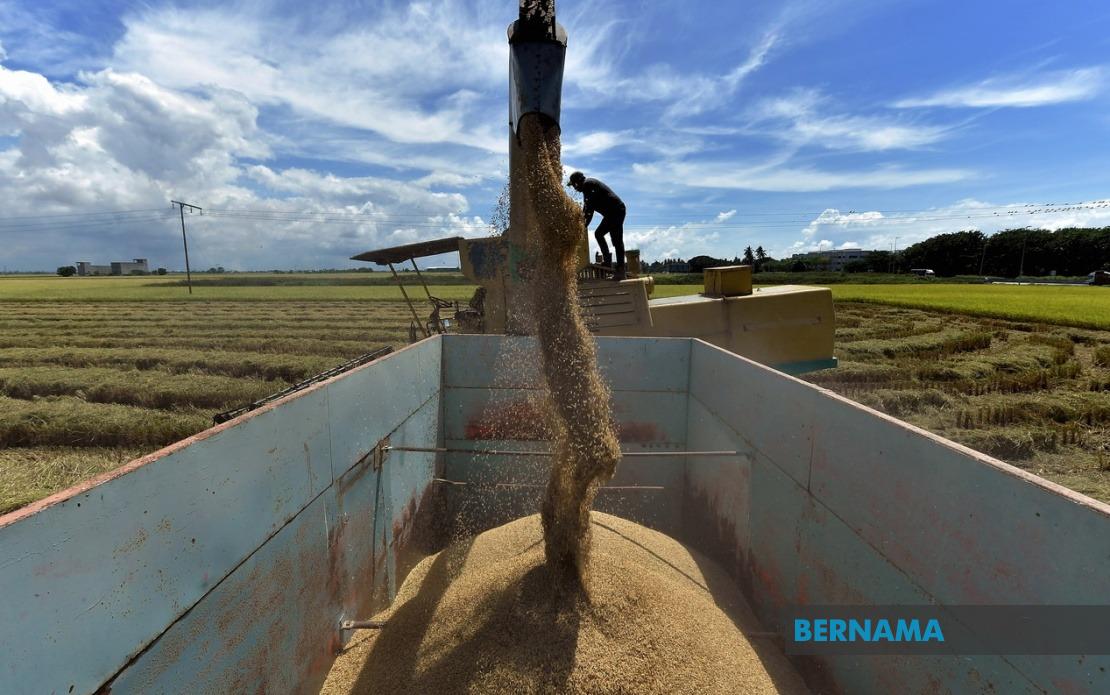
Parliament passed the Control of Padi and Rice (Amendment) Bill 2026 on July 13, marking a significant legislative step toward tightening regulation of one of Malaysia's most critical agricultural sectors. The measure, approved through a majority voice vote after debate from both government and opposition lawmakers, introduces substantially harsher penalties for offences related to rice smuggling, market manipulation, and the misappropriation of locally-produced white rice. The amendments represent the first major overhaul of the principal legislation—Act 522—since it was first enacted over three decades ago, underscoring growing concerns about vulnerabilities in the nation's food supply chain.
The centrepiece of the reforms involves a dramatic escalation in financial penalties designed to deter illegal activities that threaten Malaysia's food security. Individuals found guilty of breaching the Act now face fines of up to RM250,000, while companies and corporate entities can be penalised up to RM1 million. This substantial increase comes at a time when the rice and padi industry, valued at several billion ringgit annually, has faced mounting pressure from smuggling networks and market manipulation tactics that have eroded domestic supply stability and farmer profitability. Deputy Minister of Agriculture and Food Security Datuk Chan Foong Hin explained that the existing penalty structure, which had remained unchanged since 1994, had become entirely inadequate given the scale of illegal profits being extracted from the sector.
Enforcement data presented during parliamentary deliberations revealed the true scope of the problem: seizures of smuggled rice and illegally diverted local stocks reflect substantial volumes, yet historical sentencing has failed to match the gravity of these crimes. The disparity between the scale of illicit operations and the comparatively modest fines imposed under the old regime essentially created an economic incentive for wrongdoing. Criminals could calculate that the risk-adjusted cost of smuggling or hoarding—even accounting for the possibility of detection—remained profitable. The new penalty structure aims to invert that calculus by making violations financially catastrophic for both individuals and organisations willing to circumvent regulations.
Beyond financial penalties, the amendments also address the structural mechanisms through which the padi and rice industry operates. Datuk Chan stressed that stronger enforcement powers serve a dual purpose: protecting farmers from predatory market practices while simultaneously safeguarding the broader population's access to reliable rice supplies at stable prices. In the Malaysian context, rice remains a foundational staple consumed across all ethnic and income groups, making the stability of this supply chain a matter of both agricultural policy and social stability. Market manipulation—whether through artificial scarcity creation, price-fixing arrangements, or the channelling of domestic supplies into parallel markets—directly threatens the purchasing power of lower-income households and undermines rural farming communities.
Parliamentary debate revealed sustained concerns about implementation gaps that the bill alone cannot resolve. Datuk Idris Ahmad of Perikatan Nasional suggested that enforcement successes would require not merely higher penalties but clearer prosecution guidelines and specialised training for legal professionals handling rice-related cases. His intervention reflected a common pattern in Malaysian regulatory enforcement, where legislative intent sometimes diverges sharply from ground-level implementation due to resource constraints, jurisdictional ambiguities, or insufficient technical expertise among prosecutors. Without parallel investments in investigative capacity and prosecutorial skill development, even RM1 million penalties may prove inadequate if the complex financial structures used to conceal smuggling or diversion remain difficult to penetrate.
Opposition voices raised broader systemic concerns during the parliamentary session. Tan Hong Pin from Pakatan Harapan urged the ministry to subject the new penalty rates to periodic review rather than treating them as permanent, and proposed establishing an independent oversight committee to assess the performance of Padiberas Nasional Berhad (BERNAS)—the government-linked entity responsible for padi procurement, milling, and rice distribution. This suggestion reflects ongoing frustration with cartel-like behaviour and market coordination issues within the padi sector, where prices paid to farmers often remain suppressed even as retail rice prices climb. An independent evaluation mechanism could provide transparency regarding whether structural reforms are genuinely improving farmer welfare and consumer access, or whether market power remains concentrated in ways that undermine the amendment's intended benefits.
Technology emerged as a critical theme throughout parliamentary exchanges. Azli Yusof advocated for comprehensive digital traceability systems spanning the entire padi and rice supply chain—from farm gate through milling, storage, wholesale, and retail distribution. Such systems would create visibility that makes leakages, diversion, and hoarding immediately apparent to regulators. Similarly, Manndzri Nasib proposed equipping each rice bag with QR codes enabling real-time tracking of inventory movements across the supply network. Both proposals acknowledge that modern enforcement increasingly relies on data systems rather than traditional inspection methods. For Malaysia, where logistics networks span from Peninsular Malaysia through Sabah and Sarawak, and where informal trading channels have historically complicated oversight, such technological solutions could substantially enhance regulatory effectiveness.
The amendments reflect mounting recognition that Malaysia's rice sector requires modernised governance tools proportionate to contemporary challenges. The nation remains largely self-sufficient in rice production—a strategic advantage that depends on protecting both domestic supply volumes and farmer incomes sufficiently high to sustain cultivation. Market integration within ASEAN has introduced new vulnerabilities, as price disparities between countries create incentives for smuggling across regional borders. The legislation thus operates within a context of inter-regional rice trade, where Malaysian supply leakage potentially strengthens supply chains elsewhere in Southeast Asia while weakening domestic resilience. Higher penalties and improved enforcement capacity help Malaysia maintain control over its domestic production in ways increasingly necessary as regional supply chains become more tightly integrated.
The passage of this amendment also signals parliament's willingness to allocate political capital to agricultural regulation—an issue that sometimes receives less attention than manufacturing or service sectors despite rice production's fundamental importance to food security and rural livelihoods. Both government and opposition lawmakers contributed substantively to the debate, suggesting cross-party recognition that food supply chain vulnerabilities transcend conventional partisan divisions. This consensus creates space for the ministry to pursue implementation strategies that address the training, technology, and coordination challenges that remain unresolved by legislation alone.
Looking forward, the true measure of this amendment's success will depend on how thoroughly the government resources enforcement machinery and how effectively it bridges gaps between statutory penalties and investigative capacity. The RM250,000 individual and RM1 million corporate penalties represent significant escalation, yet only if prosecutors regularly pursue violators and courts consistently apply these maximum sanctions will the deterrent effect materialise. For Malaysian farmers concerned about market stability and consumers depending on affordable rice, effective implementation of these amendments could meaningfully strengthen their economic security within a supply chain that remains foundational to national food sovereignty.

