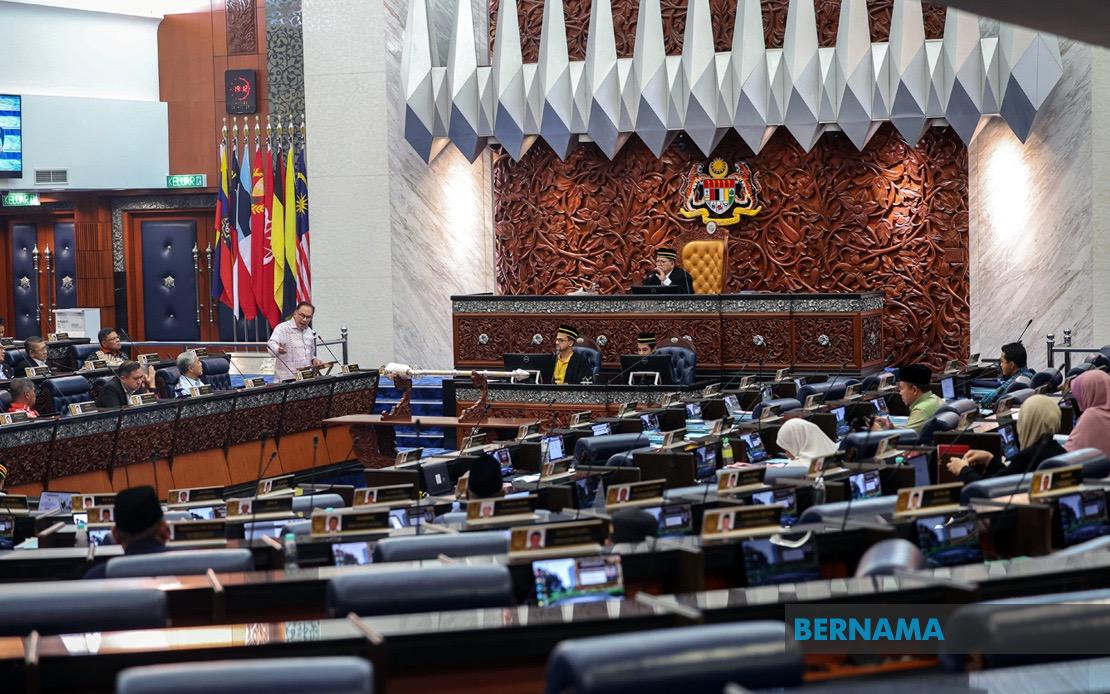
Parliament's lower house has given its approval to amendments targeting employment reporting compliance, with lawmakers introducing a graduated fine system designed to encourage businesses to register vacancies with the Social Security Organisation. The measure passed by voice vote on June 30 after thirteen members from government and opposition parties participated in substantive debate, reflecting broad parliamentary consensus on the need for better labour market oversight.
The amendments centre on revisions to Clause 11 of the Employment Insurance System (Amendment) Bill 2025, specifically modifying Subsection 45F(4) to establish penalties scaled according to violation frequency. First-time offenders will face fines of up to RM1,000, second offences attract RM3,000, and subsequent breaches carry maximum penalties of RM5,000. This tiered approach represents a significant concession to business concerns, as the government reduced the original proposed ceiling of RM10,000 following extensive consultation with employers across multiple sectors.
Deputy Human Resources Minister Datuk Khairul Firdaus Akbar Khan framed the amendments as balancing regulatory rigour with practical business realities. He emphasised that the revisions prioritise employer education and voluntary compliance over punitive measures, with PERKESO continuing to offer guidance and engagement sessions to help companies understand their obligations. The minister outlined a compliance pathway where businesses receive formal notices allowing them to rectify reporting failures before any financial penalties are imposed, distinguishing this approach from purely enforcement-focused legislation.
The evolution of the penalty structure reveals important dynamics in Malaysian parliamentary discourse around employment regulation. The government's willingness to reduce maximum fines from RM10,000 demonstrates responsiveness to stakeholder feedback, yet maintains sufficient deterrence to ensure serious compliance. This calibration reflects recognition that excessive penalties could burden small and medium enterprises, potentially driving informal employment arrangements that undermine the entire labour market framework the amendments aim to strengthen.
Business reporting obligations under the revised framework serve a crucial function within Malaysia's employment ecosystem. When employers notify PERKESO of vacancies, the organisation can facilitate more effective job matching between available positions and unemployed workers, potentially reducing structural unemployment and enabling policymakers to craft labour strategies based on reliable market data. The reporting requirement thus extends beyond administrative procedure to represent foundational infrastructure for a functioning labour market that benefits both businesses seeking workers and individuals seeking employment.
MP Azahari Hasan, representing Padang Rengas, highlighted the critical importance of maintaining straightforward reporting mechanisms that do not impose excessive administrative burdens on employers. His intervention underscored parliamentary concern that complex or time-consuming compliance procedures could inadvertently discourage participation, particularly among smaller enterprises lacking dedicated human resources departments. The emphasis on system usability reflects understanding that legislation achieves its objectives only when compliance requirements remain proportionate to business capacity.
Rural employment contexts received specific attention during parliamentary consideration. Nurul Amin Hamid from Padang Terap expressed concern that agricultural, manufacturing, and services businesses operating outside major urban centres may lack awareness of their notification obligations under the Employment Insurance System Act. This concern carries particular relevance for Malaysia, where rural employment dynamics differ substantially from urban labour markets, and where access to government information services remains uneven. The minister's commitment to expanded guidance sessions suggests recognition that awareness-building requires targeted outreach beyond urban commercial hubs.
Transparency in job advertising emerged as a parallel concern, with MP Syerleena Abdul Rashid from Bukit Bendera advocating for centralised government employment portals that provide equitable access to opportunity information. Her contribution connects the vacancy reporting requirement to broader fairness considerations, arguing that when employers register positions with PERKESO rather than relying exclusively on private recruitment channels or informal networks, disadvantaged job seekers gain improved access to employment information. This democratic dimension of labour market regulation extends the policy's significance beyond mere administrative efficiency.
The parliamentary debate reflected cross-party recognition that employment regulation requires careful calibration between legitimate business interests and broader social objectives. Members from both government and opposition benches acknowledged the tension between ensuring compliance and avoiding regulatory overreach, ultimately concluding that the refined penalty structure struck an acceptable balance. This consensus suggests that employment policy, despite partisan differences on many issues, commands substantial agreement on fundamental principles of labour market functioning.
For Malaysian businesses and workers, the amendments signal government commitment to strengthening labour market institutions through incremental regulatory refinement. The emphasis on compliance support and graduated enforcement suggests that policymakers view the private sector as generally willing to cooperate when requirements remain reasonable and assistance is provided. The framework anticipates that most compliance failures stem from confusion or inadequate systems rather than deliberate evasion, justifying investment in education and support before resorting to financial penalties.
Implementation of the revised Employment Insurance System amendments will require PERKESO to operationalise its expanded guidance mandate while employers adjust internal procedures to ensure timely vacancy reporting. The transition period will test whether the government's assumption about business willingness to comply materialises in practice, or whether additional refinements become necessary. Success in this policy area carries implications for Malaysia's broader competitiveness agenda, as functioning labour markets with transparent opportunity access contribute to efficient workforce allocation and productivity growth.
Looking forward, the amendments represent a staged approach to labour market governance that prioritises relationship-building between regulators and business before enforcement escalates. This philosophy contrasts with purely punitive regulatory models and reflects emerging recognition that sustainable compliance derives from genuine stakeholder engagement rather than fear of penalties alone. As Malaysia continues developing its employment insurance and labour market frameworks, the collaborative approach endorsed by parliament on June 30 may establish precedent for how employment regulation balances protective objectives with business operational realities.

