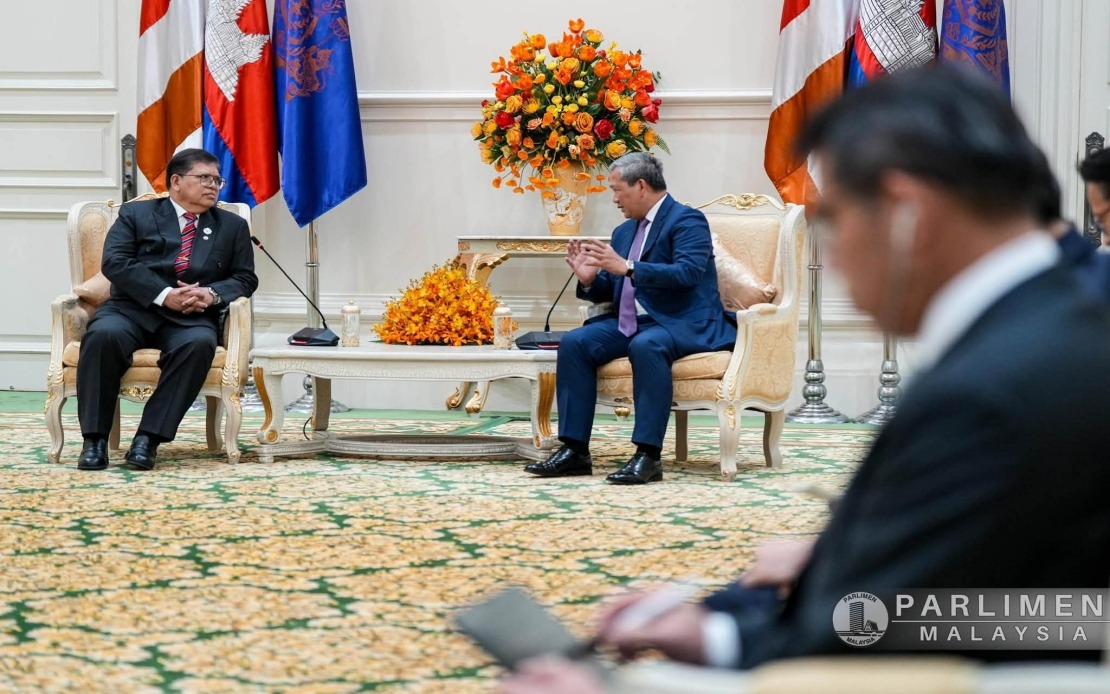
Malaysia remains committed to supporting a diplomatic resolution of the Cambodia-Thailand border dispute, with parliament speaker Tan Sri Johari Abdul stressing that dialogue must remain at the forefront of efforts to address the longstanding bilateral tensions between the two neighbours. Speaking during a high-level engagement in Cambodia's capital, Johari underscored the critical importance of maintaining constructive channels of communication rather than allowing the dispute to escalate into broader regional conflict that could undermine the collective interests of Southeast Asian nations.
The Malaysian parliament leader's intervention reflects Kuala Lumpur's broader concern that unresolved bilateral conflicts among ASEAN members risk fracturing the regional bloc's internal cohesion at a time when external pressures and geopolitical competition in the Indo-Pacific demand greater unity. His remarks also signal Malaysia's willingness to play a moderating role in disputes that do not directly involve the country, consistent with ASEAN's principles of non-interference while maintaining solidarity around regional peace and stability.
Johari raised the Cambodia-Thailand border situation during meetings with Cambodian Prime Minister Hun Manet at the Second Inter-Parliamentary Speakers' Conference held in Phnom Penh from August 26 to 28. The setting of the conference—a gathering designed to strengthen legislative ties across the region—provided a platform for Malaysia to articulate its support for Cambodia's position while simultaneously encouraging all parties to pursue resolution through negotiated settlement rather than confrontation. By engaging directly with Cambodian leadership on the matter, Malaysia demonstrated its readiness to listen to the grievances of affected communities along the disputed border while maintaining the principle that such differences should never be permitted to poison ASEAN's collaborative framework.
The border tensions between Cambodia and Thailand have periodically flared into military confrontations over disputed territorial claims and the status of several temples straddling the frontier. These clashes have caused casualties, displaced residents, and created humanitarian concerns for populations living in affected areas. Malaysia's emphasis on understanding Cambodia's specific concerns—particularly the impact on vulnerable communities—suggests recognition that lasting solutions must address not only the technical questions of demarcation and sovereignty but also the human dimensions of the conflict that shape public opinion and political pressure in both countries.
For Malaysia and other ASEAN members, the persistence of such disputes represents a strategic vulnerability. The bloc's strength derives partly from its reputation as a stable platform for multilateral engagement and economic cooperation. When bilateral tensions monopolise diplomatic attention or threaten to pull in external powers eager to exploit regional divisions, ASEAN's capacity to pursue collective interests in trade, security, and development becomes compromised. Johari's call for prioritising dialogue can thus be understood as an appeal to both Cambodia and Thailand to recognise their mutual interest in maintaining ASEAN's structural integrity and relevance in an increasingly multipolar world.
Beyond the border dispute, the Malaysia-Cambodia bilateral discussions touched on several areas of potential deepening cooperation. The two nations explored opportunities for parliamentary collaboration, economic partnerships, and people-to-people exchanges, particularly involving younger generations who represent the future of regional relationships. Such engagement complements Malaysia's diplomatic approach of reinforcing broader ties with neighbouring countries, making it politically and economically costly for disputes to escalate into open conflict that would disrupt multiple channels of cooperation and mutual benefit.
The discussion of Technical and Vocational Education and Training expansion between the two countries reflects a strategic investment in human capital that serves long-term regional development. By facilitating skills training and institutional exchanges, Malaysia and Cambodia can build networks of professionals and administrators who understand each other's contexts and priorities, potentially creating additional incentives for peaceful cooperation. Such initiatives also demonstrate that ASEAN partnerships extend far beyond governmental dealings into the practical spheres where citizens and workers interact directly.
Malaysia's affirmation of support for Cambodian enterprises and recognition of Cambodia's investment-friendly policies signals confidence in the country's development trajectory while simultaneously reinforcing bilateral economic interdependence. When countries maintain robust trade relationships and Malaysian firms invest significantly in Cambodia's economy, both nations acquire tangible stakes in each other's stability and prosperity. This economic dimension of diplomacy often proves more durable than formal declarations of intent, as business communities naturally lobby for peaceful resolution of disputes that threaten their operations and profits.
The timing of Johari's diplomatic engagement carries additional significance given broader regional dynamics. As major powers compete for influence in Southeast Asia and some nations face internal political pressures, ASEAN members must actively work to prevent disputes from becoming proxy battlegrounds for external interests. Malaysia's insistence on returning parties to the negotiating table represents an implicit reminder that ASEAN solutions must remain ASEAN-centred, free from the influence of powers outside the region who might benefit from prolonged conflict and division.
Looking forward, Malaysia's diplomatic approach suggests a sustained commitment to shuttle engagement and quiet mediation efforts aimed at keeping Cambodia and Thailand in communication. The parliament-to-parliament dimension of this engagement provides valuable space for frank discussions that might prove difficult in formal governmental channels, while the inter-parliamentary format maintains plausible deniability if either side wishes to modify its public stance without appearing to capitulate. For Malaysian readers and policymakers, this episode illustrates both the complexity of managing ASEAN cohesion and the critical role that countries like Malaysia must play in facilitating dialogue before disputes metastasise into broader regional instability that threatens everyone's interests.

