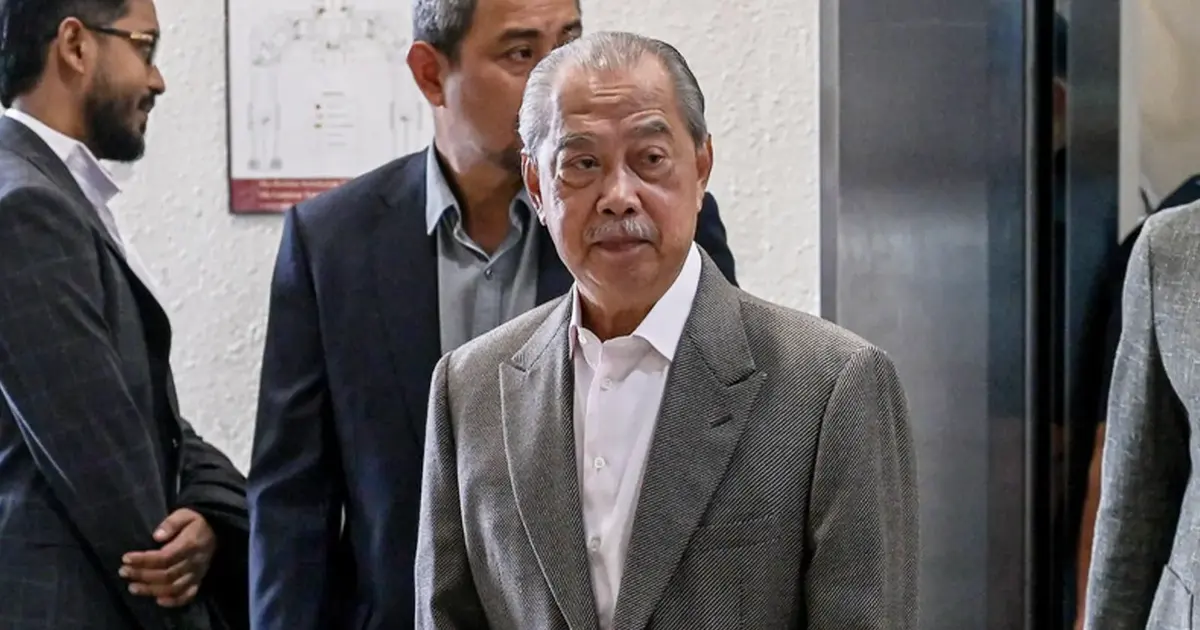
The question of who truly wielded power within Perikatan Nasional's political machinery has taken centre stage in a Malaysian courtroom, with prosecutors pressing whether Muhyiddin Yassin operated as little more than a ceremonial figurehead in his own party, Bersatu. The High Court proceedings have become a window into the internal power dynamics of the party he founded, with scrutiny falling on the actual distribution of financial authority and decision-making influence within the organisation's leadership structure.
Zulhelmi Zaulkafly, who serves as Bersatu's financial officer, provided testimony establishing that no single person enjoyed unchecked control over party finances. His account suggests a more diffuse governance arrangement than might be assumed from the party's formal hierarchy. This testimony carries particular weight given that Muhyiddin held the position of party chairman and had previously served as Prime Minister, roles that might ordinarily confer substantial operational authority. The revelation that financial powers were compartmentalised rather than concentrated raises fundamental questions about how decisively Muhyiddin could act when facing potential resistance from other leadership factions within Bersatu.
The Deputy Public Prosecutor's line of questioning appears aimed at establishing whether Muhyiddin functioned as a genuine chief executive capable of independent action or whether his authority was substantially diluted by competing power centres within the party. This distinction carries profound implications for understanding the real architecture of command within Bersatu and, by extension, how Perikatan Nasional operated during its time in federal government. Malaysian political parties often feature complex internal balances between formal office-holders and power brokers who command loyalty through other means, and Bersatu appears to exemplify this phenomenon.
The structure of financial oversight that Zulhelmi described suggests deliberate internal checks that might have constrained unilateral decision-making by any individual, including the party chairman. Whether such arrangements were designed to ensure collective accountability or reflected deeper factional tensions within Bersatu's leadership remains an open interpretive question. The compartmentalisation of financial authority could represent either prudent governance or the manifestation of underlying organisational dysfunction where competing power blocs neutralised each other's capacity for decisive action.
For Malaysian observers accustomed to personalised political leadership, the testimony indicating distributed financial control within Bersatu presents an intriguing contrast. Many Malaysian political parties have historically concentrated significant authority in their top leaders, making the picture emerging from this court testimony particularly noteworthy. It suggests either that Bersatu deliberately adopted a more collegial governance model or that Muhyiddin faced sufficient internal opposition that formal power had to be shared to maintain party cohesion. Understanding which scenario applies is crucial for assessing how effectively Muhyiddin could have implemented strategic decisions during his tenure as Prime Minister.
The significance of this testimony extends beyond mere institutional curiosity. If Muhyiddin's authority over financial matters was genuinely circumscribed, this raises questions about his capacity to direct party resources during critical political moments. Financial control constitutes the sinews of political operation, determining which campaigns receive funding, which figures within the party can access resources for their ambitions, and ultimately which faction can outmanoeuver rivals. A chairman nominally in charge but substantively constrained would face serious limitations in consolidating and maintaining political power.
The court proceedings illuminate how Malaysian political parties actually function in practice, often diverging sharply from their formal constitutional documents. While Bersatu's bylaws might specify Muhyiddin's prerogatives as chairman, the lived reality of internal politics apparently involved negotiation and accommodation with other stakeholders. This pattern mirrors broader dynamics within Malaysian politics, where factional struggles frequently determine outcomes more decisively than formal authority structures. Understanding these hidden mechanisms is essential for decoding Malaysian political developments that might otherwise appear puzzling or contradictory.
The question being litigated before the High Court carries implications for accountability and governance within Malaysian political organisations generally. If parties permit individual leaders to operate with truly concentrated power, the potential for abuse and internal corruption increases substantially. Conversely, if power is distributed so extensively that no leader can act decisively, organisational effectiveness suffers. Zulhelmi's testimony suggests Bersatu attempted some form of balance, though whether it succeeded remains debatable. The court proceedings may ultimately establish whether such internal constraints actually functioned as intended or remained theoretical upon encountering determined resistance from powerful figures.
For Southeast Asian politics more broadly, the testimony speaks to how power actually flows through political institutions in developing democracies. While formal hierarchies appear clear, the real exercise of authority frequently involves navigating complex internal relationships and competing claims on institutional resources. Bersatu's experience demonstrates that even a party founded by a figure of Muhyiddin's stature and previous high office could develop internal structures that limited his practical authority. This dynamic helps explain some apparent inconsistencies in Malaysian political leadership and decision-making patterns over recent years, revealing that visible leaders often operate within constraints imposed by less visible internal forces.
The implications for Malaysian governance extend further still, suggesting that institutional design within political parties shapes not only internal stability but also the capacity of elected governments to implement coherent policies. If a Prime Minister's own party constrains his financial and operational authority, the broader implications for executive effectiveness become apparent. The High Court proceedings, while focused on narrow questions of party financial governance, ultimately probe the fundamental question of how power is distributed and exercised within Malaysian political structures, both inside party organisations and across the government itself.

