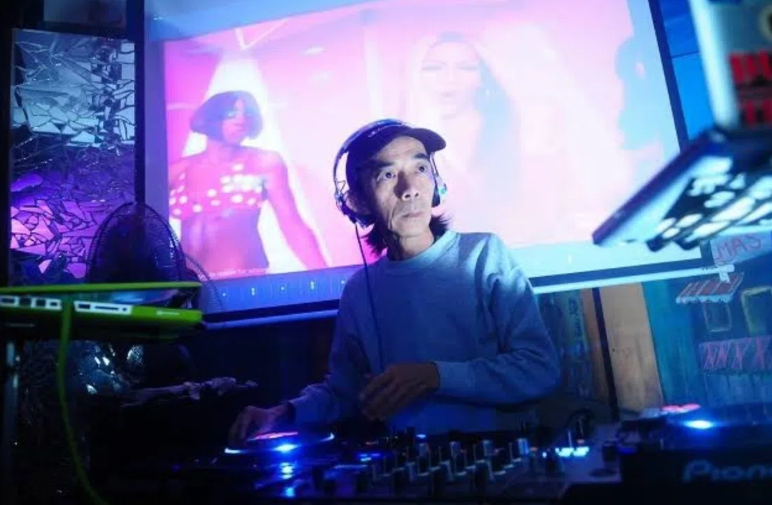
Andrew Chow, better known in Singapore's vibrant music circles as DJ Wiz, has passed away at age 63 following a battle with stomach cancer on August 3. His death marks the end of an era for the island nation's underground and mainstream nightlife, where Chow established himself as a towering figure whose influence extended far beyond the decks and turntables where he earned his reputation.
Chow's contribution to Singapore's entertainment landscape cannot be overstated. Throughout the 1990s and 2000s, he became synonymous with the development and popularisation of hip-hop, rhythm and blues, and turntablism—a performance art form involving the manipulation of vinyl records and turntables as musical instruments. His residency at the legendary Zouk nightclub on Jiak Kim Street, which he maintained from the mid-1990s through to the early 2010s, cemented his status as one of the most recognisable names in regional nightlife. For many Singaporeans who came of age during that era, witnessing Chow perform was a rite of passage in the city's music culture.
The accolades accumulated by Chow throughout his career reflected his technical mastery and artistic influence. During the 1990s and 2000s, he captured three victories in the highly competitive DMC Singapore DJ and turntablist championships, a feat that underscored his consistency and skill level among peers. His crowning achievement came in 1998 when he triumphed in the Singapore leg of the Technics World DJ Championships, an international competition that attracted the world's finest turntablists. These victories positioned him not merely as a local talent but as someone capable of competing and winning on a global stage.
Chow's final public appearance came on May 24, when he served as both judge and performer at the DMC Warm-Up Battle event held at the club Kossa. Notably, he was scheduled to receive the DMC Legacy Award at an upcoming celebration on September 6—recognition that would have formally acknowledged his lasting imprint on Singapore's DJ culture. The award, which honours those whose contributions have fundamentally shaped the discipline, was intended to celebrate the four decades during which Chow had nurtured hip-hop and turntablism in a region where such genres were not always mainstream entertainment.
For the Southeast Asian music community, Chow's passing represents a significant loss. In an era before streaming services and global digital access democratised music knowledge, pioneering figures like Chow served as gatekeepers and educators, introducing local audiences to international styles and techniques while adapting them to regional sensibilities. His work at Zouk, particularly in the club's Phuture section during the big beat era, created a physical space where music enthusiasts could gather, learn, and develop their own artistic voices.
The tributes pouring in from fellow musicians and nightlife professionals underscore the depth of Chow's influence across generations. Wayne Liu, professionally known as DJ KoFlow and himself 45 years old, emphasised that Chow's legacy persists through the community of DJs and musicians he inspired. Liu described how Chow dedicated his life to cultivating hip-hop culture through his performances and mentorship, establishing a foundation upon which subsequent artists could build.
Kavan Spruyt, the 46-year-old founder of the venue Rasa and a significant figure in Singapore's contemporary nightlife landscape, reflected on witnessing Chow during his prime. Spruyt recalled attending Chow's performances at Phuture during Friday evening sessions, describing an experience of unparalleled musicianship and energy that left lasting impressions on younger patrons who would themselves become influential in the scene. For Spruyt, Chow represented not merely technical excellence but a kind of fearlessness and innovation that defined an entire chapter of Singapore's cultural development.
Eddie Chan, performing under the stage name DJ Small, brought a personal dimension to assessments of Chow's character. Having maintained a four-decade friendship with Chow, Chan characterised him as both teacher and brother—someone whose knowledge of music was comprehensive and whose commitment to the craft was unwavering. Chan highlighted Chow's mastery across multiple genres and his consistently flawless execution of mixing and scratching techniques, attributes that elevated Chow beyond mere technical competence into the realm of artistry.
Chow's daughter, Abby Chow, age 27, orchestrated a celebration of life that reflected her father's personality and values. Rather than observing conventional mourning protocols, Abby invited attendees to arrive in colourful and stylish clothing, requesting that visitors bring positive energy to commemorate her father's spirit and aesthetic sensibility. In her social media posts, she characterised her father as fundamentally cool and unconventional, someone whose mojo and style transcended generational boundaries. She expressed gratitude for the overwhelming outpouring of affection and recognition from the broader music community, noting that her father had passed peacefully and would have been profoundly moved by the depth of appreciation his peers and fans expressed.
The logistics of Chow's farewell reflected both tradition and his distinctive character. His wake was held at a residential address in Ang Mo Kio, with the cortege departing on August 8 at 4:15 pm for cremation at Mandai Crematorium. These practical arrangements provided an opportunity for the extended music community and friends to gather and share memories of someone who had fundamentally shaped their own artistic journeys and recreational experiences.
For Malaysian readers and the broader Southeast Asian audience, Chow's passing serves as a reminder of how profoundly individual artists can influence regional culture. During the 1990s and 2000s, when hip-hop and electronic music were still establishing footholds in East and Southeast Asia, figures like Chow demonstrated that local artists could achieve mastery comparable to international standards. His influence extended beyond Singapore's borders, as regional musicians and fans followed developments in the island nation's music scene with keen attention.
The timing of Chow's death, mere weeks before the recognition he would have received through the DMC Legacy Award, carries particular poignancy. That the music community was preparing to formalise its gratitude and acknowledgement suggests that Chow's contributions were increasingly being reassessed and celebrated by younger generations who might not have experienced his performances during his peak years. His passing underscores the importance of documenting and preserving the histories of pioneering artists before institutional memory fades.
Andrew Chow's life and career encapsulate a crucial period in Asian popular culture—a time when local artists were establishing independent creative traditions rooted in but not derivative of Western models. Through turntablism, hip-hop, and rhythm and blues, Chow contributed to a distinctly Singaporean and Southeast Asian artistic voice that continues influencing contemporary musicians. His legacy persists not only in recordings or competition victories but in the musicians he mentored, the cultural space he helped create, and the standards of excellence he embodied throughout his four-decade career.

