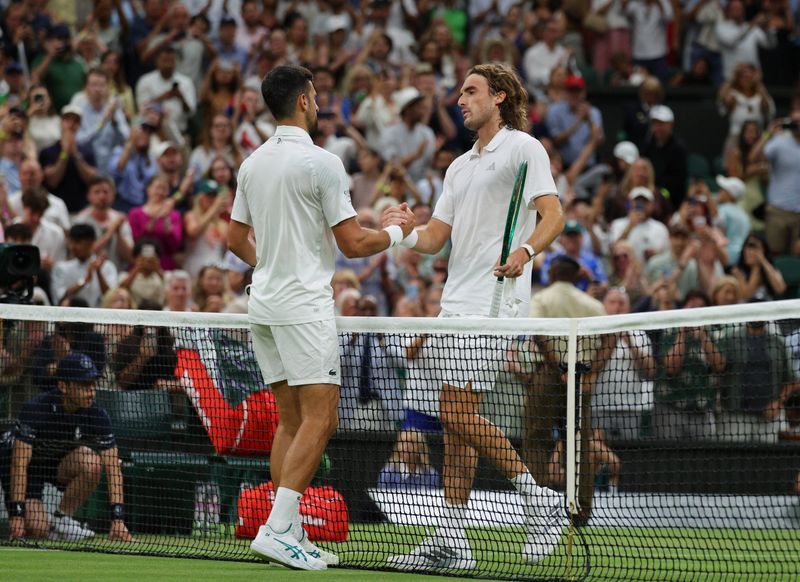
Novak Djokovic's passage into the third round at Wimbledon proved a masterclass in tournament tennis, as the Serbian champion dismantled Stefanos Tsitsipas in straight sets on Wednesday to maintain his formidable record against the Greek player. The 6-3 6-4 6-2 victory on Centre Court demonstrated once again why the 39-year-old remains a force to be reckoned with at grass-court majors, despite his advancing years and the emergence of a new generation of challengers.
The match, promoted by tournament organisers as a heavyweight collision between two former Grand Slam finalists, unfolded as a decidedly one-sided affair. Djokovic's dominance was particularly evident in the second set when, at 4-4, Tsitsipas squandered two consecutive opportunities to break serve. Presented with overhead chances that any professional player would typically finish with precision, the world number 87 failed to capitalise, sending both volleys wide of the court. This lapse in execution proved the pivotal moment, as Djokovic seized the break of serve and never looked back. The psychological impact of such missed opportunities cannot be overstated in tennis; once elite players smell such hesitation in their opponents, they tend to tighten their grip, and Djokovic did exactly that. From that point forward, the contest became an exhibition of his superior court sense and technical mastery.
Djokovic's commanding performance extended to the statistical summary, where he won eight of the final ten games, an indication of how thoroughly he neutralised Tsitsipas's attacking intent. This victory marks the 12th consecutive occasion on which Djokovic has prevailed in their head-to-head encounters, a sequence that underscores the psychological advantage the Serb holds over his younger rival. For Tsitsipas, the defeat represents yet another setback in what has become an increasingly frustrating period of his career.
The 27-year-old's journey to the grass courts of London had been tumultuous. Having withdrawn during his first-round encounter at last year's Wimbledon whilst battling chronic back pain that threatened his career longevity, Tsitsipas arrived at this year's championship seeking redemption. Yet the circumstances surrounding his preparation could hardly have been less ideal. His world ranking has plummeted to number 87, a reflection of his recent inconsistency and missed matches. Days before arriving in London, he made the dramatic decision to part ways with his coach, a decision rendered particularly significant by the fact that his coach was his own father, Apostolos. This severance, while potentially necessary for his professional development, represented a considerable disruption to his preparations and support structure at a critical moment.
That Tsitsipas had contested two Grand Slam finals against Djokovic—winning neither—added another layer of psychological burden to his participation in this match. The defeats at Roland Garros in 2021 and the Australian Open in 2023 would have weighed heavily on his confidence, even as he sought to prove he could compete at the highest level. The combination of these factors—physical frailty from chronic back issues, emotional turmoil from coaching changes, and the psychological scars of previous defeats against his opponent—created an almost perfect storm that worked entirely in Djokovic's favour.
Djokovic's display on Centre Court afforded him considerable satisfaction, which he expressed candidly to the gathered crowd following the match. "Obviously you feel very happy, satisfied and joyful on the court when you are playing this way," he remarked, before continuing to elaborate on his feelings about performing at Wimbledon at his age. The Serb's reflections on competing at age 39 suggested a genuine appreciation for his continued ability to perform at the highest level, a sentiment that resonates with observers who have watched his longevity in professional tennis. His comment that "age is just a number" carries particular weight given his demonstrated ability to compete against players significantly younger, though his fashionable cream blazer drew as much attention as his tennis prowess.
Looking ahead, Djokovic will face 25th-seeded Frenchman Arthur Rinderknech in the next round as he builds momentum toward what would be his eighth Wimbledon championship. Beyond the immediate tournament objective, however, lies a more significant goal: victory on the grass courts of southwest London would bring Djokovic within striking distance of his record 25th Grand Slam title. Currently, he stands just one triumph away from matching Roger Federer's men's record of 105 match-wins at Wimbledon, a statistical milestone that underscores his historical significance within the sport.
For Malaysian and Southeast Asian readers, Djokovic's continued success at the Grand Slams provides a compelling narrative about the intersection of athleticism, longevity, and psychological resilience at the highest levels of professional sport. His sustained excellence at 39 challenges conventional wisdom about athletic decline and retirement, offering lessons that extend beyond tennis into broader discussions about human performance and mental fortitude. Furthermore, his pursuit of historical records—the 25th Grand Slam and Federer's Wimbledon record—represents the culmination of a career that has redefined expectations around longevity in tennis.
The efficiency with which Djokovic dispatched Tsitsipas, completing the match in less than two hours, suggested a player operating at peak efficiency and confidence. There was no dramatic struggle, no unexpected challenges overcome through sheer determination; instead, Djokovic simply applied superior tactical awareness and technical consistency to overwhelm an opponent already burdened by circumstance. For aspiring players throughout Asia who watch the Grand Slams, such displays serve as reminders that consistency and psychological control often prove more decisive than raw power or aggressive shot-making.
Djokovic's progression through Wimbledon maintains his trajectory toward another championship run, though the remainder of the draw presents challenges that should not be dismissed. Nevertheless, having overcome the supposed heavyweight challenge of Tsitsipas with such decisive ease, the Serbian champion has delivered notice that he remains firmly positioned as a contender for the title. His eighth Wimbledon crown and record 25th Grand Slam await him if he can maintain this level of performance through the remaining rounds.

