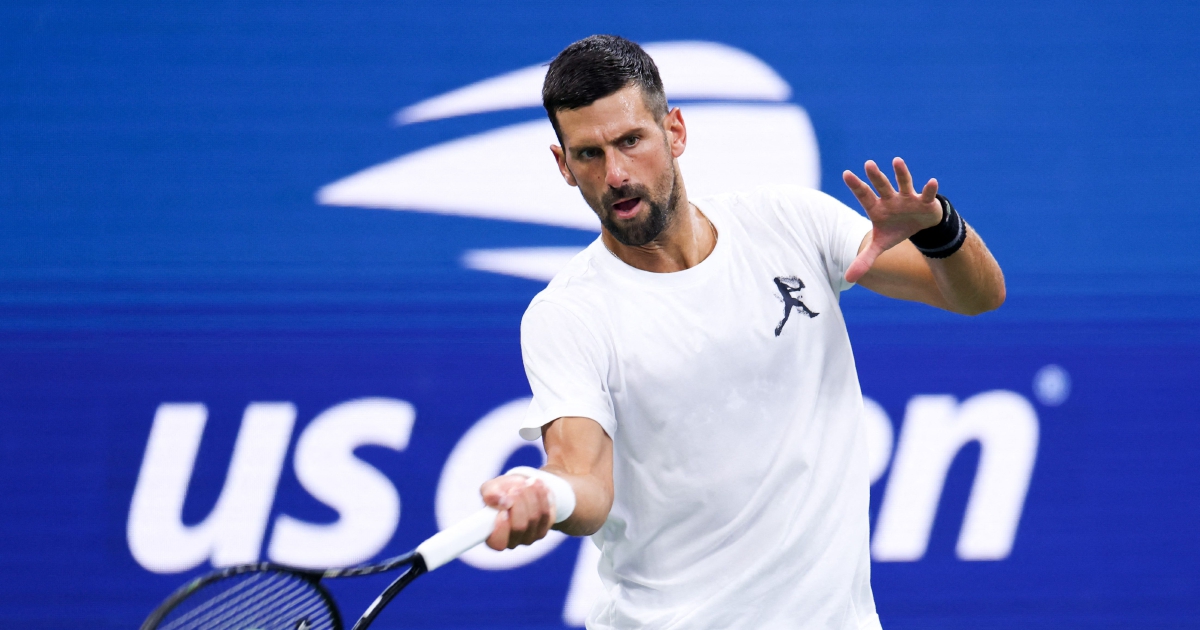
Novak Djokovic steps onto the courts at the US Open with a singular objective: claiming the 25th Grand Slam title that would establish an unprecedented record in professional tennis history. Since his triumphant campaign at the same venue two years ago, when he captured the 2023 trophy to equal Margaret Court's long-standing 24-title mark, the Serbian champion has maintained an unwavering pursuit of this elusive achievement.
The significance of this particular quest extends beyond mere statistics. Djokovic's parity with Court represented a watershed moment in tennis, as it proved that the modern men's game could produce a player capable of matching the greatest accomplishment in the sport's history across both eras. Yet achieving that milestone simultaneously intensified the pressure and expectation surrounding his next step. The psychological weight of being tantalizingly close to absolute supremacy has defined much of Djokovic's recent career trajectory.
For Malaysian and Southeast Asian tennis enthusiasts, Djokovic's pursuit carries broader relevance. His longevity and consistency at the sport's highest level challenge conventional wisdom about athletic performance and competitive excellence. At an age when many champions consider retirement, Djokovic continues to compete against younger rivals who have grown up watching him play, a dynamic that mirrors the experiences of regional champions navigating generational transitions in various sports.
The Serbian star's preparation for this US Open campaign reflects the meticulous approach that has defined his career. Having managed injuries and competition schedules with careful deliberation in recent seasons, Djokovic arrives not with desperation but with measured confidence. This measured demeanor suggests a player who understands the volatility of Grand Slam competition while maintaining conviction in his capabilities.
Djokovic's previous victories at Flushing Meadows underscore his comfort on American soil. His mastery of the hard court surface, where the US Open is contested, provides a tangible advantage. Unlike clay courts or grass surfaces where different physical attributes command prominence, hard courts reward the precise combination of power, consistency, and movement that Djokovic has honed across two decades of elite competition.
The competitive landscape surrounding his quest has shifted considerably since 2023. Emerging players have continued their development while established rivals have aged or faced their own injury challenges. This evolving context means that Djokovic's pathway to the championship, though undoubtedly challenging, may present different obstacles than those he has previously encountered at the US Open.
From a Southeast Asian perspective, Djokovic's career exemplifies principles increasingly relevant to the region's growing tennis ambitions. His systematic approach to training, meticulous attention to recovery protocols, and willingness to adapt strategies as circumstances change offer instructive lessons for emerging players and coaching communities throughout Asia. Several Southeast Asian nations have invested in tennis development programs that explicitly reference Djokovic's methodological innovations.
The record itself carries historical weight that transcends sport. Margaret Court's 24 Grand Slam titles, achieved during a different era of professional tennis, have served as a benchmark for decades. That a contemporary male player could match and potentially surpass this achievement within a unified modern era speaks to the evolution of physical conditioning, medical science, and competitive infrastructure that has transformed professional sport globally.
Djokovic's mental framework heading into this tournament appears calibrated toward resilience rather than pressure. He has repeatedly acknowledged the unpredictability inherent in Grand Slam competition, where injuries, momentum shifts, and unexpected performances from younger opponents can derail even the most carefully prepared campaigns. This philosophical grounding suggests a competitor focused on maximizing his preparation while remaining realistic about outcomes beyond his control.
The potential implications of Djokovic capturing his 25th title would reshape discussions about tennis greatness and longevity. A successful campaign would cement his legacy not merely as a greatest player, but as an athlete who transcended normal career lifecycles to achieve unprecedented sustained excellence. For Malaysian audiences following international tennis, such an achievement would represent a moment of genuine sporting history.
Looking forward, the US Open represents both a culmination of Djokovic's recent efforts and a potential catalyst for further achievements. Whether he secures the record at this tournament or pursues it across subsequent competitions, his relentless commitment to excellence continues to define modern professional tennis and inspire athletes across Southeast Asia who study his methodologies and competitive philosophy.

