Novak Djokovic heads to Flushing Meadows seeking to establish a standalone record with his 25th Grand Slam triumph, potentially capitalising on a draw weakened by the absence of two dominant rivals. The 39-year-old Serb's path appears clearer than it has in recent years, with Jannik Sinner sidelined by a knee injury and defending champion Carlos Alcaraz still recovering from four months away due to a wrist problem, raising questions about whether the Spaniard can rediscover his cutting edge. Yet Alexander Zverev, the French Open champion who reached the Wimbledon final, has established himself as the formidable competitor most likely to derail Djokovic's ambitions in New York.
Since claiming the U.S. Open title in 2023, Djokovic has remained competitive at the game's biggest events, yet he has been overshadowed as Alcaraz and Sinner monopolised the Grand Slam circuit. The two younger players have claimed 10 of the last 11 major titles between them, and across the previous six majors they have combined to defeat Djokovic on five occasions. Earlier this year, Alcaraz prevented Djokovic from reaching the 25-major milestone by triumphing in the Australian Open final, the kind of heartbreak the veteran has endured repeatedly since his last breakthrough.
Djokovic's resolve, however, remains unshaken despite his physical limitations and comparatively sparse match preparation heading into New York. The Serb drew on Serbian cultural values to explain his mentality, invoking a concept from his native language that represents determination in the face of adversity. Appearing in a documentary released ahead of the year's concluding major, Djokovic elaborated on his philosophy of using that inner drive to silence doubters and prove sceptics wrong. This psychological framework has historically powered some of his greatest comebacks and extraordinary efforts when circumstances seemed stacked against him.
The injury misfortunes befalling his rivals have genuinely shifted the competitive landscape. Sinner's absence removes the player who has been most dominant across recent weeks and months, while Alcaraz's extended recuperation introduces uncertainty about his physical readiness and sharpness despite his well-established reputation for delivering at crucial moments. Alcaraz has built a track record of producing his finest tennis precisely when the stakes are highest on tennis's greatest stages, so premature dismissals would be unwise. Nevertheless, the layoff has created genuine doubt about whether he can seamlessly return to championship form.
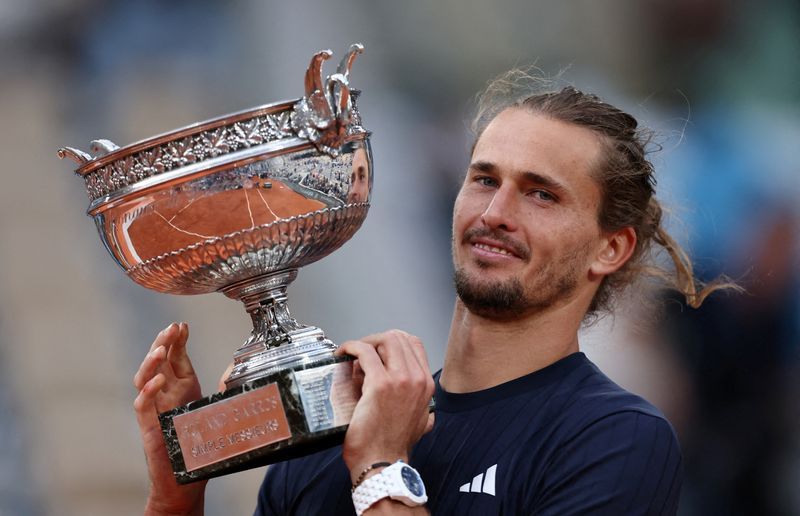
Zverev's ascent to major prominence changes the narrative considerably. The German's breakthrough victory at Roland Garros earlier this summer represents a watershed moment in his career, confirming his capacity to sustain excellence across an entire fortnight at the sport's highest level. His subsequent appearance in the Wimbledon final reinforced his credentials, suggesting his French Open success was not a one-off achievement but rather the beginning of sustained excellence. In the context of the U.S. Open draw, where he will be seeded prominently and could potentially encounter Djokovic in a later round, Zverev represents a substantive threat rather than a passing concern.
Roger Federer's perspective carries particular weight given his own extraordinary tenure at the sport's pinnacle. The Swiss legend, speaking in New York, articulated a simple yet profound observation about Djokovic's enduring capacity. Federer noted that whenever Djokovic enters any tournament, let alone a major championship, he remains a legitimate contender because of the demonstrated ability to succeed in diverse conditions and circumstances across decades. The very fact that Djokovic continues competing reflects his genuine belief that he can achieve this crowning milestone, according to Federer, a belief grounded in repeated evidence of excellence rather than mere optimism.
America's own contingent presents an intriguing subplot for tournament observers, particularly those focused on ending the nation's 23-year drought without a men's singles champion at home. Ben Shelton, who captured the Canadian Open title, leads the American challenge alongside Cincinnati runner-up Frances Tiafoe and last year's finalist Taylor Fritz. Shelton's Montreal triumph came mere weeks after an embarrassingly early exit at Wimbledon, demonstrating the volatility that has defined his career trajectory. Andy Roddick, America's last U.S. Open winner in 2003, highlighted the critical need for Shelton to navigate the opening week effectively, as maintaining form across two weeks remains his persistent challenge at the major championships.
Roddick acknowledged the complexity of evaluating Shelton's potential, noting his capacity to win titles on multiple surfaces yet questioning whether these accomplishments translate into genuine Grand Slam contention. The American legend pointed specifically to the concerning pattern of early major championship exits despite strong performances elsewhere, suggesting that consistency across the full fortnight rather than isolated brilliant performances will ultimately determine whether Shelton can capture the crown. This analysis reflects a broader reality about tennis at its highest level, where depth of play over an extended tournament matters far more than isolated impressive results.
Beyond the established names and notable Americans, rising international talents such as Arthur Fils will seek to establish themselves on tennis's grandest stage. Felix Auger-Aliassime, who reached the semi-finals last year, returns seeking to build upon his joint-best major run and prove his semi-final appearance was not anomalous. These secondary storylines illustrate the depth of competitive tennis today, where even outside the Djokovic-Zverev-Alcaraz orbit, multiple players possess the capacity to produce remarkable performances. The U.S. Open draw thus presents a fascinating mixture of wounded champions seeking redemption, established contenders hitting their stride, emerging talents on the rise, and a 39-year-old legendary figure grasping at perhaps his final realistic opportunity to rewrite tennis history.

