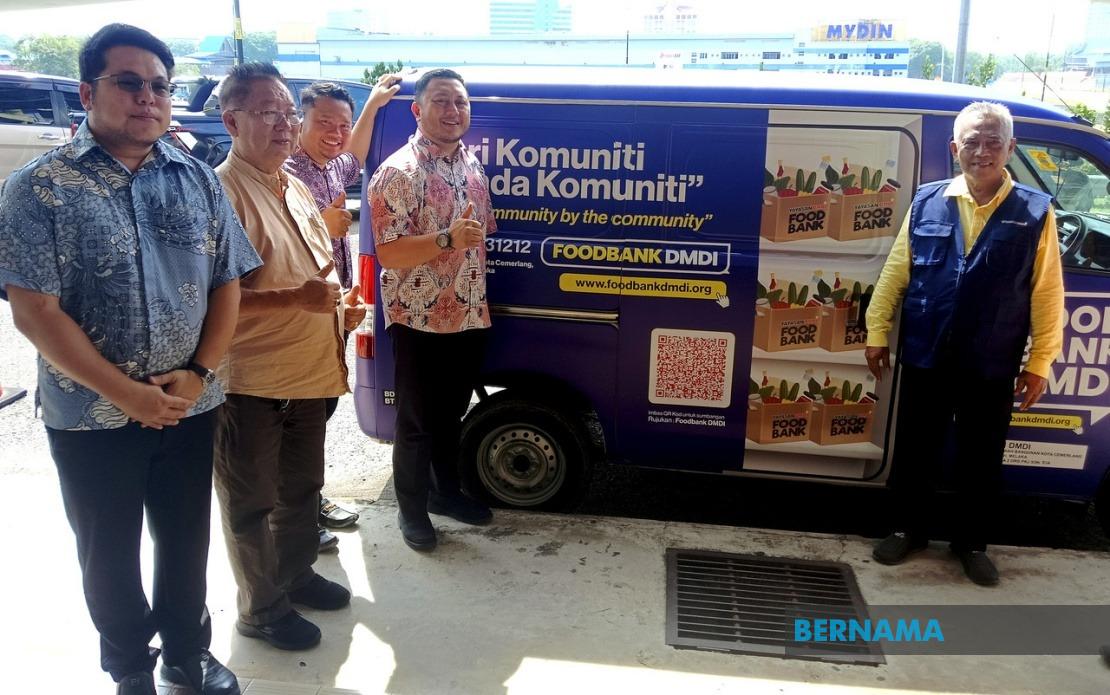
The Dunia Melayu Dunia Islam (DMDI) Foundation has launched an ambitious food assistance initiative in Melaka aimed at extending support to 2,000 economically disadvantaged families through its newly established Food Bank DMDI programme. The scheme, which commenced in July, will distribute monthly food packages to qualifying households throughout a 12-month period, representing a significant commitment to alleviating poverty in the state. The programme underscores growing efforts among civil society organisations in Malaysia to address food insecurity and the rising cost of living that continues to pressure lower-income households.
According to Datuk Mohd Ridhwan Mohd Ali, who chairs the foundation, the rollout will follow a measured approach beginning with 200 families during an initial pilot phase before scaling up to accommodate the full target of 2,000 beneficiaries. This phased implementation allows programme administrators to refine distribution logistics, verify recipient eligibility, and ensure the supply chain functions smoothly across Melaka's diverse communities. The careful staging reflects both budgetary constraints and operational best practices commonly employed by charitable organisations managing large-scale assistance programmes.
The food bank targets multiple vulnerable segments within Melaka's population, including households living below the poverty line, members of recognised asnaf categories in Islamic welfare frameworks, persons with disabilities, single-parent families, and households with irregular or unpredictable income sources. By deliberately broadening eligibility criteria beyond absolute poverty measures, the programme acknowledges that financial precarity extends across various demographic groups who may not traditionally feature in official poverty statistics but nonetheless struggle with basic expenses. This inclusive approach reflects contemporary understanding that vulnerability exists on a spectrum rather than as a binary state.
Eligible families receive monthly kits containing essential foodstuffs intended to reduce household expenditure on basic nutrition. The selection process incorporates community knowledge, with local leaders providing nominations for families warranting assistance, followed by formal verification conducted by the Food Bank's dedicated screening committee. This grassroots identification mechanism leverages existing social networks and trust relationships within communities, though it simultaneously raises questions about transparency and consistency in selection criteria across different neighbourhoods and districts.
During the programme's launch activities at the DMDI Food Bank Centre in Kota Cemerlang, Ayer Keroh, Datuk Mohd Ridhwan received donations valued at RM16,000 from various contributors, representing an initial commitment from the private sector and individual philanthropists supporting the initiative. These early contributions demonstrate willingness among Malaysian businesses and citizens to contribute toward social welfare causes, though sustained funding will prove essential for meeting the ambition of supporting 2,000 families consistently throughout the year. The foundation has indicated that food bank operations also extend beyond the regular monthly scheme, responding flexibly to acute crises such as natural disasters with emergency food distributions calibrated to immediate community needs.
To broaden financial participation and democratise charitable giving, DMDI has established an accessible donation mechanism allowing members of the public to contribute amounts as modest as RM1 through its dedicated online platform at www.foodbankdmdi.org. This low-barrier entry point recognises that sustained philanthropic support emerges through accumulated small contributions from many donors rather than exclusively from wealthy benefactors. The foundation is simultaneously pursuing formal tax exemption status from the Inland Revenue Board, a regulatory step that would incentivise larger contributions from corporations and high-net-worth individuals by conferring tax deductibility on donations.
The Melaka food bank initiative arrives amid persistent conversations about social safety nets and poverty reduction across Malaysia and Southeast Asia more broadly. While government assistance programmes exist, civil society interventions like DMDI's offer rapid deployment capacity and community embeddedness that sometimes outpace bureaucratic systems. The programme's emphasis on dignity through systematic selection rather than ad hoc charity reflects evolving norms around poverty assistance that prioritise recipient agency and social inclusion over paternalism. For Malaysian policymakers, such initiatives demonstrate both the gaps in formal welfare provision and the organisational capacity within civil society to address them.
The food bank model itself represents a practical adaptation of international best practices to Malaysian conditions and contexts. Rather than cash transfers or conditional assistance programmes, in-kind food distribution offers supply-side certainty and addresses direct nutritional needs, though it necessarily involves assumptions about recipients' preferences and dietary requirements. The initiative's integration of disability inclusion, single-parent support, and informal economy worker assistance positions it as more comprehensive than traditional poverty-focused interventions. Success metrics will extend beyond participant numbers to encompass measures like household food security, cost-of-living relief, and community perceptions of the programme's fairness and effectiveness.
Implementation challenges will likely test the foundation's organisational capabilities and donor commitment. Maintaining consistent monthly food kit quality and variety for 2,000 families demands reliable supply chains, adequate refrigeration and storage where necessary, and efficient last-mile distribution networks spanning Melaka's urban and rural areas. The screening process must balance inclusivity against preventing benefit capture by ineligible households, requiring investment in verification systems and ongoing monitoring. Donor sustainability represents perhaps the most significant uncertainty, as philanthropic support often fluctuates with media attention and economic conditions.

