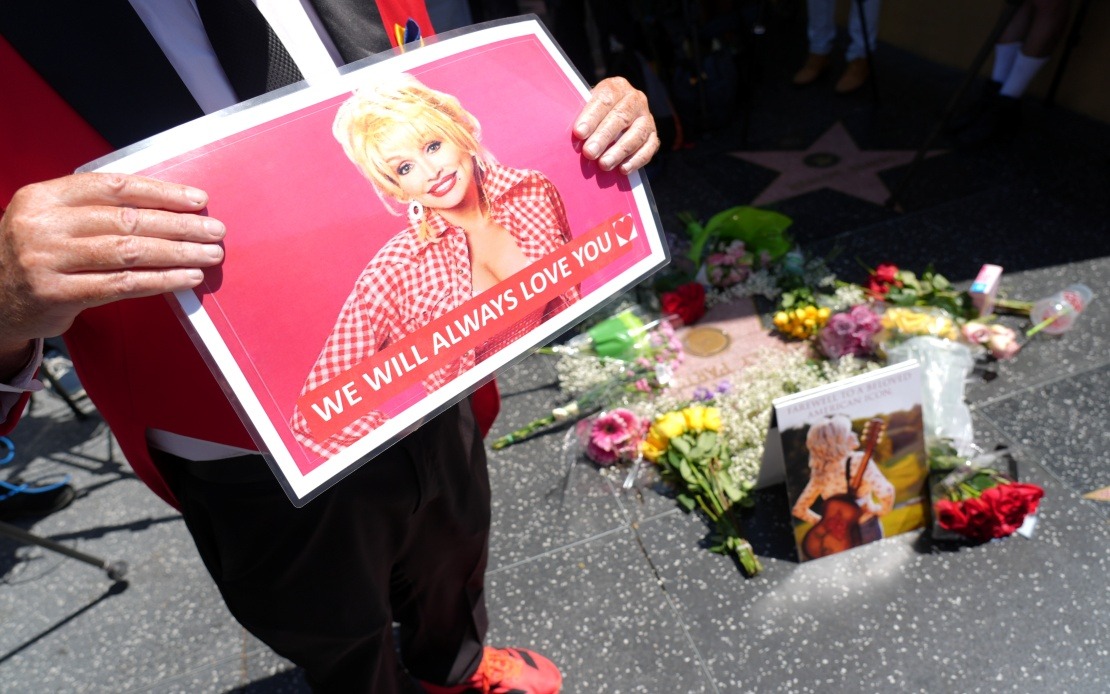
Dolly Parton, one of the most influential figures in country music history, has died at the age of 80, with her family confirming the news through social media on Tuesday. The announcement came via a video posted by her nephew, Bryan Seaver, on behalf of the Parton family, though details regarding the circumstances of her death remain undisclosed. Her passing marks the end of an era for American popular music, as Parton's artistic output and cultural impact extended far beyond the genre that made her famous.
In recent months, Parton had been managing significant health challenges that forced her to step back from her professional commitments. She cancelled several scheduled performances and made the difficult decision to postpone her planned Las Vegas residency, disappointing countless fans who had anticipated seeing her perform. However, just days before her death, she addressed her supporters through social media, expressing optimism about her recovery and noting that she was responding positively to the medications and treatments she was receiving.
Parton's journey from poverty to becoming a global entertainment powerhouse began in 1946 in Sevierville, Tennessee, where she was born into a working-class family with limited financial resources. Her musical talent emerged remarkably early; she was already performing on local radio broadcasts by the age of 10, demonstrating an extraordinary precocity that would define her entire career. At just 13 years old, she recorded her debut single, "Puppy Love," and made her memorable first appearance at the Grand Ole Opry in Nashville, establishing herself within country music circles during her teenage years.
After relocating to Nashville in 1964, Parton rapidly established herself as a formidable songwriter, with her compositions being picked up and recorded by established artists in the industry. Her breakthrough came when she joined Porter Wagoner's popular television variety show in 1967, remaining a regular performer until 1974. This high-profile platform allowed her to develop her distinctive stage presence and reach audiences across the United States, building a dedicated fanbase that would support her throughout her subsequent solo career.
The 1970s proved to be a particularly productive and creatively fertile period for Parton, yielding some of her most enduring compositions. Her signature songs "Jolene" and "I Will Always Love You" emerged during this decade, becoming standards that would outlive her and continue to resonate with generations of listeners. When Whitney Houston recorded a powerful rendition of "I Will Always Love You" for the 1992 film The Bodyguard, the song reached unprecedented levels of global popularity, introducing Parton's songwriting to audiences who might never have discovered it through her original recordings.
Beyond her musical achievements, Parton successfully transitioned into acting, appearing in films including 9 to 5 alongside Jane Fonda and Lily Tomlin, as well as Steel Magnolias, which featured an ensemble cast of renowned actresses. These roles demonstrated her versatility as an entertainer and helped solidify her status as a cultural figure whose influence extended across multiple entertainment mediums. Her ability to succeed outside her primary genre highlighted her charisma and professional skill.
Philanthropy became an increasingly central component of Parton's identity and legacy as her career progressed. She established the Imagination Library, an innovative initiative dedicated to providing free books to children from low-income families, reflecting her commitment to literacy and childhood development. This program demonstrated her desire to give back to communities similar to the one in which she had grown up, transforming her wealth and influence into concrete social benefit.
Over a career that spanned more than six decades, Parton achieved remarkable commercial success, selling more than 100 million records worldwide and securing 11 Grammy Awards alongside numerous other prestigious honors. Her contributions to music were formally recognized through her induction into both the Songwriters Hall of Fame and the Rock and Roll Hall of Fame, cementing her position among the most celebrated artists in American music history. These accolades reflected not only her commercial appeal but also the enduring artistic quality and innovation of her work.
For Malaysian and Southeast Asian audiences, Parton's passing represents the loss of a performer whose music transcended geographic and cultural boundaries. Her songs have been covered by artists across multiple genres and continents, making her compositions part of the global musical vocabulary. The themes she explored in her songwriting—heartbreak, resilience, and human connection—resonated universally, explaining why her music found listeners in markets far removed from country music's traditional strongholds. Her legacy will continue to influence musicians and songwriters for generations to come.

