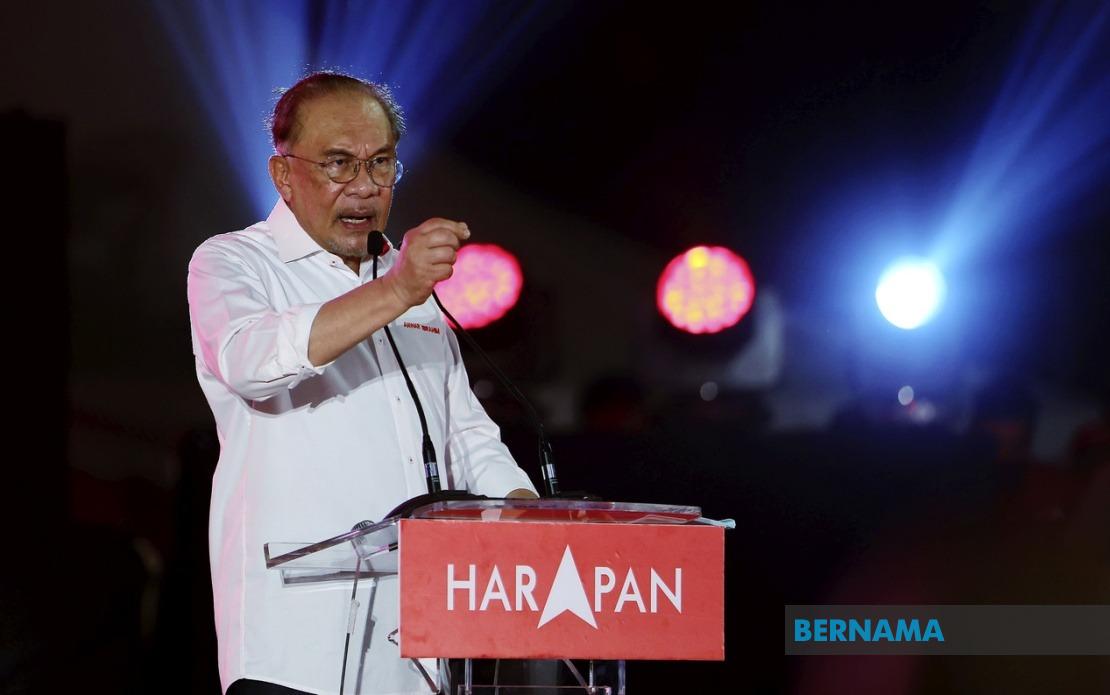
Prime Minister Datuk Seri Anwar Ibrahim has sounded a cautious note ahead of the 16th Negeri Sembilan State Election, calling on all contesting parties to exercise restraint when discussing matters touching on royal institutions and the Federal Constitution. Speaking at a Pakatan Harapan candidate announcement in Kuala Pilah on July 14, the PH chairman emphasised that while electoral competition forms a natural part of democratic governance, such contests must be conducted with integrity and without resorting to inflammatory rhetoric that risks fragmenting communities.
The warning reflects growing concerns across Malaysia's political landscape about the potential for state and federal elections to become platforms for provocative statements on sensitive constitutional matters. Anwar's remarks underscore the delicate balance between vigorous political debate and the need to protect institutions that are constitutionally enshrined and culturally significant. His intervention suggests that the ruling coalition recognises the dangers of allowing electoral heat to spill over into territories that could undermine national cohesion or institutional stability.
Anwar articulated his position with deliberate clarity, drawing a distinction between legitimate political disagreement and irresponsible conduct. He stressed that while parties may pursue competing visions for governance and development, they cannot simultaneously deploy slander or engage in actions calculated to divide society along religious, ethnic, or institutional lines. This framing positions the federal government as the guardian of democratic norms rather than merely a competing electoral participant, a stance that carries particular weight given Anwar's own role as head of government.
The Prime Minister's emphasis on clean leadership and integrity as prerequisites for steering Negeri Sembilan forward reflects the PH coalition's broader narrative entering the state polls. By linking institutional respect to developmental capacity, Anwar attempts to establish a moral framework in which constitutional stability and economic progress are interdependent. This argument holds particular resonance in Negeri Sembilan, where development trajectories and governance quality have become increasingly important to voters navigating post-pandemic economic recovery.
Anwar voiced particular confidence in Menteri Besar Datuk Seri Aminuddin Harun, characterising him as a pragmatic administrator whose cooperative approach benefits the state's constituents. This endorsement carries symbolic weight beyond the immediate election context, signalling continuity in state leadership while emphasising that institutional maturity rather than political upheaval should define the coming term. The framing suggests that re-electing PH at the state level represents not radical transformation but assured stewardship aligned with federal development priorities.
The candidate slate announced at the event featured 36 nominees drawn from PH's three component parties—PKR, DAP, and Amanah—combining established political figures with newcomers. The inclusion of DAP secretary-general Anthony Loke as a contender for the Chennah state seat represents a significant symbolic statement about inter-coalition cooperation and the sharing of responsibility across party lines. Similarly, Aminuddin's re-nomination for Linggi signals the coalition's intention to maintain leadership stability in the state's most prominent seat.
For Malaysian observers, particularly those in the Klang Valley and southern Selangor who maintain economic and social ties to Negeri Sembilan, the election holds implications beyond state-level governance. A strong PH performance would reinforce the coalition's claim to represent national stability and development continuity, while any significant setbacks could embolden opposition voices questioning federal competence. The state's mining heritage, agricultural traditions, and emerging industries make it a microcosm of Malaysia's broader economic transition, lending electoral outcomes there relevance to national policy conversations.
Anwar's specific caution against weaponising royal and constitutional issues likely reflects intelligence or recent statements from opposition quarters that he views as problematic. The timing and directness of his warning suggest that campaign discourse had already begun drifting toward sensitive territory, necessitating a public rebuke from the highest political authority. By positioning this warning as a principled stance rather than partisan accusation, Anwar seeks to establish moral high ground while setting boundaries for acceptable campaign rhetoric.
The presence of senior coalition figures—including DAP's Loke, Amanah's Mohamad Sabu, PH Communications Director Fahmi Fadzil, and Elections Director Amirudin Shari—underscored the federal government's serious engagement with the state contest. This visible unity among coalition components sends a message about PH's internal cohesion despite occasional public disagreements on policy matters. For voters concerned about governance stability, this show of coordinated leadership provides reassurance that any PH state administration would operate within a broader framework of federal alignment.
The election itself carries significance for Malaysia's democratic maturation. State elections increasingly serve as mid-term assessments of federal government performance, allowing voters to register satisfaction or discontent without changing national government. Negeri Sembilan's electorate, familiar with stable governance under both previous and current administrations, has demonstrated relative pragmatism in electoral choices. The PH coalition's framing of this election as fundamentally about development and institutional responsibility rather than ideological confrontation reflects this practical orientation.
Looking forward, Anwar's message will likely set the tone for how federal authorities respond to campaign rhetoric deemed to cross lines regarding sensitive institutions. By establishing clear expectations in advance, the government creates political and moral authority to criticise or sanction violations should they occur. This preemptive framework reflects lessons learned from previous electoral cycles where unguarded statements about constitutional matters generated controversy and distracted from substantive policy debates.
The Negeri Sembilan election ultimately represents a test of whether Malaysia's political system can sustain competitive democracy while respecting institutional boundaries. Anwar's remarks contribute to an evolving consensus among mainstream political actors that electoral victories, however important, should not come at the cost of undermining the constitutional and institutional foundations that make democratic competition possible. Whether all contesting parties heed this message will reveal much about the maturity of Malaysian political culture entering a new phase of federal-state governance.

