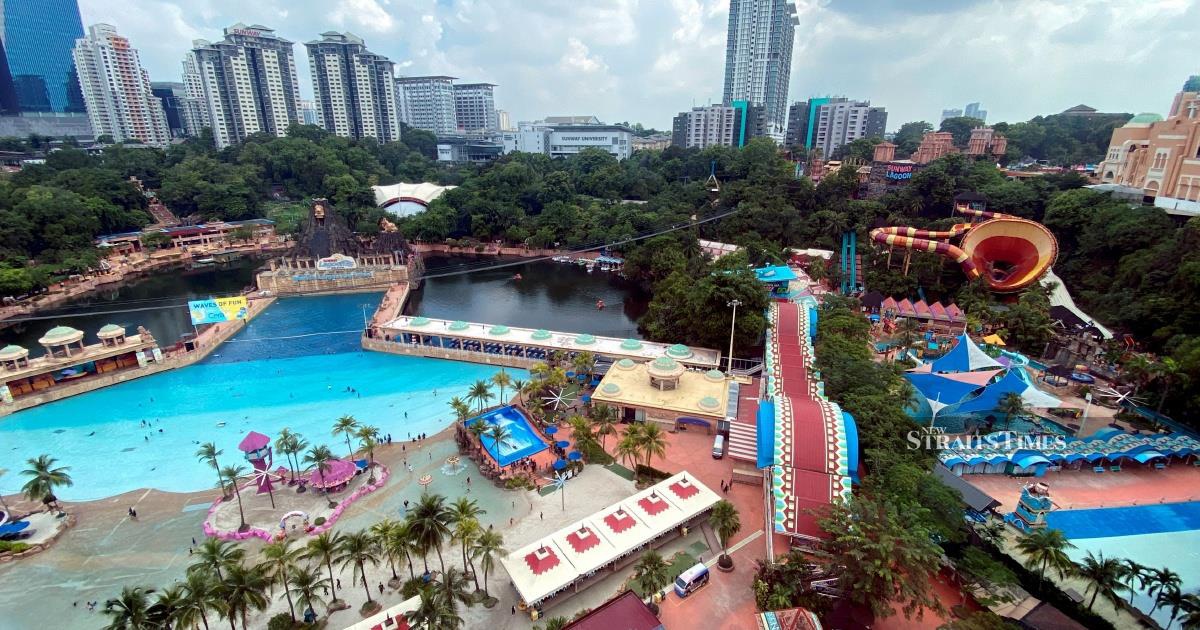
Malaysia's Department of Occupational Safety and Health (DOSH) has launched a comprehensive forensic investigation into an incident involving a roller coaster at Sunway Lagoon, one of Southeast Asia's premier theme parks located in Selangor. The move represents a formal commitment by the federal agency to determine the precise circumstances surrounding the incident and establish accountability in what could prove to be a significant safety matter affecting visitor operations at the popular entertainment venue.
Forensic investigations of this nature typically involve detailed technical analysis of mechanical systems, structural integrity assessments, and comprehensive review of maintenance records and operational procedures. DOSH's decision to deploy forensic-level scrutiny indicates the agency considers the incident serious enough to warrant thorough examination at the highest investigative standard. Such probes go beyond preliminary assessments and often involve reconstruction of events, expert testimony from engineers, and comparison against international safety standards and best practices in amusement park operations.
Sunway Lagoon, which attracts hundreds of thousands of domestic and international visitors annually, operates multiple thrill rides alongside water attractions. The theme park is one of Malaysia's major tourism draws, contributing significantly to the country's hospitality sector and regional competitiveness as a family destination. An incident affecting roller coaster safety has potential ripple effects across the broader amusement park industry in Malaysia and the region, as regulatory bodies and competing venues invariably scrutinise accident investigations for lessons applicable to their own operations.
The forensic investigation will likely examine several key dimensions. Mechanical components including track integrity, wheel assemblies, brake systems, and restraint mechanisms would be subject to detailed engineering analysis. Historical maintenance logs, inspection records, and any previous reported anomalies will come under review. Staff training documentation, operational protocols, and adherence to manufacturer specifications will form part of the inquiry. Additionally, investigators typically interview ride operators, maintenance personnel, and witnesses to reconstruct the precise sequence of events.
For Malaysian theme park operators and the broader leisure and hospitality sector, such investigations carry significant regulatory implications. DOSH's forensic approach signals that the government takes amusement park safety with seriousness comparable to other high-risk industrial environments. This investigation may ultimately influence how other parks in Malaysia conduct maintenance schedules, staff training programmes, and safety audits. Operators across the region will watch proceedings closely, recognising that findings could establish new benchmarks or stricter compliance requirements.
The incident also highlights the importance of regular independent safety audits at major entertainment venues. Theme parks operate complex mechanical systems that require continuous monitoring and preventative maintenance. International standards such as those established by the Association of Amusement Parks and Attractions (AAPPA) provide frameworks, though their implementation varies. Malaysia's commitment to forensic-level investigation demonstrates growing alignment with international safety expectations and may accelerate adoption of stricter verification protocols across the sector.
From a visitor safety perspective, thorough investigation can provide reassurance to the public that incidents are not treated lightly and that systemic improvements emerge from identified shortcomings. Consumer confidence in Malaysian attractions depends partly on visible evidence that safety concerns are addressed through rigorous, independent analysis rather than cursory reviews. Transparency in investigation findings, once completed, will be crucial for rebuilding public trust should any serious deficiencies have been uncovered.
The investigation also occurs within a broader context of Southeast Asian theme park safety. Regional competitors in Thailand, Singapore, and Indonesia similarly manage high-volume attractions with mechanical rides. Any significant safety findings in Malaysia could prompt comparable reviews elsewhere, potentially improving overall safety standards across the region's tourism infrastructure. This interconnected regulatory environment means that Malaysian investigation findings may have implications extending beyond national borders.
DOSH's forensic approach requires coordination with multiple stakeholders including the park operators, equipment manufacturers, regulatory bodies, and potentially international safety experts. The investigation timeline typically extends over weeks or months, depending on complexity and the need for expert opinions. During this period, decisions regarding ride closure and visitor access will balance safety precautions against business continuity—a sensitive equilibrium for operators managing major revenue-generating attractions.
The investigation's eventual conclusions will likely inform updated guidelines or enforcement actions affecting not only Sunway Lagoon but potentially the entire amusement park industry in Malaysia. Whether recommendations result in enhanced inspection regimes, stricter maintenance schedules, improved operator certification, or equipment upgrades, the ripple effects will extend well beyond a single incident at a single venue. This investigation represents an opportunity for Malaysia to demonstrate commitment to world-class safety standards in a sector that is increasingly important to the nation's tourism economy and regional standing.

