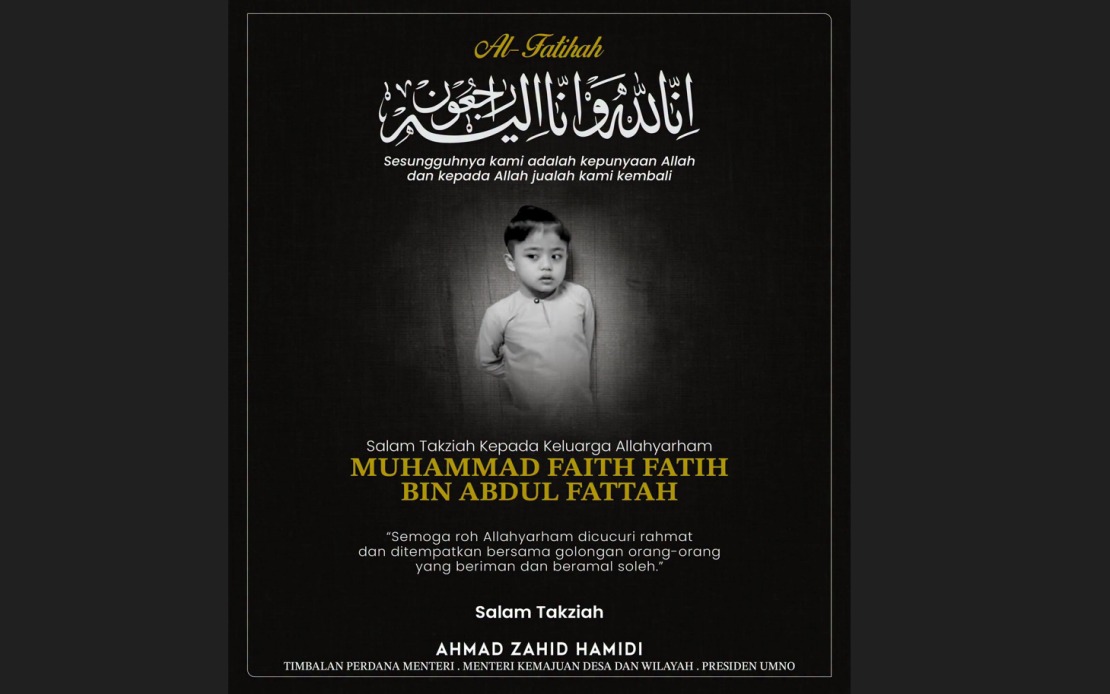
Deputy Prime Minister Datuk Seri Dr Ahmad Zahid Hamidi has extended his sympathies to the bereaved family following the tragic death of Muhammad Faith Fatih Abdullah Fattah, a six-year-old child with autism who was discovered deceased in an oil palm plantation area near Sungai Sumun in Hutan Melintang, Perak, on the evening of July 1.
Through a Facebook statement released the following day, Ahmad Zahid, who represents the Bagan Datuk constituency in Parliament, characterised the loss as particularly sorrowful given the child's tender age and his special needs. The incident highlights ongoing concerns surrounding child safety and the heightened vulnerabilities facing families caring for children with developmental conditions across Malaysia.
In his message, the DPM emphasised the profound nature of such a loss for any parent, acknowledging that few trials in life compare to the grief of losing a young child. He expressed hope that the grieving family would find the resilience and forbearance necessary to navigate the aftermath of this devastating event, recognising both the immediate shock and the long-term challenges such families face.
Ahmad Zahid also called upon the public to observe Islamic prayers for the deceased, specifically requesting that Al-Fatihah be recited and that divine mercy be granted to the child's soul. This public gesture of spiritual solidarity underscores the communal responsibility in supporting families through crisis and demonstrates institutional acknowledgement of the tragedy.
According to police records, the boy had gone missing from his home on the afternoon of July 1. His parents last observed him in the living room before discovering his absence, prompting them to alert authorities. The Bagan Datuk police chief, Supt Mohammad Ali Mohd Jali, confirmed that officers received notification of the disappearance at approximately 4.54 pm, initiating a search operation in the surrounding area.
Search and rescue teams located the child's body at approximately 10.08 pm on the same evening within a drain situated in the oil palm plantation zone. The discovery brought the frantic hours-long search to a tragic conclusion, raising questions about how a young child with autism, who typically requires close supervision, came to access the plantation area undetected.
The incident draws attention to the particular risks faced by children with autism spectrum disorder in Malaysia. Children with autism often experience difficulties with communication, spatial awareness, and risk assessment, making them especially vulnerable to accidents and wandering incidents. Parents and caregivers frequently describe the constant vigilance required to ensure safety, and the rapid manner in which such children can become separated from supervision.
This tragedy reflects broader challenges within Malaysian society regarding support systems for families managing childhood autism and other developmental disabilities. While awareness of autism has grown considerably over recent years, comprehensive infrastructure for safeguarding such children—including community alert systems, specially trained first responders, and accessible resources for early intervention—remains inadequately developed across many regions.
The case also underscores the critical importance of swift coordinated response mechanisms during child disappearances. The relatively rapid discovery in this instance, whilst ultimately ending in loss, demonstrates the value of immediate police engagement and community mobilisation, though it also raises considerations about how such outcomes might be prevented through preventative measures and enhanced supervision protocols.
For Malaysian families navigating the complexities of raising children with autism, this incident serves as a sobering reminder of the ever-present risks and the emotional toll of constant caregiving. The public expression of sympathy from senior political figures, whilst meaningful, also highlights the need for more comprehensive policy responses, including improved accessibility to mental health support, respite care services, and community resources specifically designed for families with special needs children.
The loss has reignited discussions within advocacy circles and among autism support organisations about the necessity for enhanced public education regarding autism-related vulnerabilities, improved neighbourhood safety awareness, and stronger coordination between health, education, and law enforcement agencies to protect this particularly at-risk population.

