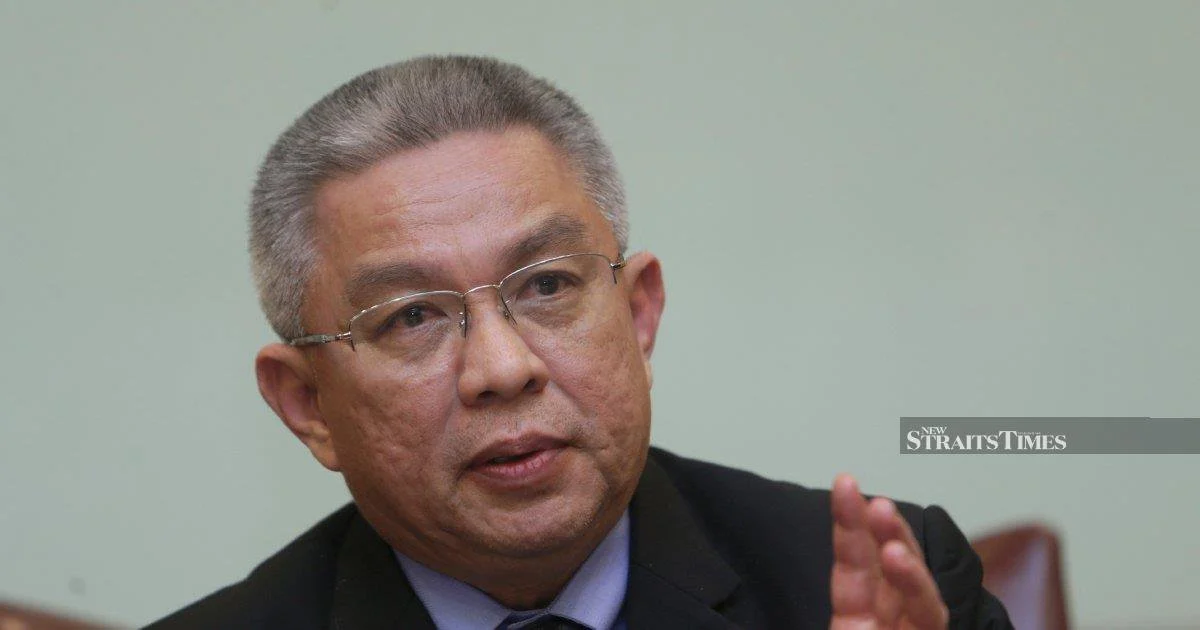
Barisan Nasional has unveiled its 56-candidate slate for the upcoming Johor state election, drawing on a mix of veteran political figures and fresh contenders as the coalition seeks to consolidate its hold on one of Malaysia's largest states. The roster includes two particularly noteworthy names: Dr Adham Baba, who served as health minister during the pandemic, and Alwiyah Talib, the former assemblyman representing Endau, signalling the coalition's strategy of deploying experienced personalities across the electoral battlefield.
Dr Adham Baba's inclusion represents a significant political statement for Barisan Nasional in Johor. The former federal minister brings substantial national profile and administrative experience at a time when the coalition faces persistent scrutiny over pandemic-era health policies. His positioning within the BN campaign underscores the coalition's confidence in leveraging his credentials despite controversies that may have surrounded his tenure in the health portfolio. The reinsertion of such high-profile figures into state-level contests reflects BN's acknowledgement that local elections increasingly require national-calibre candidates capable of commanding media attention and public discourse.
Alwiyah Talib's presence on the candidate list extends BN's reach into constituencies where it previously held ground. As a former Endau representative, her experience navigating grassroots politics in her district provides valuable institutional knowledge. Her reactivation in the electoral arena suggests BN is systematically rebuilding relationships in constituencies where incumbency or familiarity may prove decisive. The deployment of former assemblymen and women as candidates represents a deliberate effort to restore continuity and leverage existing community networks, particularly important in state politics where hyper-local considerations often override broader ideological narratives.
The composition of the 56-candidate slate reflects broader dynamics within Barisan Nasional's structure in Johor. The state coalition traditionally comprises the United Malays National Organisation, the Malaysian Chinese Association, and the Malaysian Indian Congress, though candidate allocation often extends to other component parties depending on their organisational strength and historical electoral performance in specific districts. The inclusion of such recognisable names suggests BN has prioritised competitive seats and constituencies where the coalition currently faces pressure from opposition parties.
Johor's political landscape has undergone considerable turbulence in recent years, with the state serving as a critical battleground for both Barisan Nasional and Pakatan Harapan. Control of Johor carries implications well beyond the state itself, as the state's 26 parliamentary constituencies constitute a substantial voting bloc within the national legislature. Any shift in Johor's political complexion reverberates through national politics, making the state election a proxy for broader political trends across Malaysia. The deployment of experienced figures like Dr Adham Baba and Alwiyah Talib signals that BN recognises the stakes involved in Johor's electoral contest.
The decision to field such a large slate—56 candidates across Johor's state assembly seats—indicates BN's determination to contest comprehensively rather than selectively. This full-spectrum approach differs markedly from opposition strategies that sometimes concentrate resources in winnable constituencies. The breadth of BN's candidate list reflects the coalition's access to substantial campaign finances and organisational capacity, though it also requires the coalition to resource and coordinate an extensive ground operation across geographically dispersed areas.
Dr Adham Baba's federal ministerial background introduces a dimension often absent from state elections—the ability to frame state-level contests within national governance narratives. Candidates with federal experience can credibly articulate connections between state administration and federal policy, potentially influencing voters who perceive linkages between their constituency representative and resource allocation from Putrajaya. In this sense, the inclusion of nationally recognisable figures serves BN's broader messaging strategy, not merely local electoral calculus.
For Malaysian political observers, the composition of Johor BN's candidate list provides insight into how the coalition has evolved organisationally since the 2018 federal election. The rehabilitation and redeployment of figures previously sidelined or marginalised demonstrates that Barisan Nasional retains capacity for tactical renewal. Yet the heavy reliance on experienced names also raises questions about BN's ability to cultivate genuinely fresh political talent capable of addressing contemporary voter concerns around economic inequality, digital governance, and environmental sustainability—issues that increasingly preoccupy younger, urban electorates.
The Johor state election will serve as an important indicator of electoral trends heading toward the next federal election. If BN consolidates its position using established political personalities, it may suggest that traditional political networks remain resilient in Malaysia's heartland. Conversely, should opposition parties successfully dislodge BN-held seats, particularly against experienced candidates, the result would signal that voter preferences have shifted beyond the gravitational pull of established political brands. The outcome in Johor will therefore illuminate whether Malaysia's electoral trajectory favours continuity or transformation.
The nomination of these candidates also reflects calculations about which constituencies remain winnable for BN and which represent aspirational targets where the coalition seeks to regain lost ground. Geographic distribution of the slate, combined with the seniority profiles of individual candidates, suggests BN has invested considerable strategic analysis in targeting specific constituencies where demographic, economic, or political factors favour the coalition. Whether this sophisticated candidate placement translates into actual electoral gains will determine whether BN's state-level resurgence strategy bears fruit in Johor.