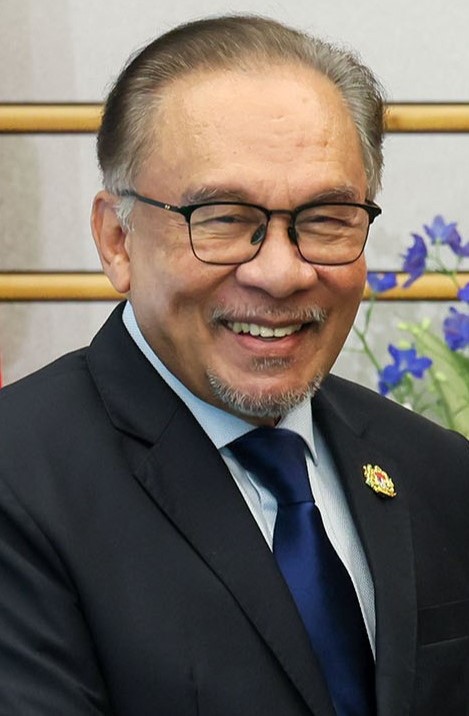
Datuk Seri Dr Adham Baba is throwing his hat back into the ring for Pasir Raja, confident that his extensive political pedigree and longstanding connections within the constituency will prove decisive when Johor voters cast their ballots in the upcoming state election. The former Health Minister's nomination as the Barisan Nasional standard-bearer for the seat represents a strategic move to reclaim territory he previously held, drawing on a reservoir of goodwill accumulated over two full terms representing the area from 2008 to 2018.
Dr Adham's political resume spans multiple tiers of governance and ministerial responsibility, providing him with a platform to argue for his readiness to deliver tangible benefits to Pasir Raja residents. Beyond his decade-long tenure as a state assemblyman, he progressed to national politics by securing the Tenggara parliamentary seat in consecutive elections, and held two significant cabinet portfolios during his time in Putrajaya. This progression underscores the political establishment's assessment of his capabilities, though it also raises questions about whether his federal-level experience translates into understanding of localized state-level concerns that often preoccupy voters in constituency races.
The political calculus underpinning his candidacy rests substantially on the notion that familiarity and demonstrated commitment to constituent welfare create enduring electoral advantage. Dr Adham explicitly highlighted the relationships he has nurtured among voters over his years of service, suggesting that personal rapport and trust form the bedrock of his campaign strategy. In Malaysian electoral contests, particularly at the state level, such interpersonal connections frequently carry considerable weight, as voters often reward representatives who have shown up consistently and delivered on promises or at least maintained visible presence within their communities.
Yet the broader challenge facing BN candidates nationwide—and Dr Adham is no exception—involves the party machinery's capacity to mobilize effectively and reach voters systematically. The former minister's own assessment reflects this reality: he contended that whichever party campaigns most actively and connects with the largest number of voters will capture the advantage on polling day. This observation highlights an important tension in modern Malaysian politics between traditional relationship-based politics and contemporary campaign mechanics that demand sustained ground presence and sophisticated voter engagement across digital and physical channels.
Dr Adham's policy platform for Pasir Raja centres on upgrading education and vocational training infrastructure within the constituency, areas that align with broader national development discourse around human capital enhancement and skills development. This focus suggests an attempt to position himself as forward-looking and aligned with contemporary economic needs, particularly important given Malaysia's ongoing transition toward higher-value industries and the persistent concern among voters about job prospects for younger generations. Such policy framing also implicitly acknowledges that state-level representatives increasingly bear responsibility for ensuring their communities have access to quality educational opportunities.
The timing of his return to state-level politics warrants contextual consideration. Having served in parliament and cabinet positions following his departure from Pasir Raja in 2018, Dr Adham's decision to contest the seat again might be read as either a strategic repositioning or a response to changed political circumstances at the national level. State elections in Malaysia have increasingly become referendums on incumbent federal governments, making individual candidates' local credentials somewhat subordinate to broader perceptions of the ruling coalition's national performance and public confidence in its direction.
For Johor specifically, a state historically regarded as BN's fortress and long governed by the coalition, the electoral landscape has shifted measurably in recent years. The state assembly election represents a critical moment for assessing whether BN can consolidate support in what was once reliably friendly terrain, or whether opposition parties have successfully embedded themselves and persuaded voters that alternatives merit consideration. Within this context, the nomination of candidates with established local presence like Dr Adham makes organizational sense—such figures can activate networks and remind constituencies of past service and familiarity.
The opposition's candidates will likely focus on the length of Dr Adham's absence from Pasir Raja, potentially arguing that his federal-level commitments meant diminished focus on state-level concerns, or questioning whether promises made during campaign season will be honoured if he is elected. Such attacks are standard in Malaysian electoral contests, particularly when candidates attempt comebacks after years away. Dr Adham's campaign will need to address this vulnerability directly, perhaps by highlighting achievements during his previous tenure and articulating a compelling vision for how his enhanced national experience now positions him to secure better outcomes for Pasir Raja constituents.
The Pasir Raja contest exemplifies broader patterns within BN's campaign strategy, which appears to emphasize fielding candidates with parliamentary or ministerial experience at the state assembly level, presumably to ensure that elected representatives possess the networks and expertise necessary to secure federal resources and attention for their constituencies. This approach assumes voters value connection to national power structures, though it carries the risk of appearing remote or overly focused on elite positioning rather than grassroots service.
Ultimately, Dr Adham's electoral prospects will be determined not by his past accomplishments alone but by his ability to demonstrate that he understands current voter concerns and possesses concrete plans to address them. While his institutional knowledge and community ties provide genuine advantages, the political environment of 2024 demands that candidates synthesize experience with visible engagement on contemporary issues—whether economic hardship, cost of living pressures, or service delivery quality. His campaign's effectiveness will hinge on whether he can convincingly connect his proven track record with the priorities voters are actively discussing at their doorsteps and in their neighbourhoods.