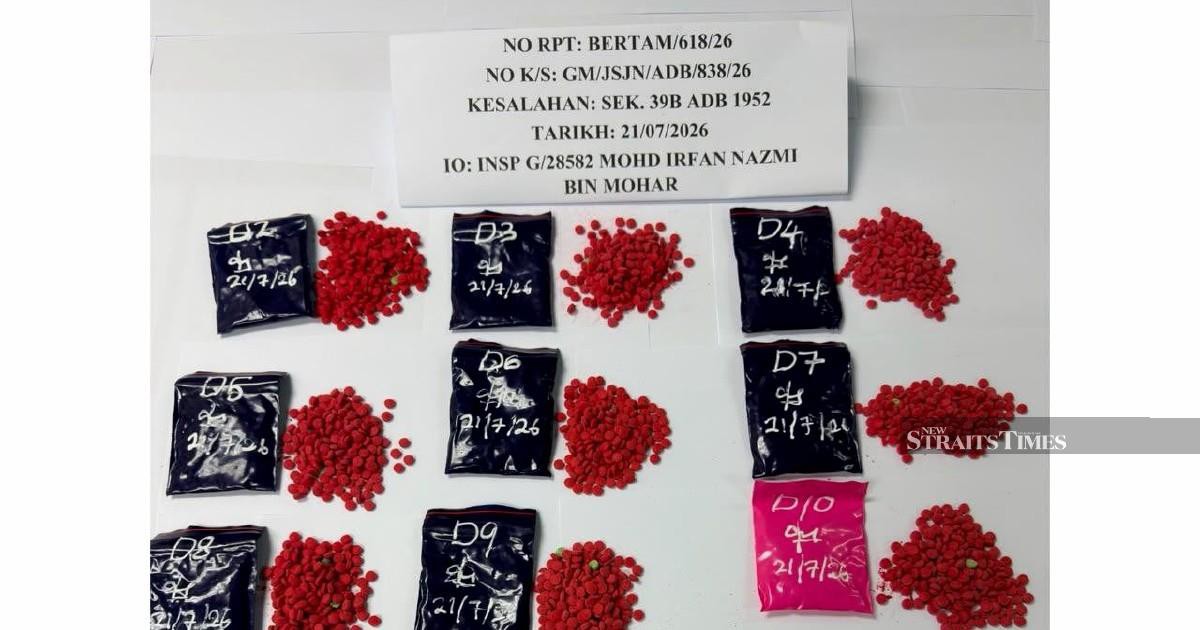
Border enforcement efforts in Kelantan intensified this week as police arrested two Myanmar nationals and dismantled a substantial yaba trafficking operation centred on Gua Musang. The operation, which culminated in a brief pursuit and subsequent apprehension, underscores the continued vigilance required to stem the flow of illegal stimulants through Malaysia's northern frontier zones. The seized consignment of 6,000 pills, with an estimated street value of RM60,000, represents a significant disruption to illicit drug supply networks operating across the Thailand-Malaysia border corridor.
The arrested men remain the subject of ongoing investigation, with authorities working to establish the full scope of their operations and identify potential distribution networks within the country. Initial police interrogations suggest the pair may be linked to broader trafficking syndicates responsible for moving yaba, a methamphetamine-based tablet that remains a primary drug threat throughout Southeast Asia, from production centres in Myanmar into Malaysian territory. The chase element of the operation reflects the increasingly evasive tactics employed by traffickers attempting to evade detection.
Yaba continues to represent one of the most persistent drug challenges facing Malaysian law enforcement. The tablets, typically containing methamphetamine and caffeine, are manufactured primarily in clandestine labs operating across Myanmar, Laos, and northern Thailand before being trafficked southward through established overland routes. The drug's compact, portable nature and relatively low individual cost make it particularly attractive to traffickers seeking to move large quantities across land borders with minimal detection risk. Its appeal spans multiple demographic segments, from long-haul commercial drivers requiring stimulation to maintain alertness, to younger urban consumers attracted to its party-facilitating properties.
Gua Musang, situated in Kelantan's interior, has emerged as a consistent flashpoint for drug enforcement operations. The district's geography—characterised by forested terrain, limited urban infrastructure, and proximity to the Thai border—creates conditions that traffickers exploit for transit and transshipment purposes. The porous nature of this frontier zone, combined with established smuggling routes refined over decades, means that interdiction efforts require sustained coordination between multiple agencies and intelligence services. Yesterday's operation demonstrates the police's commitment to disrupting these corridors, though the sheer volume of attempted border crossings ensures that many trafficking attempts succeed undetected.
The broader context reveals an escalating arms race between law enforcement and organised trafficking networks. As Malaysian authorities enhance checkpoint efficiency and deploy additional resources to high-risk zones, traffickers respond by investing in more sophisticated concealment methods, employing multiple couriers to distribute risk, and cultivating local facilitators with intimate knowledge of patrol patterns. The two Myanmar nationals apprehended represent the low-risk operatives at the terminus of these trafficking chains—expendable foot soldiers whose capture, whilst operationally significant, inflicts minimal damage on the underlying criminal enterprises.
Yaba seizures across Malaysia have fluctuated considerably, reflecting both enforcement intensity and production dynamics in source countries. The consistency of yaba availability despite repeated enforcement operations suggests that supply remains robust. Wholesale prices in Myanmar have reportedly declined in recent years, partly attributable to expanded production capacity, making trafficking increasingly lucrative for those willing to assume border crossing risks. The RM60,000 valuation assigned to this particular seizure, based on estimated local retail prices, may significantly underestimate the actual profit margin accruing to traffickers operating at the wholesale-to-retail interface.
Police coordination with Thai counterparts remains essential for effective border control. Thailand's own yaba epidemic—which has seen explosive growth particularly among younger demographics—creates incentive alignment for joint enforcement efforts. Regional intelligence sharing mechanisms have improved measurably in recent years, though implementation remains inconsistent across certain border sectors. The Gua Musang operation likely benefited from intelligence gathering conducted through these channels, highlighting how transnational cooperation can yield tactical successes.
The implications for Malaysian public health and social stability remain considerable. Yaba's stimulant properties carry well-documented health risks including cardiovascular complications, psychological dependence, and long-term neurological effects. Emergency departments in major Malaysian cities regularly treat acute yaba toxicity cases, whilst rehabilitation facilities struggle with increasing admissions of yaba-dependent individuals. The drug's affordability relative to other available stimulants means that demand persists across all socioeconomic strata, particularly in commercial transport sectors where drivers seek substances enabling extended working hours.
Looking forward, sustained enforcement success will require enhanced intelligence capabilities targeting trafficking organisations rather than focusing exclusively on street-level operations. Disrupting the logistics networks connecting production centres to retail distribution points offers greater strategic leverage than interdicting individual courier operations. Malaysian authorities, in collaboration with regional partners and development agencies working in border communities, must simultaneously address the supply-side drivers motivating individuals like yesterday's arrested men to assume trafficking roles. Economic alternatives in border regions remain limited, rendering the risk-reward calculus of drug trafficking perpetually attractive to marginalised populations.

