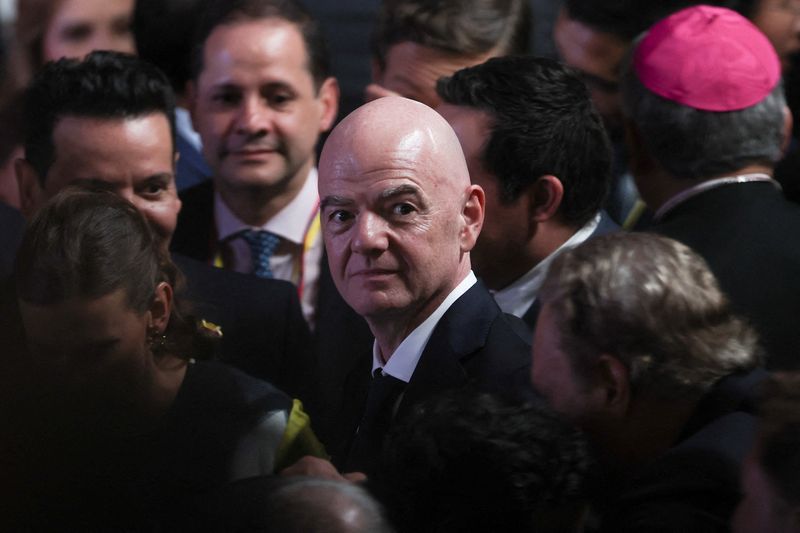
The Royal Dutch Football Association (KNVB), one of the oldest football bodies in the world and a founding member of FIFA in 1904, has issued a dramatic call for the complete overhaul of international soccer's governing structures. In a statement released on Sunday, the KNVB formally withdrew confidence in FIFA President Gianni Infantino and outlined an ambitious proposal to host an International Summit on the Future of FIFA in Amsterdam. This move represents a significant shift in the European football landscape, particularly given the Netherlands' historical prominence in global soccer governance and its previous support for Infantino's leadership.
The timing of this intervention proves critical, as Infantino faces re-election in March 2025, and growing discontent among regional confederations has surfaced following his controversial proposal to monetise FIFA's major events through private equity investment. The plan to partially sell stakes in flagship competitions like the World Cup triggered substantial backlash from football's traditional powerhouses, creating an opening for alternative voices within the global football community. The KNVB's intervention signals that established European institutions are willing to challenge the current presidential framework rather than await scheduled elections.
What distinguishes the Dutch association's position from typical leadership challenges is its focus on institutional transformation rather than personality replacement. The KNVB explicitly stated that electing a new president alone would prove insufficient without accompanying structural reforms. The organization identified excessive concentration of power around the FIFA presidency as a fundamental governance problem, particularly highlighting the inadequate separation between presidential authority and administrative functions. This critique suggests deep-seated concerns about how decisions are made and implemented within FIFA's hierarchy, concerns that multiple leadership changes might not adequately address.
The proposed Amsterdam summit reflects the KNVB's vision for inclusive, collaborative reform rather than top-down restructuring. The Dutch body emphasizes the importance of developing FIFA's future direction in partnership with all 211 member associations and confederations representing every continent. This inclusive approach contrasts sharply with perceptions of centralized decision-making under Infantino's tenure and appears designed to build consensus among diverse stakeholders with varying interests and resources. For Southeast Asian football nations, this proposition carries implications regarding their voice and influence within reformed FIFA structures.
Three specific reform priorities emerged from the KNVB's analysis. First, the association demands strengthened governance mechanisms featuring robust checks and balances to constrain executive power. Second, they insist that human rights considerations and sustainability principles become central to FIFA's decision-making processes rather than peripheral concerns. Third, the KNVB advocates for genuine international cooperation that prevents any single region from imposing its priorities on the global football community. These elements collectively suggest frustration with how recent FIFA initiatives have been conceived and implemented.
Financial equity within the global football system constitutes another dimension of the KNVB's reform agenda. The association proposes that FIFA should reinvest up to ninety percent of its distributable revenue directly into soccer development programs. This emphasis on wealth redistribution acknowledges the significant disparities between wealthy European and South American federations and developing football nations struggling with resource constraints. Such redistribution could meaningfully enhance development opportunities for football associations across Southeast Asia and other traditionally underfunded regions, potentially improving competitive quality and participation rates in emerging markets.
Infantino's recent argument that FIFA bears responsibility for narrowing the resource gap between affluent and struggling member associations found tacit support within this reform framework, yet the KNVB's approach suggests this objective requires systematic structural change rather than benevolent leadership discretion. By institutionalizing revenue redistribution and development investment, reformed FIFA could function more equitably regardless of individual presidential philosophy. The KNVB explicitly rejected what it characterized as a European-centric approach to global football reform, signaling commitment to truly international rather than regionally dominated governance.
The broader context surrounding this intervention includes ongoing legal scrutiny of FIFA's operations. UEFA, the European confederation to which the KNVB belongs, has separately sought permission from United States federal courts to obtain testimony and documents from FIFA entities based in Florida for use in a potential criminal complaint against Infantino in Switzerland. These parallel developments suggest growing institutional pressure on FIFA leadership from multiple directions simultaneously, combining governance criticism with legal investigation.
The KNVB's willingness to withdraw previous support for Infantino despite having endorsed him during his most recent electoral campaign underscores the conditional nature of such backing among major football associations. This shift demonstrates that presidential legitimacy within FIFA requires continuing endorsement from powerful member federations rather than representing permanent institutional authority. For developing football nations in Southeast Asia watching these developments, the outcome of this governance struggle may substantially influence their future influence within international soccer structures and their access to FIFA development resources.
Since its founding more than a century ago, the KNVB has wielded considerable influence in shaping international football regulations and competitive formats. The association's emphasis on democratic processes, international cooperation, and equitable resource distribution reflects deeply held values within European football traditions. However, the organization's simultaneous rejection of perceived European dominance suggests sophisticated understanding that successful global governance requires transcending regional interests. This philosophical foundation may prove attractive to confederations beyond Europe seeking more balanced representation within FIFA's decision-making apparatus.
The practical mechanics of convening and conducting an international summit would face substantial logistical and political challenges. Yet the KNVB's proposal appears designed to shift the conversation from which individual should lead FIFA toward fundamental questions about how FIFA should operate. This reframing potentially opens space for deeper discussions about competitive fairness, development equity, and democratic accountability that transcend typical presidential campaign dynamics. For Southeast Asian stakeholders concerned about their confederation's influence within FIFA structures, such conversations could create unexpected opportunities to advance regional interests.
As FIFA navigates this period of institutional questioning, the organization faces pressure to demonstrate responsiveness to member federation concerns while maintaining operational continuity. The KNVB's proposal for deliberative reform through inclusive international consultation suggests that member associations increasingly demand meaningful participation in determining FIFA's future direction. Whether Infantino's eventual successor emerges from scheduled elections or extraordinary processes, reformed FIFA governance structures may look substantially different from current arrangements, with implications reverberating throughout Asian and Southeast Asian football for years to come.

